Evan Arbolante: Volunteer at the local Animal Shelter

I worked at one of Kyoto’s local animal shelters for my CIP.

I had a great time taking care of the dogs and cats. Some of my responsibilities included walking the dogs, teaching them how to sit and walk alongside you, and cleaning their living spaces.

This CIP is perfect if you love animals and share a passion for protecting and caring for them. For me, it felt like a weekly therapy session where I could destress and build bonds with both the animals and the shelter staff.

For those wondering what CIP to choose, find something that excites you and offers a space to connect with others. The most valuable part of the CIP is that it gives study abroad students a chance to form a special community within Japan. Think about what kind of community you’d like to be part of when deciding on your CIP. No matter what activity people choose, CIP often leaves a warm and lasting place in our hearts—so my best advice is to come excited and ready to participate!

Jonathan Wu: Volunteering at the Kyoto International Manga Museum

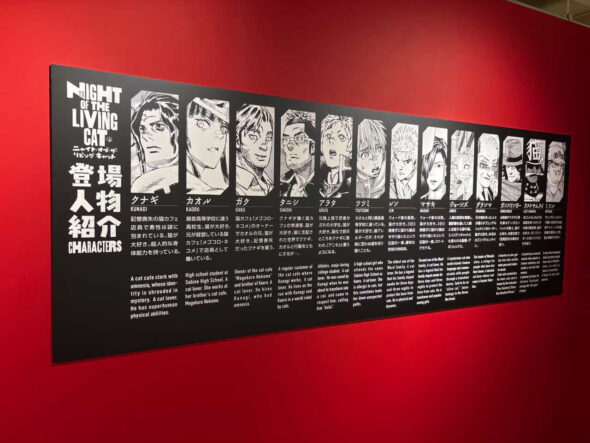
This Spring semester, I volunteered at the Kyoto International Manga Museum, where I assisted with archiving, shelving, and preserving manga while learning about Japanese workplace culture and library systems.

Volunteering at the museum was incredibly fulfilling, not only because of the unique nature of the space itself (a hybrid museum/library), but also because of how much I learned about intercultural communication and the subtleties of Japanese work etiquette. As someone who has personally loved anime and manga for a long time, getting to volunteer in a space dedicated to their preservation and study made the experience even more special. This space was a place of personal growth, cultural exchange, and meaningful connections for me, and I am incredibly thankful to have been given the opportunity to be part of it.

My advice to incoming students and prospective students: Don’t be afraid of discomfort or feeling out of place at first while abroad; these moments are often where the most growth happens. Observe how others interact socially, and most importantly, be curious and open-minded. You’ll be surprised at how much you can learn simply by participating with sincerity and respect.

Kailey Garcia: Hip Hop at FlyDanceStudio


For my CIP, I took weekly hip-hop classes at FlyDanceStudio, located in Kawaramachi. I attended three classes led by Ruka先生、Nana先生、and Neo先生 on Mondays and Wednesdays. Nana’s class was beginner dance, and Ruka and Neo’s classes were taught at the intermediate/advanced level. Regardless of the indicated level, I think every class challenged me each time I attended. Over time, I began to notice gradual improvements in both areas, especially in dance retention and overall confidence. The studio didn’t really foster an environment where I could always talk freely in Japanese since the classes were structured so that the instructor could teach a whole choreo within the set time, but in the moments I did exchange conversation with my classmates and instructors, it was always encouraging. Not just with dance, but also when trying to apply language skills in real life, you’re put in situations where hesitation can hold you back from reaching your full potential. Taking classes in a language that, although I’m learning, I didn’t know the proper dance terminology, I had to learn to not be afraid to make mistakes in order to accurately measure growth. Despite the limited communication in class, every time I walked out of class with more motivation to continue studying Japanese in order to preserve the relationship I had with my instructors. Whether it’s taking a dance class for the first time or when you’re put in flight-or-fight mode, I think the most memorable moments I had in Kyoto were when I pushed myself outside of my comfort zone even if I wasn’t fully confident I could.

Shawn Chen: Koto

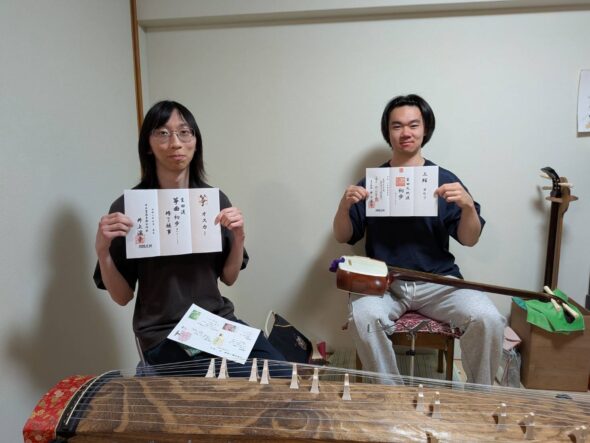
For my CIP, I took Koto lessons with Iwasaki sensei! Koto, shamisen, and shakuhachi are also taught at the studio and there was a chance for me and 4 others to perform together in traditional attire!

While learning the instrument was fun in itself, the community in the studio is definitely the key highlight of the experience. They’re all so welcoming and often help out with teaching.

If you take lessons here (which I highly recommend), I would advise you to never be afraid to ask questions if you have any and to talk about your experiences in Japan as you go. They’re also curious about us and want to hear more!

Jack He: Volunteering at Nalba

画像

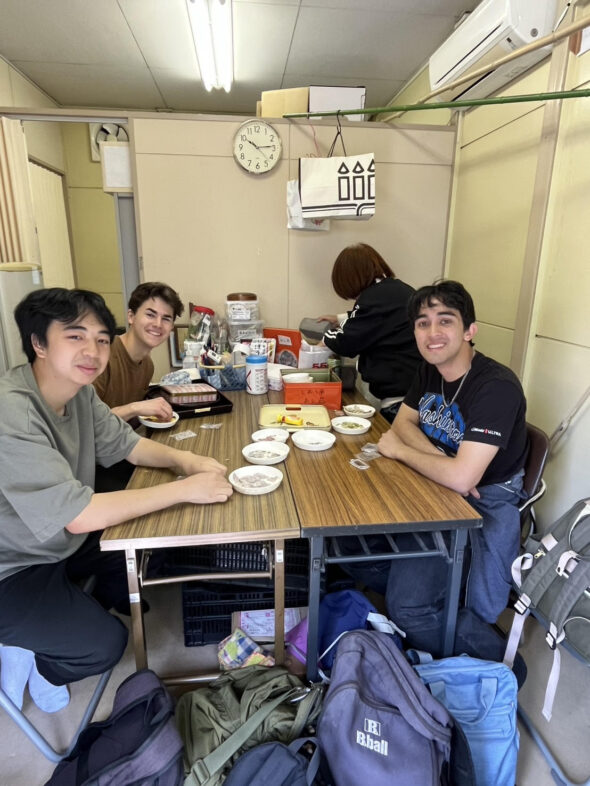
Nalba is a 子ども食堂 (children’s cafeteria) that resembles a afterschool daycare. Primary school students join together to play, eat dinner, and play more. My responsibilities primarily entailed playing with the children and helping with the cooking. Throughout the semester, I made friends with both kids and the adult volunteers who work there. I would wholeheartedly recommend Nalba to those who enjoy playing and spending time with children.

Tyrone Xue: Shakuhachi

Me (left) and Sam (right) practicing right before our big concert

I took lessons learning the shakuhachi as my CIP. There are different types of shakuhachi playing style, I was learning the Kinko-ryu shakuhachi as it is what my teacher was an expert at. I feel that the shakuhachi is a fairly hard instrument to learn during the start compared to the other traditional instruments like the koto or shamisen, but eventually you get the hang of it. We were invited to play for a concert near the end of our lessons which I felt was an amazing experience, both the pressure and the fun.

If you’re thinking about doing a traditional Japanese instrument, whether it’s shakuhachi, koto, shamisen, or something else, I think you should just go for it. Even if you don’t have any experience in western music because the music sheet and playing method is really different anyways. My best advice is to not go into these lessons to become an expert in the instrument (our shakuhachi teacher himself has decades of experience but he still feels like he has more to learn). Instead, I think it’s best to go into it with the mindset of building human connections. The shakuhachi is one thing, but take some time to ask about the the history, the songs, and the communities. You’ll find yourself learning about a completely new world than just an instrument.

Fatou M’Baye: Pottery

I took pottery classes at Keiko Ikoma’s pottery studio. I’d always wanted to learn pottery but had never done it before. I was intimidated going in on my first day because I was a total beginner, but all of my worries quickly dissolved as soon as I stepped into the classroom. Ikoma Sensei is super kind and patient, and everyone in class is very friendly. It’s a very communal space, with everyone chatting while they work. Ikoma Sensei has a curriculum for beginners, which was really nice because it provided me guidance on what pieces to make. I made a vase, three teacups, a rice bowl, and a large bowl. Rather than working with a moving wheel, everyone at Ikoma Sensei’s classroom does hand-building, so it’s a slower process. It was very therapeutic to make everything step by step. I now want to continue pottery! My advice for incoming students is to not be afraid to talk to the people in your CIP. If you are more social and talkative, others will also be more social in return. Get to know the people in your CIP and don’t be shy about asking questions!

Sam de la Vega: Shakuhachi

My CIP was the traditional Japanese flute known as a Shakuhachi. I had lessons once a week for about 2 hours and occasionally practiced with other students who practiced other instruments, such as the koto or shamisen. Towards the end of the semester, all of the other students involved in the instruments took part in a traditional concert recital. 

The shakuhachi was an incredible experience that was not only extremely rewarding to learn, but it also helped with listening comprehension and feeling more comfortable speaking Japanese in a more casual manner. One of the most important aspects of learning this instrument was becoming good friends with my teacher as he created an environment where learning the instrument was fun and no stress was created. 

My advice for future students of KCJS is to go beyond what you believe you’re comfortable with and do not be scared to try something new. I’m not new to learning instruments, but learning a new instrument in a language I’m not fluent in was incredibly daunting. Yet, it turned out to be one of the best experiences of my life. I’m forever grateful for this CIP and will continue to practice the shakuhachi for the rest of my life. 

Sloane McLean: Volunteering at NALBA Children’s Cafeteria


Although NALBA is a cafeteria, as a volunteer I was more so responsible for playing with the kids as meals were being prepared rather than participating in the cooking. We would all have dinner together, during which I would make small talk with the kids and volunteers, and then it would be time to clean up and keep the kids entertained as they waited for their parents to come pick them up.

I love kids so this was an incredibly rewarding (though physically tiring) CIP experience for me as I got to develop relationships with the children and see them excited to spend time with me every week. The volunteers at NALBA are incredibly warm and friendly, and the children were very curious about why I was in Japan and also wanted to know about the USA, so there was always a lot to talk about and I easily made conversation with the people I met there.

I highly recommend NALBA to anyone who is nervous about their Japanese skill level but still wants a bit of a challenge for themselves — it’s easy to connect with the kids because there are so many games you can play together which require limited conversation ability, but at the same time you will definitely still need to practice the more advanced grammar you are learning in class when talking to the kids (and they talk a lot!). Speaking with the older volunteers was always a little outside of my language comfort level, but I’m glad I pushed myself. My biggest advice for anyone in a similar situation is to just power through any hesitancies you have at your CIP. Don’t be afraid to strike up a conversation, and ask clarifying questions as often as needed! I would say the latter piece of that advice is definitely extremely important, as it’s absolutely necessary in order to understand what the rules and boundaries are.

Overall NALBA was a warm and energetic environment I enjoyed going to every week, and leaving it was really hard. I hope many more KCJS students will participate there in the future!

Isabel Hurwitz: 茶道(Tea Ceremony)

For my CIP I had private 茶道(Tea Ceremony) lessons with the lovely 三谷先生. Our lessons consisted of meeting once a week for about two hours to practice the steps of the ceremony including purifying (cleaning) the utensils and bowl and learning how to prepare the tea.

This was, by far, one of the most enjoyable experiences of my personal journey in Japan. Not only I was able to learn something I had been wanting to learn for a long time, but also I was able to understand the cultural and historical context of Japanese way of life through the lens of this ceremony.

I also owe this experience to 三谷先生 because she was the best teacher I could have had for this. She is the sweetest and most patient woman I’ve met. Even though I made a lot of mistakes, she kept cheering me up and telling me I got better every session, and that really inspired me to practice at home by my own.

I would recommend incoming students to do this as your CIP project if you want to get more involved in the subtle culture of Japan—or if you really like Matcha. Through this activity, you can get a deeper understanding and appreciation for the way Japan approaches interpersonal communication and mutual respect.