Mika Fishell: Ikebana

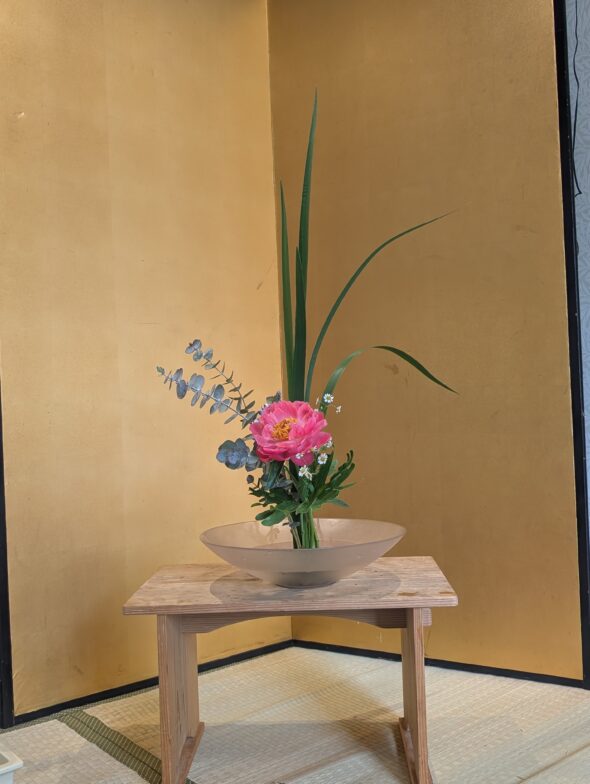
I was given the opportunity to join an Ikebana class for my CIP. While focusing on learning the foundation of Moribana, the lessons did go into more modern styles of Ikebana. Within the lesson, while given diagrams on the composition of each piece, I was given creative freedom within those requirements. After the lesson finishes, the teacher will check the work and make suggestions and explain in which ways I could improve my work. If you chose this CIP, while it does incur a monthly cost, it was very beginner friendly. This is the case both in terms of the Japanese, as the professor could speak English, as well as the art form itself. No real background in flower arranging is necessary. Some of the lessons were taken in his house. When starting I felt unprepared to enter a house, but I think he was very forgiving and over time I became more comfortable with the etiquette.

Skyler Lee: Primo Passo Orchestra (プリモパッソオーケストラ)


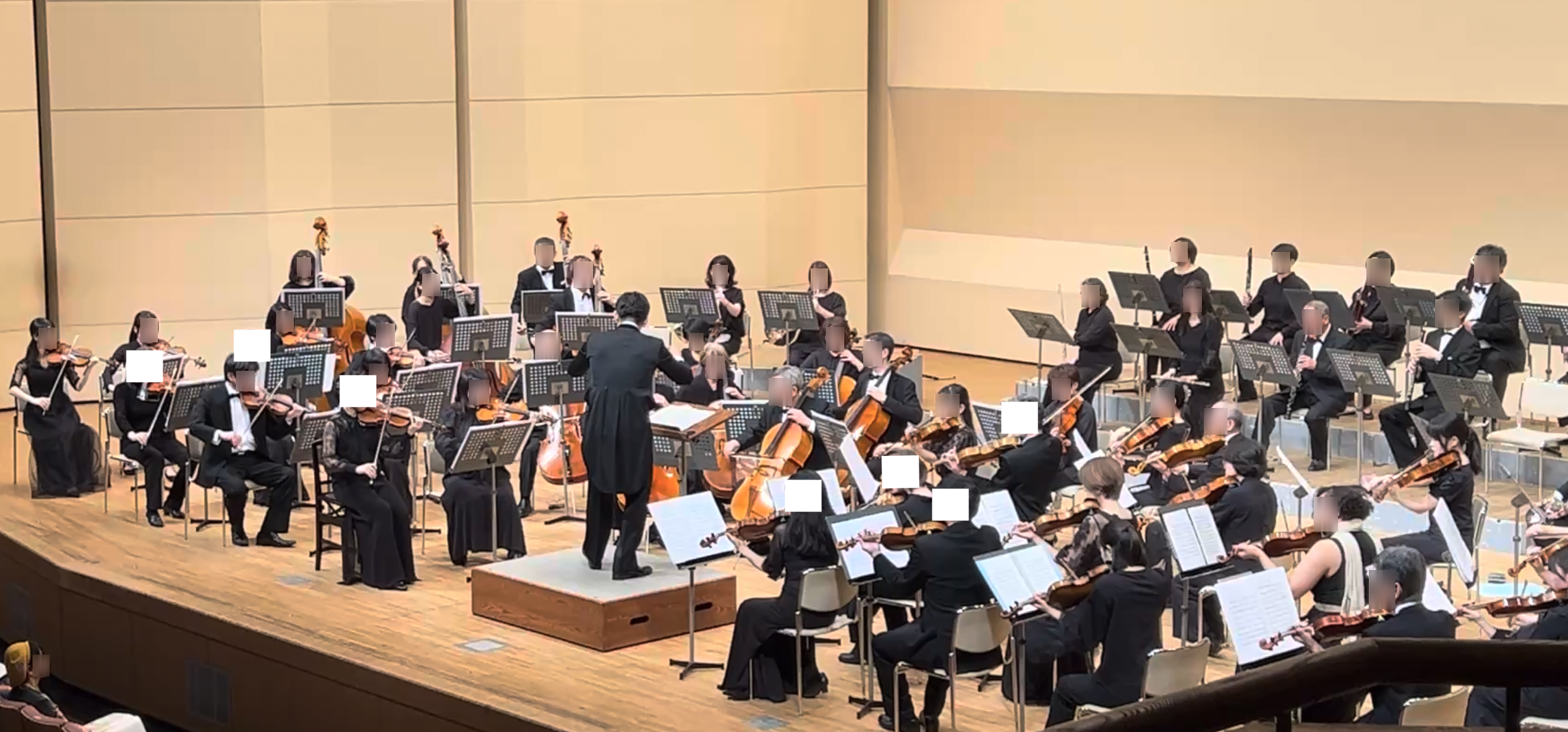
I participated in the rehearsals and concerts of one of Kyoto’s amateur orchestras (~50 ppl). Rehearsals are once a week, in rotating locations and regular sectionals, and the main concert is once a year (February).

As an amateur orchestra, naturally the players are on the older side, but there are a few college age students. Everyone was extremely welcoming and kind, got to meet something really awesome people and learned musical terms in Japanese.

Pretty much anyone can join, so don’t be intimidated! Make an effort to talk to those around you. There are other orchestras in Kyoto you may be able to join, if you’ve brought your instrument to Japan. Doshisha was oddly exclusive and cliquey—a Japanese friend corroborated with similar experiences. Kyoto Three Universities Joint Symphony Orchestra is a very welcoming college-level orchestra, but it’s a bit chaotic and their rehearsal schedule is fairly intensive. Ultimately, figure out what you want from joining orchestra in Japan. I wanted to talk to people who likes music so things worked out.

Mia Nakamura: Volunteering at a Nursery


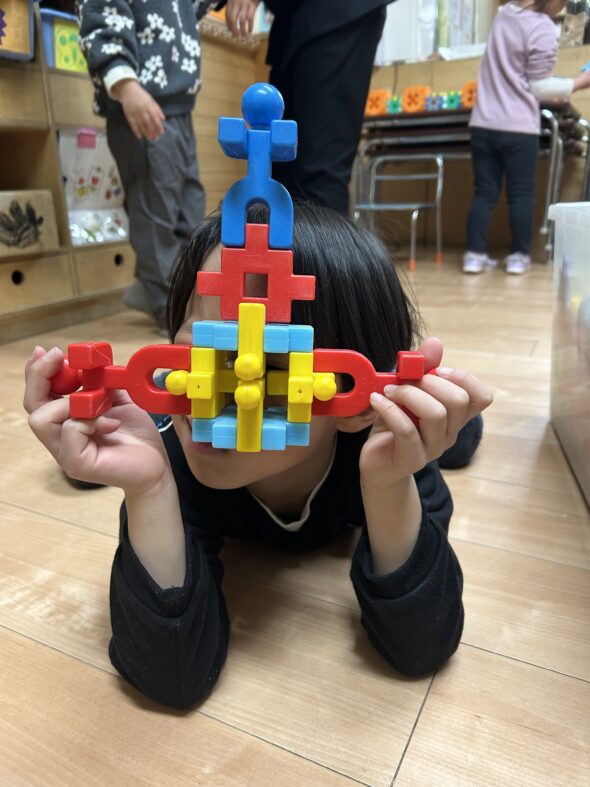
For my CIP, I volunteered at Pesutarotchi Nursery, which is a place for kids from ages 0-6. Every week, I would go to the nursery, wake the kids up from their nap, gather them and eat a snack together, play with them, and then help clean up. The reason that I wanted to do this activity for my CIP was because I do not have much experience with young kids since I am the youngest child and cousin on both my dad and mom’s sides, so I wanted to get more comfortable playing and interacting with them. A lot of the time I felt very awkward, but after some time, just being around the same kids allowed me to build a rapport with them, so after a while they would come and play with me. My advice to incoming students is to just act like a kid when you’re playing with the kids and don’t overthink how to interact with them.

Ryan Cunningham: Cooking at La Carriere

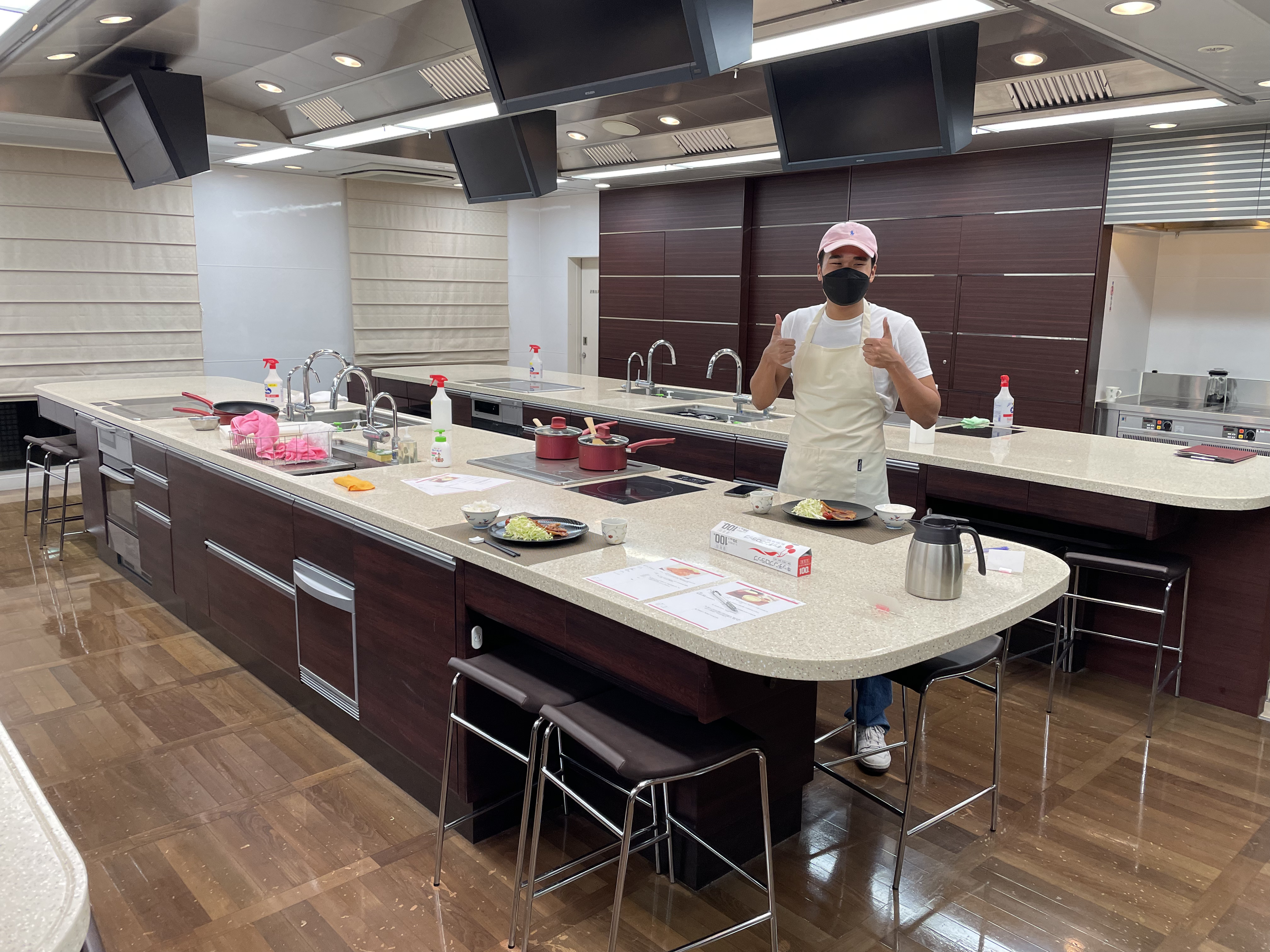
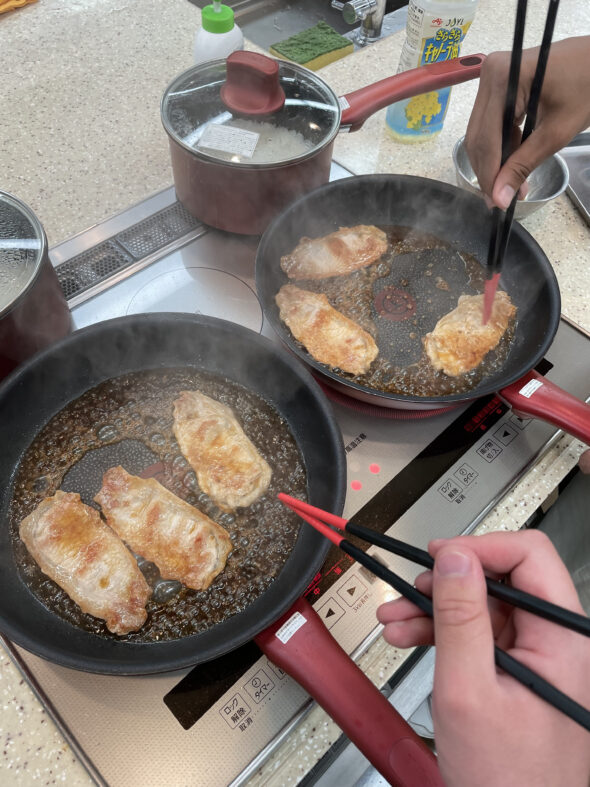
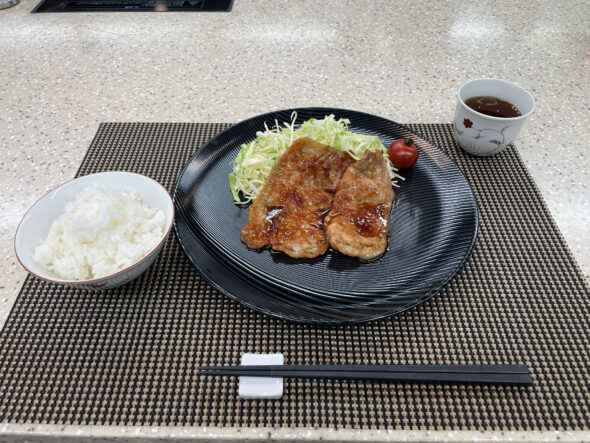
My CIP this semester has been at Taiwa’s La Carriere culinary school in Kyoto. La Carriere offers a variety of lessons (including dessert and baking tutorials), although I largely participated in group introductory cooking lessons conducted in Japanese.

La Carriere was a blast – it was calming and fun cooking and learning to make different kinds of dishes (and eating the product of our hard work felt so redeeming). It was a bit tricky to keep up with the Japanese lessons at times, but the teachers were understanding and helped us keep pace.

I would advise new students to not be afraid to try activities that look intimidating. I would also say it’s important to keep your expectations realistic when choosing your CIP activity. I expected the CIP of a cooking lesson to be an incredibly social place where I could meet new friends, but as it turns out the fast-paced environment of an instructor-led lesson isn’t the best place for that. Nonetheless, I had a great experience and a blast at La Carriere.

Blake Chaplin : Klexon Language Circle

Website: https://www.klexon.net

To the ambitious, future KCJS students,

For my CIP, I have been attending the Klexon language circle, based out of the Kyoto women and gender centre (ウィングス京都). Klexon is a circle designed to help people improve their English and attracts a surprisingly wide array of people from across Kyoto. There were freshman, all the way to senior salarymen at the meetings, so it was a real opportunity to talk to a wide cross-section of Japanese society.

The language meetings are 2 hours long are generally split into 2 parts. The first half of the meeting consists of a ‘moving chair’ approach, where each member is given a sheet with a topic, and the goal of the activity is to collect names and opinions on the topic by speaking in English. These have varied massively, all the way from ‘international study’ to ‘failure’. People are generally receptive to the topic, though I have found that people tended to stray away from the negative ones, or talk about something else. This makes sense since many people will come to Klexon after working all day, and negative topics are often draining. I have been able to make relationships with some of the regulars, which has been rewarding, and had given me insight into the life and thoughts of local people. Though must of the CIP is conducted in English, understanding Japanese allows me to help people articulate their thoughts better, as I can work backwards from their thoughts.

The second half of the meeting is based around a group activity, where we are supposed to discuss the topic, as well as find out more information about each other. In my experience, this often derailed into us talking about each other or current events, as this was most interesting. Honestly I liked this part most, just because the group setting made it hard for the local Japanese people to translate keigo (敬語) into English, and so it made for more open dialogue and fun conversations. I honestly learnt a lot about Kyoto from this, and would recommend Klexon to anyone who is looking for friends and information about Kyoto, but might not have confidence to speak fully in Japanese.

Overall, I would recommend Klexon. What I learned from locals was interesting, and I think, if used correctly, could allow a lower-level Japanese speaker to integrate into Japan more than otherwise they would. (Meetings are also free for native Anglophones, and events are cheap to participate in!)

– ブルイク


Karinne Lorig: Klexon

While I had been to Klexon once before during last term, I began to go regularly once the embroidery class I had been attending went on break until summer. Klexon is an English practice circle for those who wish to have an opportunity to practice their conversational English with others studying the language as well as with volunteer English speakers from Anglophone countries. The group attracts a wide range of students and young adults from both a wide area of Japan and abroad, so to accommodate the resultant range of scheduling needs, the group meets Tuesdays at 19 o’clock, late though that is. Having never been to any practice group other than this one before or, in fact, provided help to those studying English as a second language in any official capacity before, I quickly found myself making adjustments both in the way I was speaking and in the way I was listening to things in order to better facilitate communication. I began to enunciate my speech a little more than I usually do and be cognizant of how opaque certain turns of phrase and idioms can be to people not from my own culture. Similarly, as I continued to go, I became more and more aware of the types of pronunciation distinctions that can be difficult for native speakers of Japanese beyond the oft-cited ‘L’ and ‘R’ pronunciation such as the subtle vowel distinctions that differentiate words such as ‘machinery’ and ‘missionary’ and listen carefully to try and suss out which was which.

But it wasn’t just the thing I was doing that helped expand my horizons. Though it surprised me initially, it’s the broad variety of people that I’m able to meet by going which keeps me attending Klexon. Through going there, I’ve been able to have conversations with many people who are not only interesting, but come from wide ranging backgrounds and professions—such as dolphin trainers, specialists in British history, and even current and former Doshisha students—whom I likely wouldn’t have had the chance to meet otherwise.

Sol Lee: Ceramics at Asahiyaki Studio

Before I arrived in Japan, I knew that I had to pick an activity for the Community Involvement Project, otherwise known as CIP. Because Kyoto has a long history and culture of artisans, I decided that I wanted to involve myself in the arts in one way or another. There were so many options but the reason I chose ceramics in particular is that I had thoroughly enjoyed my experience when I took a ceramics class back in my senior year of high school. I honestly would not have minded choosing something I had never done before but at the same time, CIP was something I was committing myself to for the entire semester. As a result, I chose something that I had at least some exposure to so that I had a clear idea of what I was getting myself into.

Now, I knew that taking pottery classes was going to be a bit expensive but I was willing to pay up to a certain amount. With the help of my Japanese teacher, I found two that I thought were reasonably priced and made plans to visit them. The cheaper of the two, unfortunately, was not taking students as the teacher was not in Kyoto that often. As a result, I ended up at the slightly more expensive and slightly further studio called Asahiyaki in Uji, Kyoto. It is about an hour commute for me but Uji is one of the most serene, and most beautiful places that I have ever been to that I feel it is always worth the time to make that trip. To be completely honest, I buy a bento and sit by the Uji River every week before pottery class to reflect on my life and my experiences (lol).

Learning to throw pots at Asahiyaki has led me to many interesting observations. The first thing I noticed was how casual the teacher was with me. Knowing Japanese society and having studied some keigo at this point, I found it very interesting that the teacher omitted all forms of desu/masu and spoke as if I was a friend. However, I noticed this with not just myself, but with the other students as well — and by students, I mean the elderly. The pottery classroom is mainly full of adults and the elderly, which, in retrospect, makes sense. After several weeks of going there, I believe that I am the only college-aged student that goes there regularly. But I digress. My teacher is young, but she is definitely over a decade older than me. She definitely has the upper position in not just status, but also age and therefore, can speak casually with me. What really surprised me was how casually she spoke with the elderly and how they responded in polite form. This led me to believe that in a classroom, no matter the age, the teacher is the one with the most power — the most “erai” person. But still, being that casual with the elderly — some parts of me believe that that is really just my teacher’s friendly personality.
Having grown up in America, many of Japan’s customs and culture is somewhat of a culture shock because the two countries are so different. However, as a Korean, I often notice many similarities between Japan and my own culture and many of these differences suddenly become “understandable” to me. But that does not mean that I fully understand how Japanese society works so studying pottery at the Asahiyaki studio has definitely been a meaningful experience for me. It has allowed me to see a classroom dynamic that is not only different from the traditional school setting, but also different from America’s classroom setting.

Karinne Lorig: Traditional Embroidery

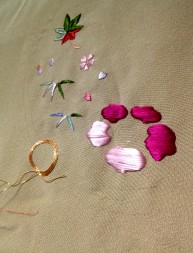
Camelia, sakura, bamboo leaves, a maple leaf and some spheres.

My work as of the second to last class.

The thing that shocked me first about my embroidery classes was the schedule. We met six times in the term, but the dates were spread out erratically throughout the season on seemingly random Wednesdays. Of course, that was far from the only thing that wound up shocking me. Honestly, I hadn’t expected the class to have nearly as many students as it did. I had expected at first that it would be closer to the knitting and sewing classes targeted at older ladies I had seen in the back of local yarn shops, no more than ten or so beginner students and a teacher sitting around a single table. The embroidery class easily had more than twice that many students and was set up over an area roughly equivalent to the entire aforementioned yarn shop. A brief glance over some of the other student’s work quickly told me why: the class was in no way exclusive to new learners and many—if not most—of the other students were quite experienced already.

I gradually came to understand not only how to embroider maple leaves, cherry blossoms and camellias, but also about the way in which the other students use the class as an opportunity to meet with one another and discuss everything from their plans for their embroidery to family to young people who don’t know how to use keigo. Even through the age barrier, I have been able to have conversations with and learn from the people around me and wound up understanding far more about both embroidery and their lives and observations about society than I otherwise could have.

Jaime Guzman : Aikido

For my CIP, I practiced aikido at aikidokyoto located a few blocks away from Senbon dori and Imadegawa. From learning how to fall and do shikko to having instructions taught to me in a strange blend of Japanese and English, the experience for me was a fun and interesting one. Although I’ve only been able to practice for a short amount of time, I felt like I’ve learned a lot from both of the sensei, and of course was always looking forward to eating McDonald’s after practice on Tuesday. But in all seriousness, I have very little regrets about my decision to try out aikido. The 45 minute walk to and from the dojo may have felt long some days and the lack of interaction between the other students and me outside of lessons were probably not ideal but that did not take away from my experience at all.

Taking aikido at an actual dojo, in Japan, made me get a better glimpse at what practicing martial arts in a more official setting, and not a college setting, is like. For example, when I did karate back at Amherst, we had to use the gymnasium and did not have an official dojo so we never had to do anything like bowing to the dojo when entering or getting on the mats. We also rarely had to sit in seiza, the only times were when we were late and had to wait for the sensei’s permission to join the class or during promotion, however at this aikido dojo we it felt as if half of our time was spent in this position. When we are waiting for the sensei to start class, when we are bowing to the sensei, when we are observing a new technique before practicing it ourselves, and even for when we do certain techniques, we are required to sit in seiza. At the beginning of the class, my foot would usually feel an unbearable pain but as the class goes on sitting in seiza became a little bit easier. Of course when I walk the 2 miles back to my apartment, I am still able to feel the pain in my ankles but after a certain amount of classes even that became enjoyable and part of the aikido experience.

One main thing I noticed in my aikido class is that when there is a new student that has only been there for about 2 months or so, they’d always pair them up with a much more experience senpai wearing a hakama. For the first few classes, I was rotated among the same senpai until they were certain that I could do the majority of the basic moves before having me actually allowing me to learn techniques. When I did practice techniques it was usually with the same people until recently and I noticed that each senpai have their own way of showing techniques. Some are a lot stricter and forceful while others go through it slowly and walk me through every move. It’s interesting practicing with different people because some of them are fluent in English, some are native French speaker who sometimes try to talk to me in English and Japanese and others only speak Japanese. However the chance to speak in Japanese for me is very limited because I rarely get to speak to anyone after class and when I have it was for asking how to get my gi or a receipt and the person I asked always responded in English.

I’m very grateful for my time at the dojo however I feel as if I have not really been able to fully integrate into the dojo community. I walk there, practice, and then walk like many other people do. On Thursday, there’s always another class following mine and on Tuesday, after we clean, everyone is quick to zoom out of there. I may not be able to talk much with anyone there but at least I’ve learned a lot about aikido and some vocabulary for the parts of the body that I never actually remembered before.

ハイメ・グズマン:合気道京都

僕はCIPのために合気道を選びました。合気道をしたことがありませんでしたけれども、とても面白そうで、合気道についての本を持っているから、してみたかったです。僕は一週間に一、二回合気道の道場に行きます。このレッスンは基本技クラスといって、火曜日と木曜日に行われます。そして、二人の先生がいらっしゃいます。火曜日のクラスはモルガン先生が担当しますが、木曜日のクラスは岡本が担当します。今、僕はまだ基本的な動きを習っています。時々、とても難しいと思いますが、とても楽しいと思います。アマースト大学で空手を一年間しましたが、合気道ではよく正座をします。でも、合気道のほうが好きです。