Raaef Ahmed: Fly Dance Studio

Igloo – Kiss of Life

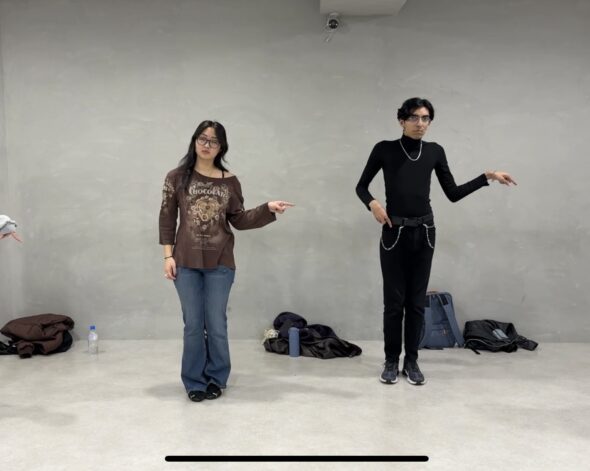
For my CIP, I took k-pop dance classes at a dance studio every week. I went to the same two lessons each week, one with a friend, and the other by myself.

It was a lot of fun; I loved learning new choreo each class, and just getting to continue doing dance during my study abroad. Also, since I had the same two instructors each week, I was able to build a good relationship with both of them.

At first, especially in the class that I just went to on my own, I was a little intimidated, because there were some regulars that the instructor already knew well, and trying to add to their conversations with the added pressure of the language barrier was pretty hard. I think the solution is to start with things that you already have in common (in this case, anything about k-pop), and then over time you’ll become comfortable enough to talk about whatever comes to mind. Everyone is also super welcoming, they were always happy to reexplain whenever I didn’t understand something, and never got impatient when it took me some time to figure out how to say what I wanted to in Japanese.

Sasha Volakova: Volleyball Club

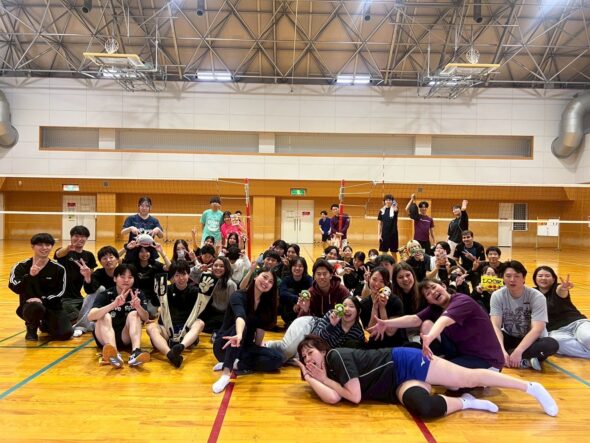
My CIP was volleyball: I joined several clubs in Kyoto and played volleyball regularly with locals. After practices, we would sometimes grab lunch or dinner together, and occasionally go for group outings. 

For me, it was a great way to connect with a wide range of people – from same-age university students to office workers, from Japan or various countries – and feel as a part of a larger community in Kyoto. I also progressively got more comfortable with managing unfamiliar and stressful situations, as I was never judged for making mistakes or “sounding funny”.

If you plan to do volleyball, I strongly recommend checking several groups for practices, and always be proactive in conversations. People may seem shy to start talking, but often they are genuinely interested in getting to know visitors from other countries!

Daniel Anton: Zen Meditation


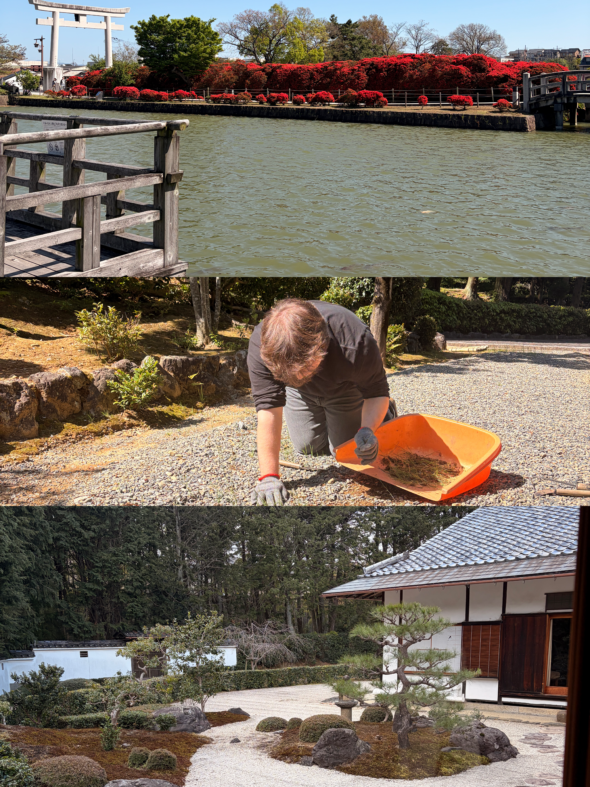
My CIP activity involved a mix of group lessons and volunteering at Nagaoka Zen-Juku, a rinzai-sect zen training center in Nagaokakyo. Weekdays would be spent cleaning the temple in a practice known as samu (作務). Weekends would involve participating in 3-hour zen meditation sessions with a lecture from Hasegawa-san, the head monk of the center, on key topics in Buddhism. Because this was a center and not a traditional temple, I felt the rules were more relaxed and I was able to make more mistakes than when I had practiced Soto-zen in America.

In an age where we are constantly asked to be “always active” (whether it be school, career hunting, or social media), it can often feel like you’re lost in a sea of anxiety. For that reason, I was looking for a place where I would be able to increase my cultural understanding while also practicing to manage my anxiety in a new and unfamiliar country.

Overall, through the CIP I was able to have many great experiences not just with Hasegawa-san, but others who studied at the temple as well. This involved always saying “yes” to when Japanese people at your CIP invite you to things outside of the CIP! The lectures were especially intense, but it was the perfect CIP to increase my understanding of the language. I would recommend to come into your CIP with the understanding that you won’t get everything right away, but to not let that discourage you from taking a leap into something new!

Jack Garza: Taiko Drumming at Fujinomori Shrine

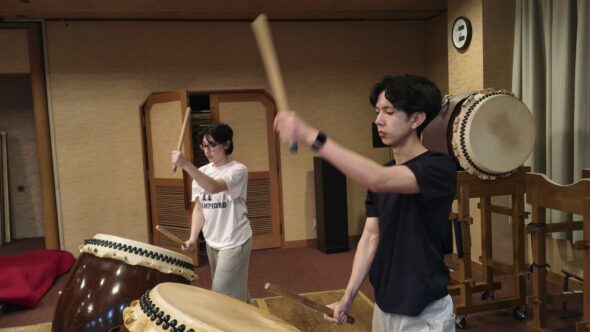
For my CIP, I participated in the 藤森太鼓保存会 (Fujinomori Taiko Preservation Society) alongside another KCJS student. We attended weekly practices at Fujinomori Shrine, practicing taiko drumming for about an hour and a half with around 15 other members. Taiko practice is both physically demanding and mentally engaging, requiring coordination, rhythm, and group synchronization. The experience is very hands-on, with a strong community dynamic where you learn by observing and practicing, and it gave me a better understanding of how traditional arts are passed down. I’d highly recommend this CIP because it’s immersive and the members are very welcoming. One piece of advice is to not be afraid of making mistakes (even experienced members do!) just stay consistent and focus on improving over time.
Lisa Lu: Volunteering at Demachi Salon

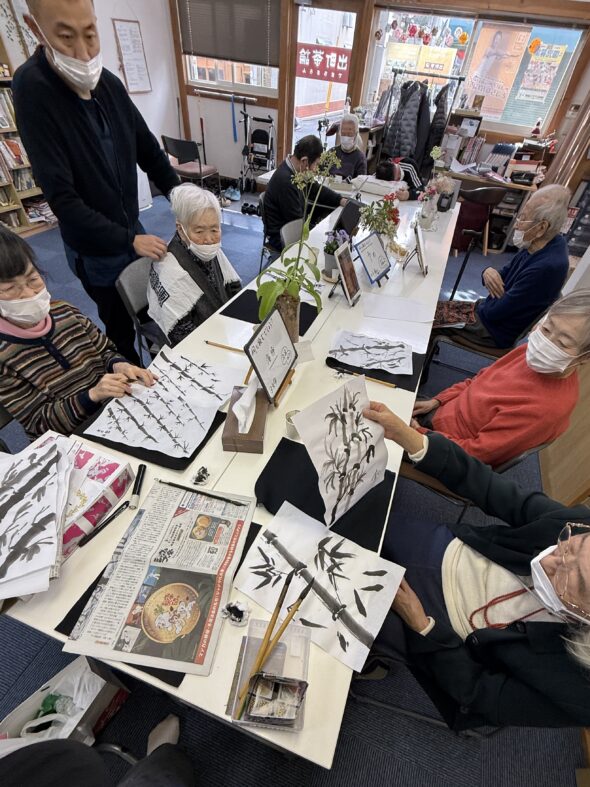
 At Demachi Salon, I led activities (Chinese, English, Ink painting, etc.) for a group of elders that come to this elderly care center. Throughout the 2 hour session, we would start with a casual chat while they do their daily health check ins, then I lead the activity of the day, we go on a virtual trip to places in Japan, daily exercise, and games at the end. I really had a lot of fun talking to the obaachans,and they were incredibly nice and warm to young people. The experience really made me appreciate the multigenerational connection. If you like interacting with or want to help elders, I think this would be the perfect place to practice your Japanese! But one advice would be to be aware that a lot of the elders speak Kansai dialect, which can make it hard to understand them at first.

Maxwell Maveus: Ikebana at Kadou-enshu

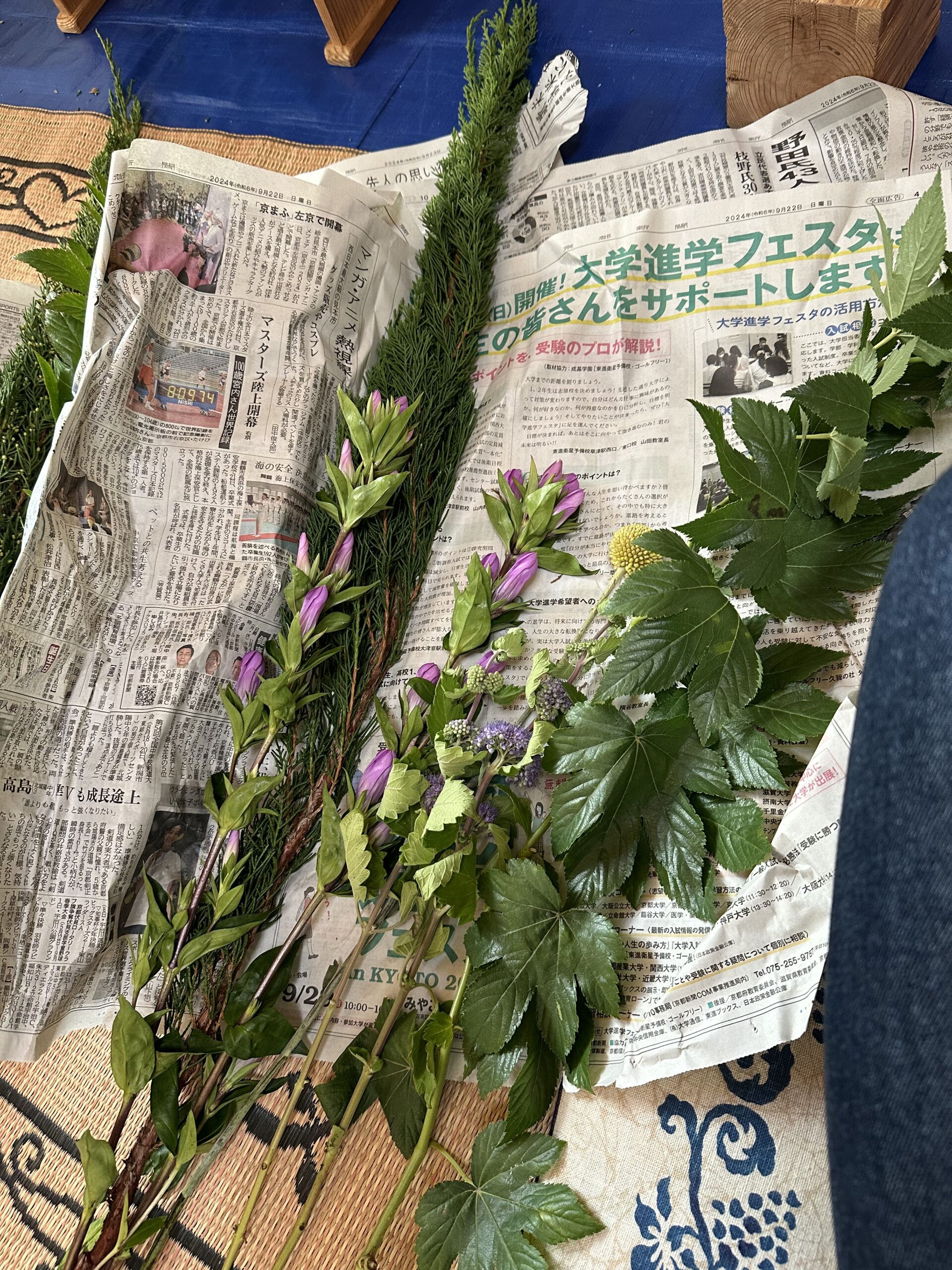
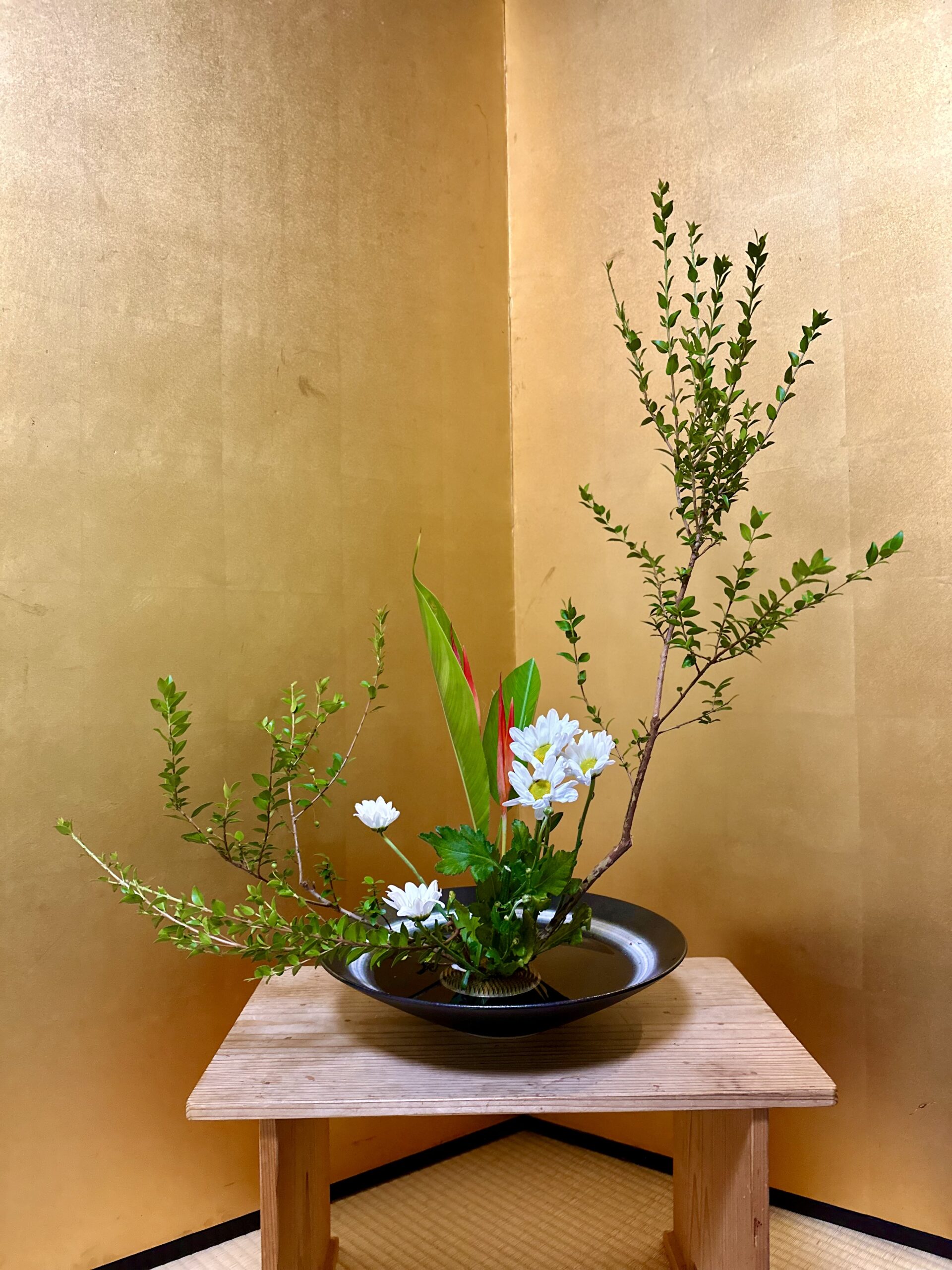
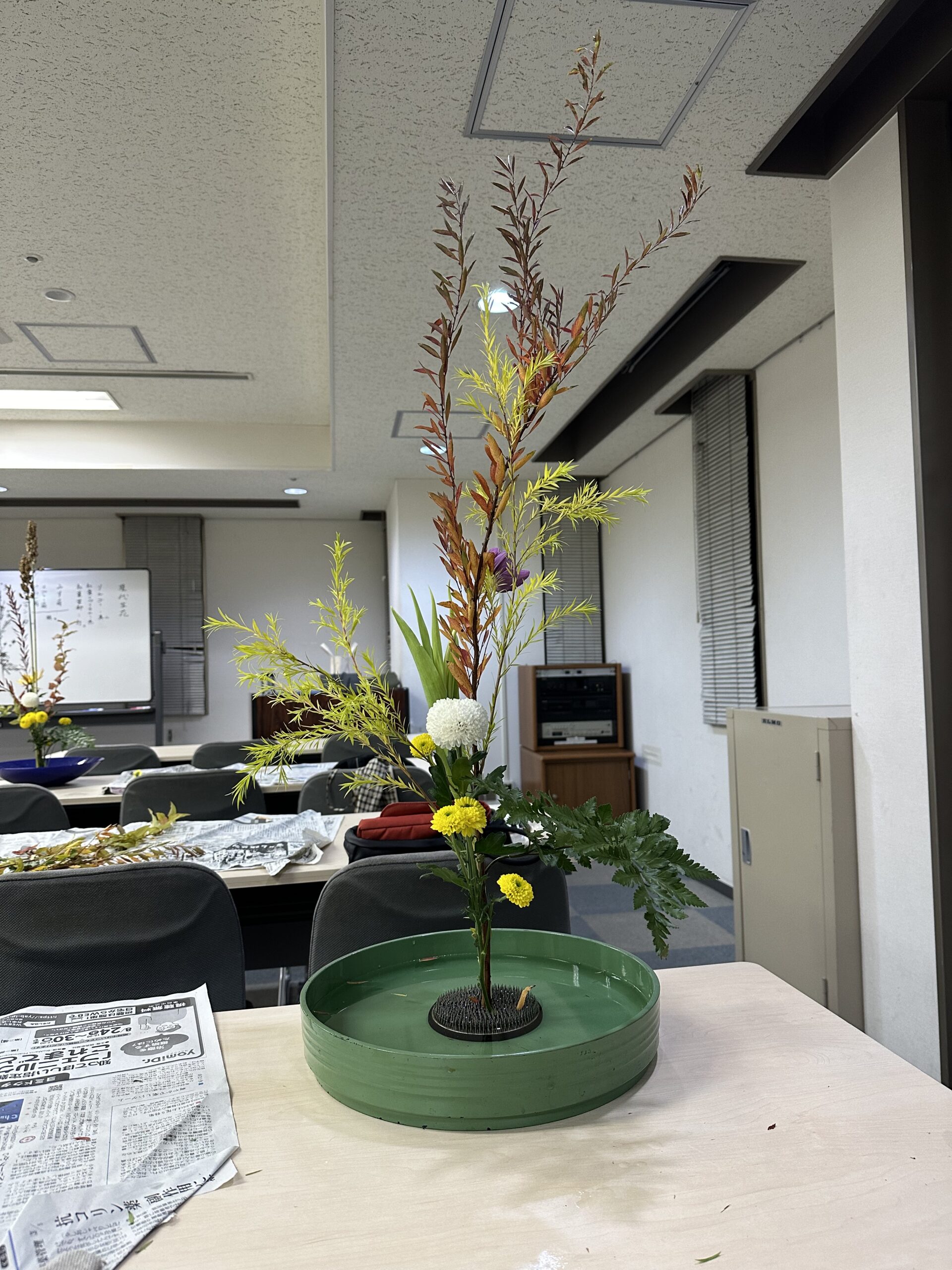
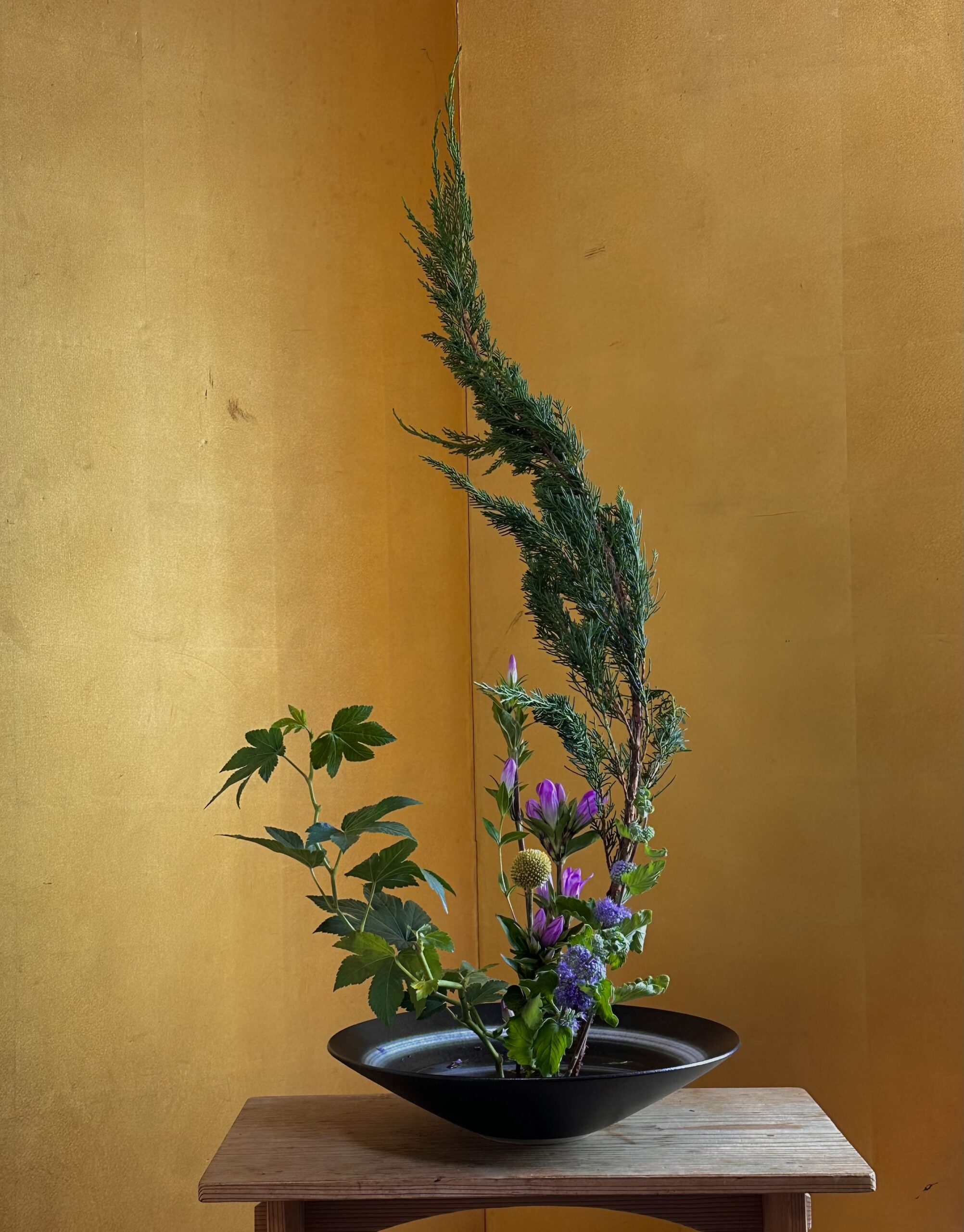
I practiced ikebana (生け花), the art of traditional Japanese flower arrangement, at the Kadou-enshu school under the headmaster Ken Ichiju Ashida. I primarily created works under the moribana style, learning how to prune and shape plant materials, ikebana’s components (shin, hikae, gyo, do, and tome), and some of ikebana’s philosophical bases. 

I had been interested in ikebana before coming to KCJS, so I was thrilled to have the opportunity to train under an ikebana master in Kyoto—let alone in private lessons in his home. My typical lesson consisted of 1.5 hours (that always sped by) of learning what each flower/plant he had for the day was, considering where everything should go, and placing the materials in the kenzan. The most invaluable component was the advice the headmaster gave me at the end of each session—he would carefully sit in front of my arrangement, make subtle changes while describing why he did them, and transform my amateur work into something beautiful. 

I advise all incoming students doing private lessons to acknowledge how kind most instructors are. I was scared to accidentally offend my headmaster by speaking up when I wanted to do something different than his arrangement chart he made for each lesson, but the whole time he encouraged me to do as I aesthetically saw fit! You will have so much more fun and grow closer with your CIP instructor if you aren’t afraid to be your (polite) self.

Lyla Normand: Volunteering at Mitsuba Kindergarten

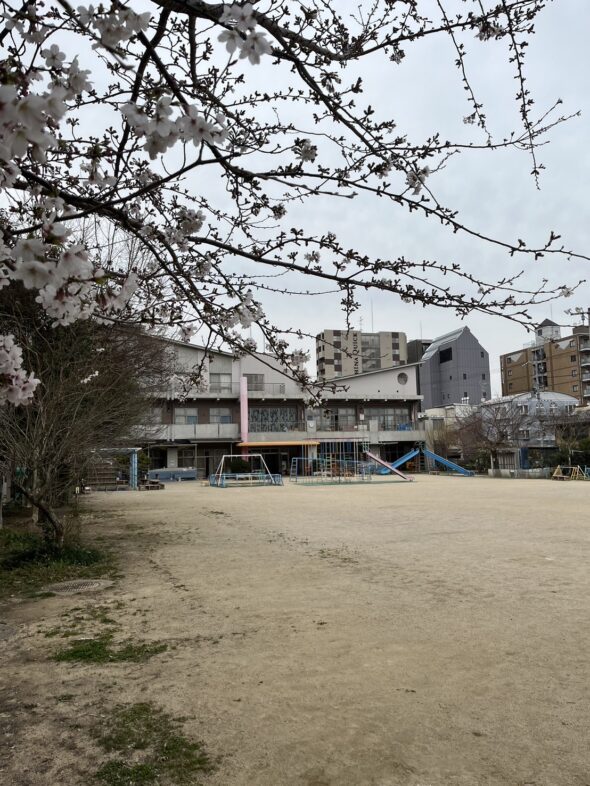
For my CIP I commuted to Mitsuba Kindergarten once a week to help out at the kindergarten for about 2 hours (from 2-4). The kindergarten is a 10 minute walk away from Doshisha’s Imadegawa campus so it was really convenient location wise. The kindergarten is not very structured and my job was basically to facilitate the kids’ play time for 2 hours. I usually spent my time doing puzzles with them, or drawing with them—essentially anything the kids wanted to do. 
It’s a really tiring job but it’s plenty of fun if you like kids. The 3 year olds were more shy so I was mostly approached by the 5 year olds to play. I’d recommend this CIP if you enjoy spending time with kids! It’s definitely rewarding but a very draining experience. I don’t think I learned much Japanese from this CIP but I made a few enduring memories with some of the kids that I’ll treasure. They’re very friendly children and I was expecting to have to try very hard to connect with them but they actually approach you! It was gratifying watching some kids open themselves up to me over the course of my visits. 

My advice would be to think carefully about what you want to get out of your CIP before you make a decision! I did enjoy spending time at the kindergarten but I wouldn’t recommend it for everyone. I didn’t learn a whole lot about Japanese culture or language from the CIP but I learned how kids minds’ work and how best to mediate their conflicts. I think you could transfer these skills to work at any kindergarten or institution with younger children.

Jack Johnston: Volunteering at Happiness Kodomo Shokudou

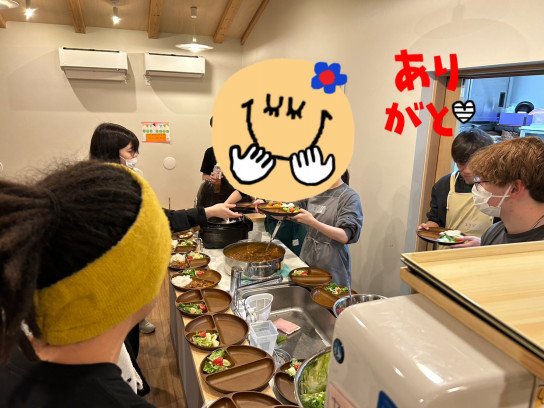
This semester I volunteered at Happiness Kodomo Shokudou, a children’s cafeteria near Nishioji Station! Every Wednesday I would volunteer from 3-8 PM by preparing parts of that evening’s meal, serving food, cleaning, and keeping the children occupied.

No one at Happiness can speak English, so this was a great opportunity for me to be completely immersed in Japanese for almost my entire day. I enjoyed getting to know the other volunteers at the cafeteria, as well as getting the opportunity to attend additional activities like strawberry picking.

For incoming students, I would highly recommend making an effort to get to know the children quickly and early on. For those with whom I didn’t interact within the first week or two, it became very difficult to talk with them. Likewise, this CIP is loud and engaging, so be prepared to interact with many different types of people!

Theodore Sternlieb: Kyoto University Hiking Circle

I participate in Kyoto University’s Hiking Circle. Although due to weather and field trips, I did not end up getting to go on any of the overnight hikes, I did actively participate in the more mundane events hosted by the circle. Groups of 6 or so would gather in the room which the circle had access to and do anything from make gyoza to watch the Rugby World Cup. Even though it would have been a great opportunity to camp out with the members, I still enjoyed getting to know them over the course of the semester.

Sillin Chen: Volunteering at Bazaar Cafe

I was recommended Bazaar Café  by my classmate as my CIP. Of course, since I do not have a high cooking skill that could be compared to a professional chef, volunteering at Bazaar Café basically equals to helping around chores like washing dishes or ironing aprons. Yet, when the kitchen is not very busy, other volunteers or regular staff are very willing to teach me using some special kitchen tools or allowing me to do some side works while preparing the orders.

Clearly knowing how poor my keigo is, I was very nervous on my first day. Luckily, Bazaar Café is a place where everyone is here to support each other, and thus keigo is not something mandatory even when you are speaking with the manager. Regardless of that, I was still able to learn some nuances in workplace culture. For example, there is a co-volunteer, nice middle-aged lady, who always greets me with “おはようございます” even though I usually go to Bazaar Café around 3 pm. Then my friends, also my co-volunteers explained it to me that in Japanese workplace culture, one would always greet his or her co-workers with “おはようございます” when starting to work. Besides, sharing snacks or small souvenirs after a trip among co-volunteers is rather common as a way to build up the relationship.

In addition to my new findings of unique Japanese culture, meeting different kinds of people at Bazaar Café is my best memory within these several months. As some of us might have known, Bazaar Café is like a harbor for minorities, LGBTQ, foreigners, and immigrants. It is also the reason why on my first day of work, the manager suggested me to not ask some sensitive questions on personal background. I then struggled a while on how to get into the group without being sure about what are the topics that I could talk about. To my great surprise (in a good way), they accept me naturally by leading me through the things I could help around and inviting me to share food. After around three weeks, although my co-volunteers are still trying to memorize my name as I was struggling on writing down everyone’s name, I was settled in the kitchen as well as I know where I should put dishes back.

I haven’t mentioned the details of my conversations with these lovely people because it might involve a lot of personal information. Nevertheless, if there is one thing I have learned from this experience, it is how to communicate with your heart. I know it really sounds like preaching or those old talks, but to treat other people with respect and trying to help whatever is within one’s ability range is never a wrong thing to do.