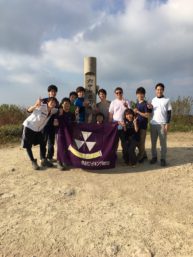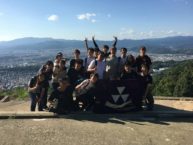
For my CIP, I decided to join the Doshisha Hiking Circle (official name is along the lines of “circle for people that love to hike”). My reason for joining was simple: I wanted an extracurricular that would provide a way to stay in shape. Of all the various sports I can play due to being partially blind, the Hiking Circle met at the most convenient time and location. Since it also would allow me to see Japan and get some fresh air on the weekends, I joined as soon as possible.
The meetings themselves are very calm and relaxed. Usually, I show up about 20 minutes early and get a few rounds of video games in with the other early members. This is a good way to practice casual speech and informal grammar. When the meeting proper starts, we check the weather. If it is raining, we do some drills in the stairs. If it is a clear day, we do some running near the campus. The point of these drills is to build endurance for when we do go on a hike. That happens about once a month, with those meetings taking up a good half of the day as opposed to the usual two hours. The length, however, it not just the hike, but of the shopping and sometimes dinner that we do afterwards.
Moreover, the members themselves are very accommodating. While I did use (or rather attempted) to use the correct polite speech style when I introduced myself, I learned in hindsight that this was probably not necessary. In general, they welcome any study abroad student (there are four others with me) if you routinely show up and keep in contact. The President Fuji-san (yes, that’s his name), was very helpful by always carrying an electronic dictionary to make sure I understood both important hiking instructions necessary for my survival and the college student vocabulary the members use. Later, I learned that he carried this because he is trying to learn English. As a result, we are helping each other learn new languages.
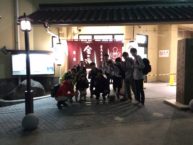
Ultimately, I would say the Hiking circle is a good way to develop an understanding of Japanese culture. Be it the simple “こにちは” s to fellow hikers on the trail or the trash talk in games of smash, you learn how casual Japan works and feels. In addition, I learned about various social gatherings. This ranged from participating in a 飲み会 (a drinking party) to going to a hot spring. In each instance, I learned the procedure and etiquette for each event. Joining this club has made me smarter, happier, and healthier during my time in Japan.