
This past semester, I decided to continue studying Koto, which I had been playing for roughly half a year at my home institution. As a result, I initially came in with the expectation that lessons would be pretty much the same as my typical group lessons.
In the end, I believe private lessons provided me a unique opportunity to not only learn more technical tricks but also to gain a deeper understanding of music and discussing music in Japanese. Reaching those realizations, however, was initially very difficult. On my first class, especially, I was amazed that after all of my hours and hours of studying Japanese, I didn’t understand a word my teacher said. I later came to realize it was because she used Kansai dialect. If she hadn’t been playing the Koto with me I would have had no idea what she was asking me to do. I was overwhelmed, and even wound up making silly mistakes like saying 行ってきます(ittekimasu=I’ll be back, but used only when you leave your home) after class. However, this language barrier forced me to listen even closer and to constantly ask questions, which thankfully made me more comfortable with my teacher.
Around half-way through the semester, I met a Japanese friend who is studying English and preparing to study abroad next semester. He takes really diligent notes on all the English phrases, idioms, and words that he hears pretty much all of the time. From looking at his notes and its benefits with his language study, I figured I would give it a try for my CIP. It was by far one of the best decisions for my studies. Not only did it let me keep track of new vocabulary and phrases, it helped me pay closer attention to general speaking, be unabashedly inquisitive when I didn’t understand, and opened up different conversations that in turn taught me interesting everyday objects and phrases. For example, tying string into a bow or “bunny ears” is called 蝶々結び(chyou chyou musubi) or a butterfly knot. During my newfound confidence I also began studying Shamisen. This new study unexpectedly lead to a plethora of conversations about different materials, finger and plucking styles, and words to describe the moods associated with certain note changes.
Through my CIP I’ve been able to understand far more Kansai words likeもういっぺん, わからへん、ちゃう、ええ instead of いい、and so much more. Currently I’m working on 春の海 (Haru no Umi), a very difficult traditional koto piece, and look forward to learning more about the different cultural and linguistic words and phrases associated with traditional Japanese music.
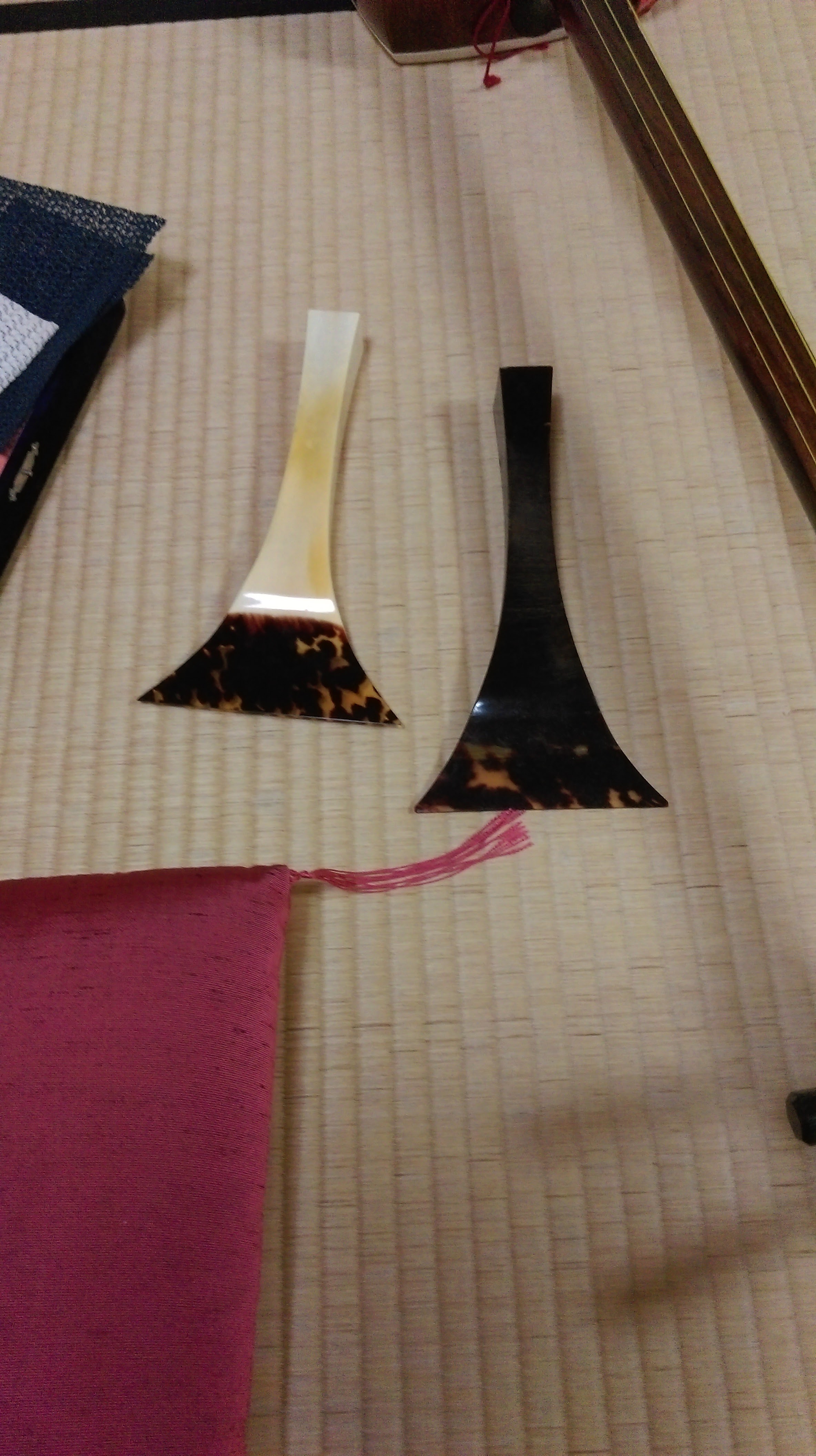
Two of my Sensei’s more expensive 撥(ばち)or picks for Shamisen. The white one is made of elephant tusk and tortoiseshell.
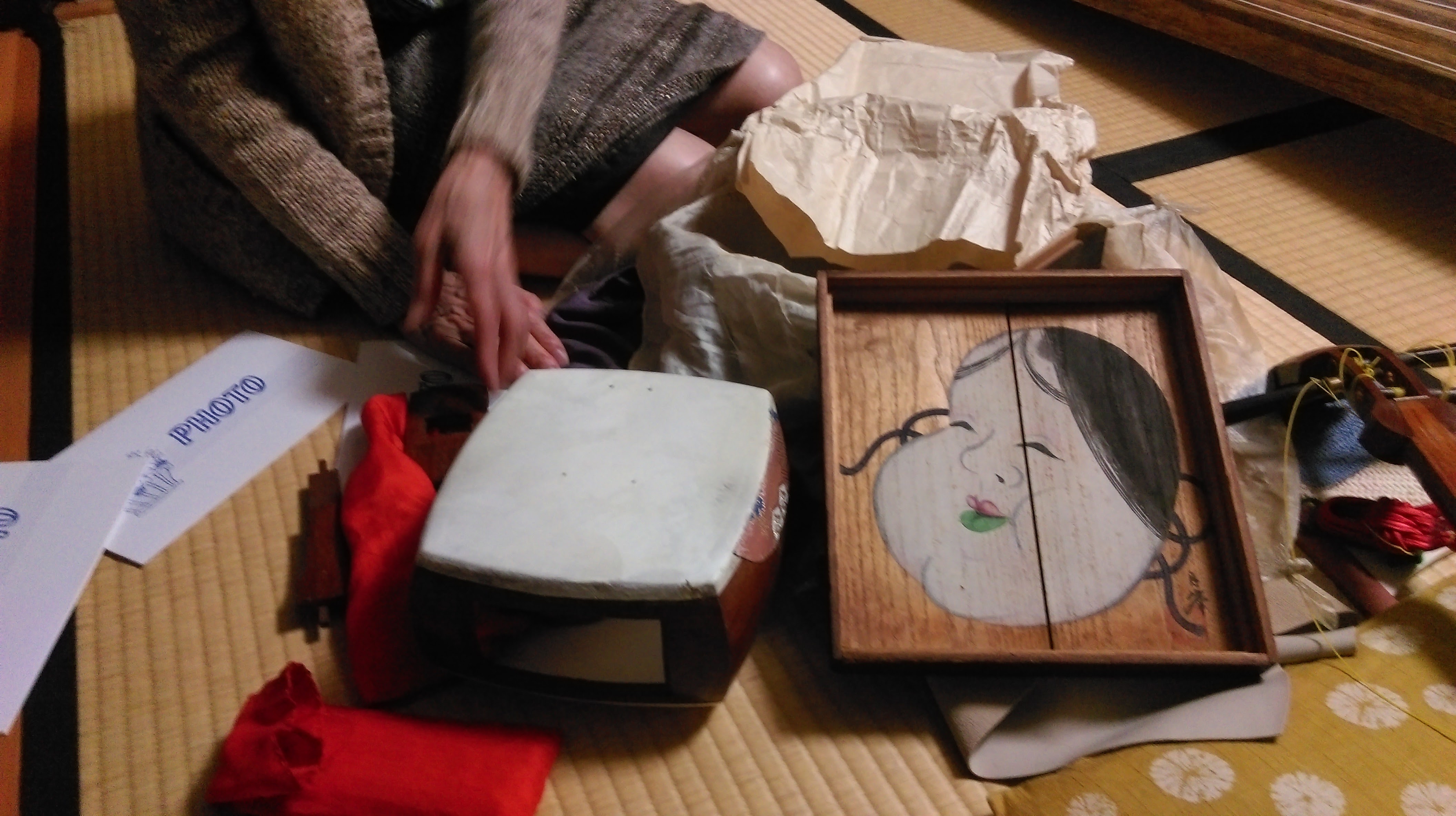
This is an antique shamisen from the the Edo period. The face painted is an お多福(おたふく)面 or mask of a homely woman.
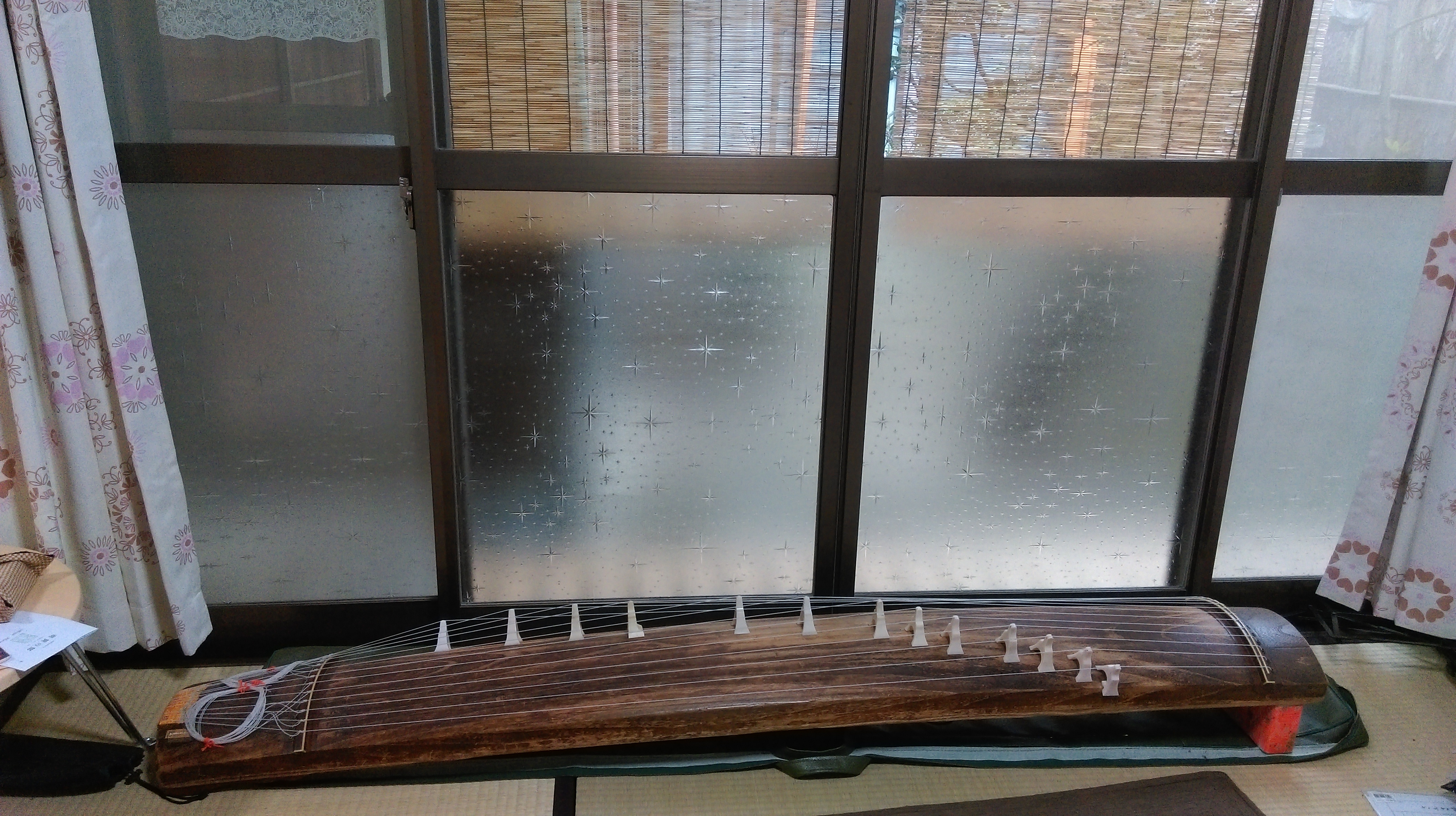
This is the koto my sensei lent me to practice throughout the semester. I have it in my 和室(わしつ),or Japanese style room, in my homestay.