As I have been attending the children’s services at Doshisha Church, more and more I realize that there are typically more adults who do not bring children at the service, than there are adults who are actually bringing kids. Although it may appear to be sketchy, rest assured that most of these adults are staff members who help out before and after the service—handing out flyers, setting up the projector, helping to carry in the keyboard, and such—but still, I decided in my mind that there must be something that these adults are getting out of coming to the children’s service every week. In my curiosity, I decided I would interview three adults whom I regularly meet at Doshisha Church every Sunday.
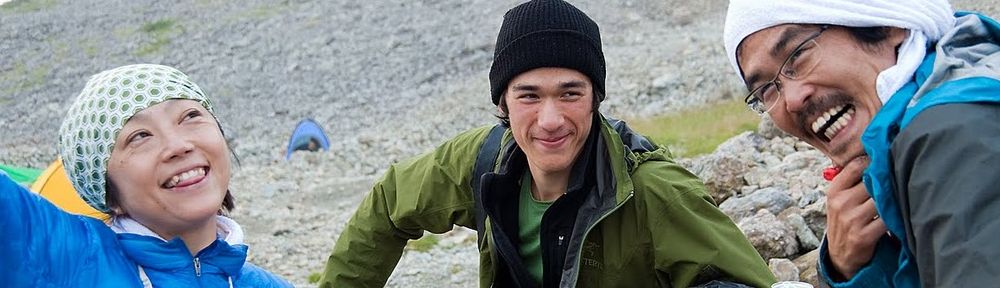
I interviewed two staff members and Doshisha Theology students, Shimiri and Noyuri, and one adult who did not have children, but regularly came to the services, Ms. Sekiyama, just to see why these people attended the services, and to find out what they were getting out of it. When I interviewed Shimiri, she told me that one of the requirements for Theology students at Doshisha is to run the children’s services, so when I asked her why she continues to come, of course her answer was “I come because its my job to come.” However, when I pried for what she got out of coming to the services, she said her favorite part was playing with the children, and that she seemed to become naturally energized because of them. From Shimiri, I learned that she thought that three year-olds and eleven year-olds who attend the services should not be given the same activities to do, and if she could change it, she would. As for Noyuri, although she got involved with the children’s’ service because she is a Theology major, she said she knew the experience would “be helpful in the future.” She shared with me that she didn’t like children before, but now she loves them and thinks that they’re cute. Noyuri also said that she thinks its great to get to hear sermons from people other than Doshisha’s head pastor, she loves being able to gain spiritual peace through the easy to understand message, and that learning about the Bible along with the children makes her think that “God is sweet and kind, but also strict at times.” I was thrilled to hear that although her participation in the services was not initially her choice, she still was able to feel that she had grown and received something positive from her experience as a staff member. In Ms. Sekiyama’s case, when I asked her what she has enjoyed about coming to the children’s service, she said that “the sermons are easy to understand—I was able to become like a child!” When I asked more about that, she said that Jesus said in the Bible that those who will inherit the kingdom of Heaven must first become like children, meaning pure in heart; Ms. Sekiyama said that attending the children’s service helps her to do just that. She said that it helps her to prepare her heart, and quiet her spirit to become like a child before she dives into the adult service later in the morning. If she goes to the adult service straightaway, she says, her heart does not feel quite ready yet, but if she attends the children’s’ service first, Ms. Sekiyama says her heart is prepared to receive the message the pastor will give in the adult service.
As a non-native Japanese speaker, I certainly understand enjoying the children’s service simply because it is easy to understand. As the adult service can be—more times than not—difficult for me to comprehend, the children’s service is given in simple Japanese, with a message that all ages can benefit from. Through my experience coming to Doshisha Church every week, I’ve learned that being with children, playing, and learning the things they are learning all have great benefits for the adults who participate, including me!
My experiences playing the violin at a church in Japan have also been drastically different from my experiences participating in the praise band at my church in America, Binghamton First Assembly of God. Namely, the way of communicating and scheduling when someone will play is quite different at Doshisha. Every month a small group of staff members meet to schedule who will be in charge of music each week, then that schedule is passed out to staff members later. In America, there is a website that the praise band uses allowing everyone to input whether or not they will be free to play the date they are scheduled for. As music for the services at First Assembly changes week to week, the website allows for music and schedules to be sent out easier; however, at Doshisha Church, the music the children’s service uses stays the same week to week, reducing the need to use a more complex scheduling website. The genre of music played at Doshisha was also a drastic difference from the church music I had become accustomed to in America. While the Christian Alternative Rock I played in Binghamton had been used at times to stir up the congregation into praising God openly and loudly, I felt that the music at Doshisha was used in a much calmer way to aide the congregation in praising God through softer means.
I learned that in my CIP I had to be open to learning about a new way of doing things using my interests. Instead of comparing my accustomed way of doing things with the staff at Doshisha’s way of doing things—causing myself a great deal of frustration in the mean time—I found that it was best for me to realize that this culture is not worse or better, it is simply different from my own; in that realization, I allowed myself to try new things, to create new relationships with people I never imagined I would meet, and to learn about the world in a new and profound way. Playing the violin at Doshisha Church’s Children’s Service as my CIP has been a great experience!