Maxwell Maveus: Ikebana at Kadou-enshu

I practiced ikebana (生け花), the art of traditional Japanese flower arrangement, at the Kadou-enshu school under the headmaster Ken Ichiju Ashida. I primarily created works under the moribana style, learning how to prune and shape plant materials, ikebana’s components (shin, hikae, gyo, do, and tome), and some of ikebana’s philosophical bases. 

I had been interested in ikebana before coming to KCJS, so I was thrilled to have the opportunity to train under an ikebana master in Kyoto—let alone in private lessons in his home. My typical lesson consisted of 1.5 hours (that always sped by) of learning what each flower/plant he had for the day was, considering where everything should go, and placing the materials in the kenzan. The most invaluable component was the advice the headmaster gave me at the end of each session—he would carefully sit in front of my arrangement, make subtle changes while describing why he did them, and transform my amateur work into something beautiful. 

I advise all incoming students doing private lessons to acknowledge how kind most instructors are. I was scared to accidentally offend my headmaster by speaking up when I wanted to do something different than his arrangement chart he made for each lesson, but the whole time he encouraged me to do as I aesthetically saw fit! You will have so much more fun and grow closer with your CIP instructor if you aren’t afraid to be your (polite) self.

Nikolas Martin: Weaving

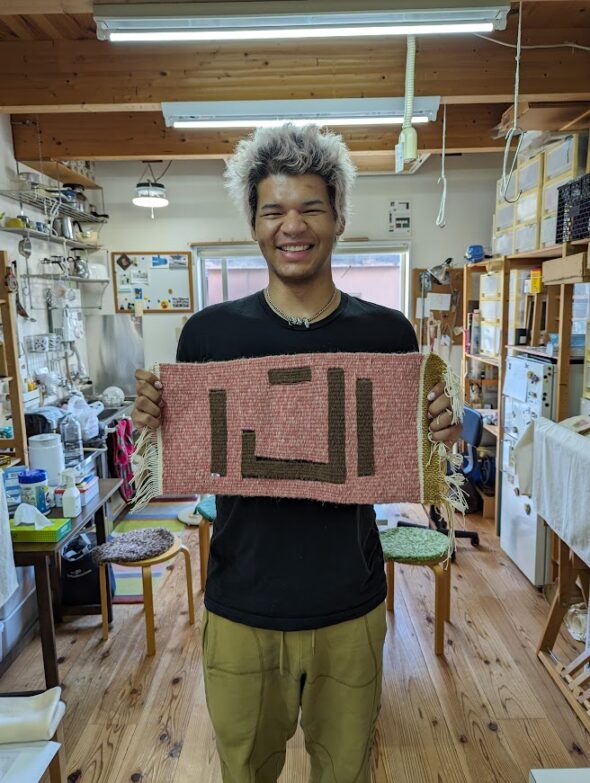
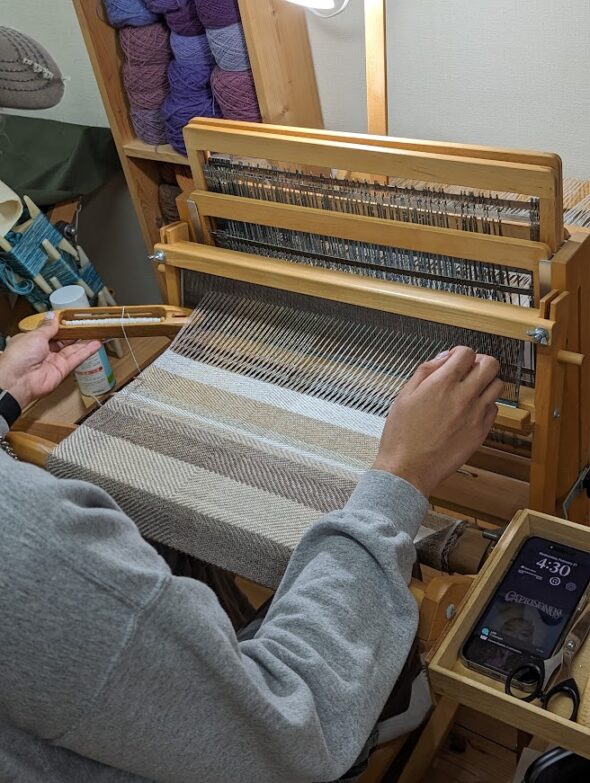
 I did my CIP with Kawasaki-sensei, a renowned fiber artist in Kyoto, where he taught us how to weave in his studio. From scarves to mats, Kawasaki-sensei and his wife Yuri-sensei, taught us everything from the basics to more advanced techniques for weaving.

I spent ~5 hours a week with them learning how to weave and it was defintiely one of my highlights of being in Japan. Kawasaki-sensei and Yuri-sensei are probably two of the nicest people I have ever met; always showering us with compliments and spoiling us with snacks every time we went (they were indeed delicious!).

For anyone interested in weaving, textile, or fashion-related, DO THIS CIP!!! It taught me so much related to my field of interest while also being in a very supportive and comfortable environment. However, I do recommend anyone going into this CIP to do a little research into weaving related vocabulary in Japanese, as it makes those first few times easier and makes communication with the senseis smoother if they can understand what you are referring to or asking about. As I said, please do this CIP! And if you do, tell my senseis I said hi!

Jayden Fedoroff: Volunteering at Bazaar Cafe

For my CIP, I volunteered at the Bazaar Cafe, which is right down the road from Doshisha University. The volunteer work consisted of primarily helping out in the kitchen. I would wash dishes, clean up the kitchen, and during down time, I would chat with the other volunteers and customers.

I thought that volunteering at the Bazaar Cafe was very fun! The volunteers and staff are incredibly friendly and the atmosphere was very laid back. Some of the days, the cafe was very busy, and during those times I had to wash a lot of dishes and there wasn’t as much time for chatting. However, when the cafe became less busy, I was often treated to a free lunch and I got to have some very nice conversations with the other volunteers.

I would highly recommend this CIP to students that really want to practice speaking casual Japanese (and Kansai-ben.) The volunteers are very laid back and kind, so they’re very easy to talk to. However, I would recommend also checking what the available times are for volunteering. I volunteered on Wednesdays from 12-2PM, which is when the cafe would occasionally become busy. If you would prefer a time that is less busy, I would recommend volunteering in the afternoons (around 2-4PM.) They are also very accommodating, so if you can’t come in during your usual time, if you let them know in advance, you can just come in the following week or reschedule for another time that week.

Noah Bell: Kyūdo Lessons

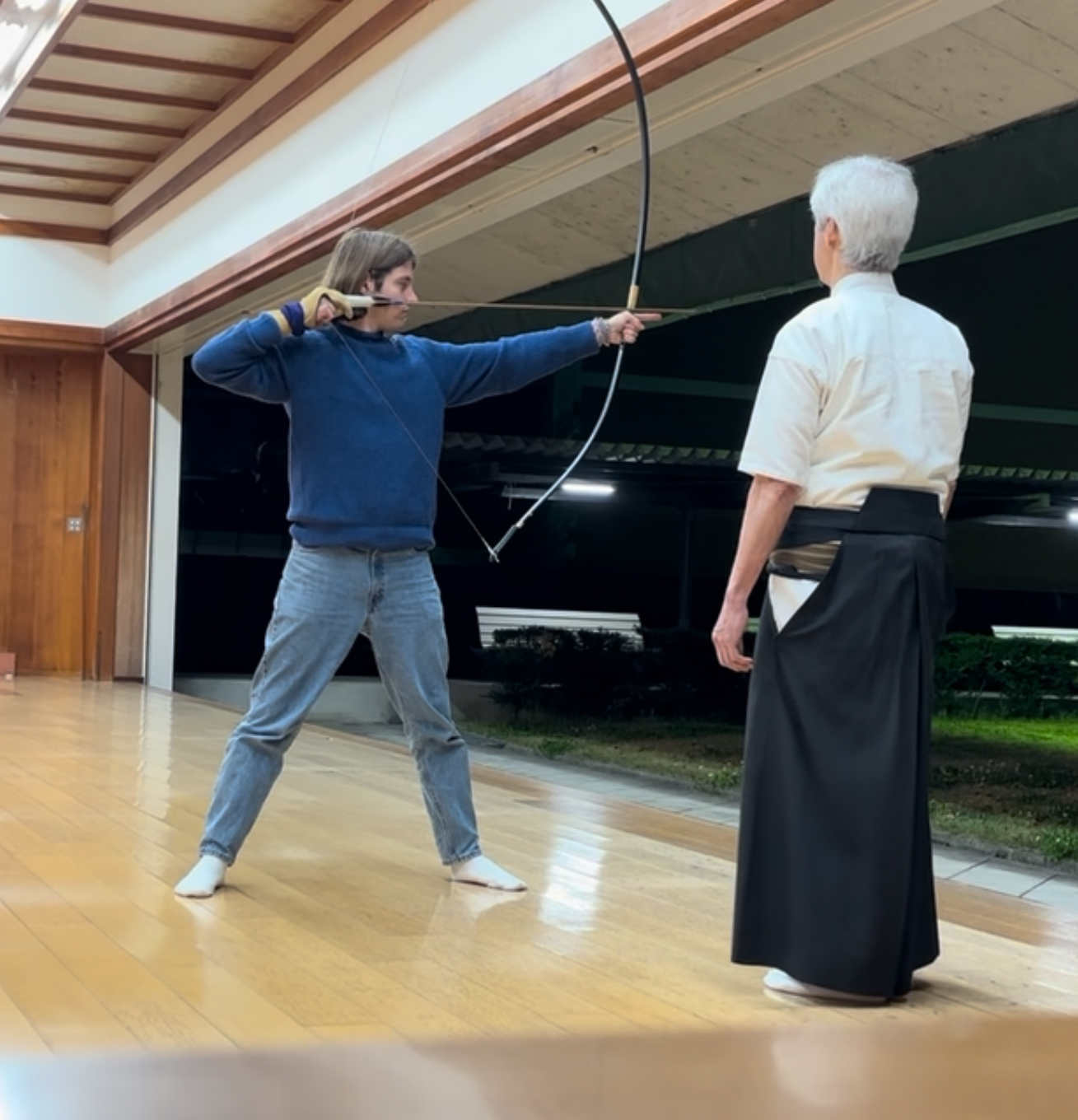
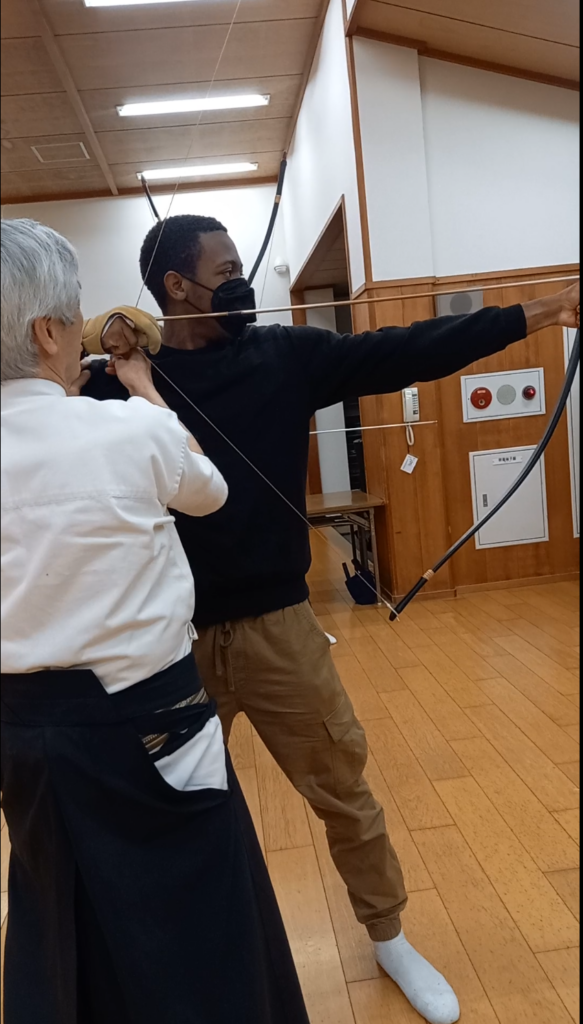
A picture of me about to fire an arrow

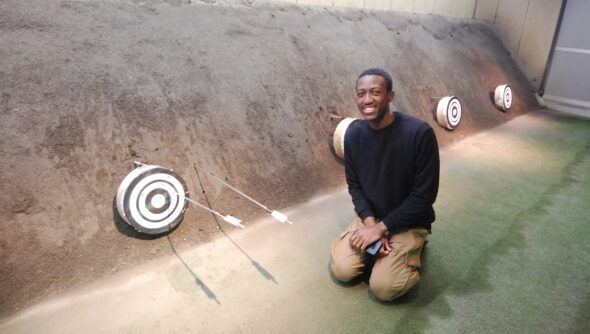
For my CIP this semester, I had the opportunity to learn Kyūdo under Furuya Sensei at the Kyoto Budo center. For about 2 hours each week, we worked hard to learn the forms and etiquettes of Japanese traditional archery. Our lessons were conducted entirely in Japanese.

The experience was quite challenging at times, but super rewarding since you could see steady progress each week. On top of that, Furuya Sensei was super kind and had a good sense of humor. He was hard to understand at times, but he knew we were trying our best and would show how proud he was of our effort which made me feel super happy and grateful.

If you’re looking to learn Kyūdo, my advice would be to let yourself make mistakes because you are going to make a lot of them. There are so many practices that everyone around you will already know, so don’t feel embarrassed if you mess up or get corrected as it’s all part of the learning experience. Also, I would say to try not to worry too much about your success in hitting the target. KyÅ«do, like many Japanese traditional arts, is about form above all else. If you get the forms correct, accuracy will follow, not the other way around.

Bryan Wang: Yoshida Daycare

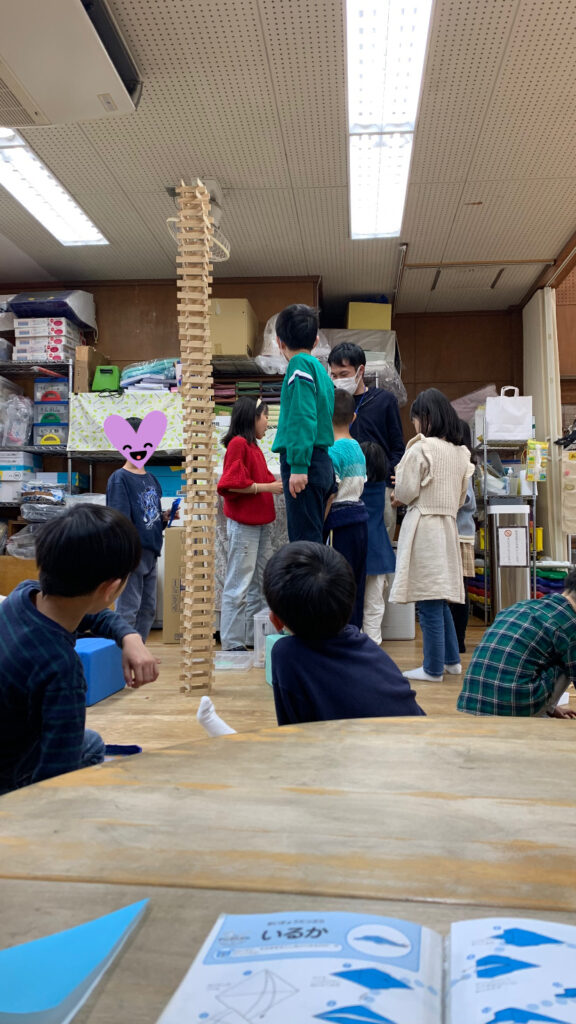
I  had actually started out working at a cafe, but after a couple weeks I ended up switching to working at a daycare. I mostly just helped around the daycare and played with the kids, who were all super sweet. They were all very curious about me and American culture as well, so it was fun talking to them about that. One challenge I faced was communication. A lot of the kids spoke very quickly and with a lot of slang, so it was hard to understand them at times. But the kids were surprisingly patient with me and kindly explained what I did not know. The senseis I worked with were also very kind and accommodating and were happy to help with anything I had questions about. My biggest piece of advice is to not be afraid to ask questions. Even if you end up embarrassing yourself, you’ll inevitably learn something!

Joyce Wu: ナルバ子供食堂

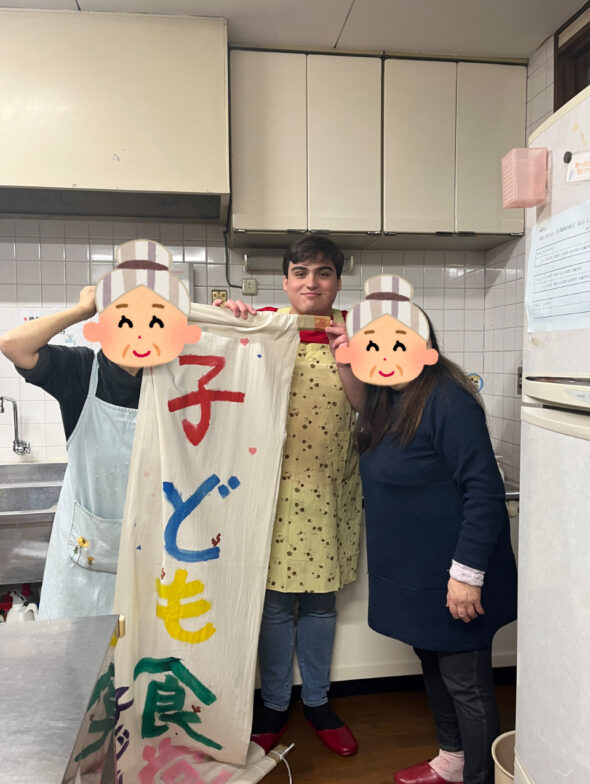
My CIP was volunteering at a children’s cafeteria called Nalba. I really enjoyed my experience. My responsibilities included playing with the students and helping out with cooking here and there. I was able to learn a lot of new recipes that I plan to try out after returning to America. The kids were also really fun to interact with and I made a lot of precious memories. I would definitely recommend this activity!

Bella Besuud: Koto

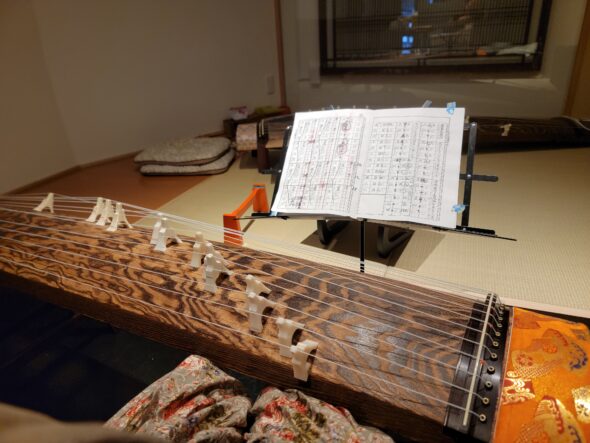
For my CIP, I took koto lessons with Iwasaki Sensei. Since I’ve played the piano, violin and have had brief stints with some other instruments, I wanted to learn another instrument. I’m always looking for the opportunity to learn how to play more instruments because I love music! It’s been rewarding and interesting to learn how to play the koto. It’s unlike any instrument I’ve played before, including the way the score is written

Cindy Bu: Kendo | 京都剣清会・妙覚寺道場・武徳殿・同志社剣道部体育会

This semester, I went to different dojos to practice kendo, the sword martial arts in a number of dojos. I did not go to Doshisha Kendo Club to practice this semester yet due to schedule conflicts very sadly.

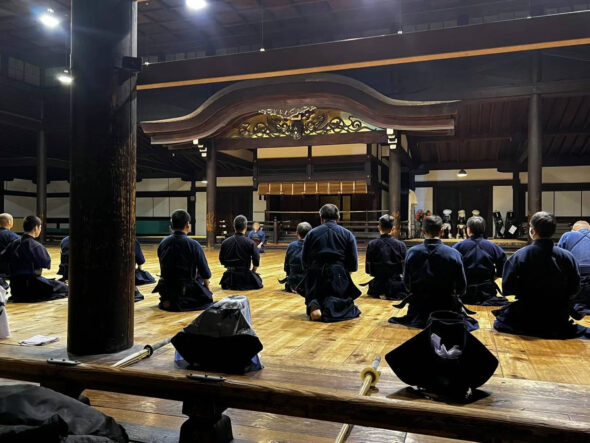
Different types of Dojos have very different vibes. 京都剣清会does not place much focus on waza training, and does fundamental basics (1h), kata (the form) (30min), and Jikeiko (1h) usually. The dojo there is very pretty (on Saturdays, I have not been to the Tuesday dojo). They will also have 飲み会 sometimes. 妙覚寺道場 is a dojo in the temple. They have practice for 1h/time, but 3times a week, spreading basics and jikeiko fairly evenly (I have not been to so many times, and you may refer to Emile’s post!).  Both social dojos have strong senseis. And 妙覚寺道場 is closer to Doshisha University. 武徳殿 is open to the public, and anyone can go to the night practice there (no need invitation as said on the website). I also did not go as much, but the focus on the basics will be much less, and it is primarily focusing on 地稽古. There would be a lot of high-ranking senseis from many different dojos. 同志社剣道部’s practice is less of instruction but has more freedom to practice the skills you wish. Normally, we do the warm-up, 素振り, 切り返し, and some fixed pattern training together, and we are left off to do 自由稽古, (and 地稽古 shortly in the end). It requires more dependence on oneself, and the training is definitely much more demanding.

I would say that the Spring semester is relatively hard for being able to practice in 同志社剣道部 Doshisha Kendo Club (solely) and the fall will be much more doable. Practice after the winter break for Doshisha starts in mid-February, while our spring semester begins in the head of January. In addition, most of the practices during the Japanese students’ spring break are in the morning on weekdays, which KCJS has Japanese classes every day in the morning. And some practices on the weekends will be canceled if there is a tournament, adding on that the 春合宿 that we would not be able to attend as we probably have class at that time (it was right after the spring break for this semester unfortunately, but if it happens right in that week, you are lucky!) . The practice in the Spring semester is in the evening, but their semester starts around April, where the program is about to get to the end. I think it might be fine if you talk to Doshisha Kendo Club only to practice on weekends, but I would also recommend adding some other practices outside Doshisha Kendo and talk to both sides!

P.S. These commentaries on dojos and the scheduling for Doshisha Kendo Club is fully based on my personal first-hand experience practicing in those dojos based on my personal situations. These feelings may be different for different people. Please only take it as ONE source of reference and ask more people about these dojos or ask for a trial training and go there yourself!

Jordan Jones: Kyudo


My CIP was taking weekly Kyudo lessons. Kyudo is traditional Japanese archery that focuses more on the control and movement rather than getting a bullseye.

The experience was both challenging and rewarding. I gained a deeper understanding of Japanese culture and customs while honing my archery skills. It gave me opportunities for personal growth and reflection, instilling a sense of discipline and resilience both in and outside of the dojo.

My advice to incoming students is even if you have no prior experience with Kyudo or archery at all, embrace the learning process with an open mind, staying patient with yourself, and appreciating the journey of self-discovery that comes with exploring a new cultural practice. Approach each lesson with an open mind and willingness to learn because the journey itself holds valuable lessons in discipline, self-awareness, and cross-cultural understanding.

Cameron Molnar: Boxing

For my CIP, I had the opportunity to at group boxing lessons at the フュチュールボクシングジム (Futur Boxing Gym). I got to learn a Japanese style of the sport while having the chance to meet many different kinds of Japanese people in a friendly setting. I appreciated my time at the boxing gym because I got to see more firsthand about how Japanese people interact and react with difficult challenges. Also, since myself and others in the lessons were experiencing the same physically challenging activities, we had something to bond over that made it easier to talk to them afterwards. My advice to incoming KCJS students would be to come in with a positive mindset. Sometimes you try to speak with someone and they are too busy or just not interested. But if you keep pushing and look for the right opportunities, you could find some great friendships that you would’ve never been possible otherwise.