Yue Ma: Volunteering at Elderly Activity Center

This semester, I have been volunteering at the 上京老人福祉センター, participating in the weekly 生き生きサロン and leading mini-lessons related to Chinese language and culture. Initially, presenting in Japanese was quite intimidating, but everyone has been very tolerant of my mistakes. I’ve enjoyed my time at the salon and getting to know the obachans, and I hope to return there during the Spring semester.

For future students, I would suggest finding a CIP that truly interests you. It may take a bit of time to figure out what do you wanna do, but don’t hesitate to ask for help from sensei and others. Also, don’t let your Japanese skills deter you from pursuing your interests but have faith in yourself to learn and adapt.

Jacqueline Zou: Kyoto Animal Shelter

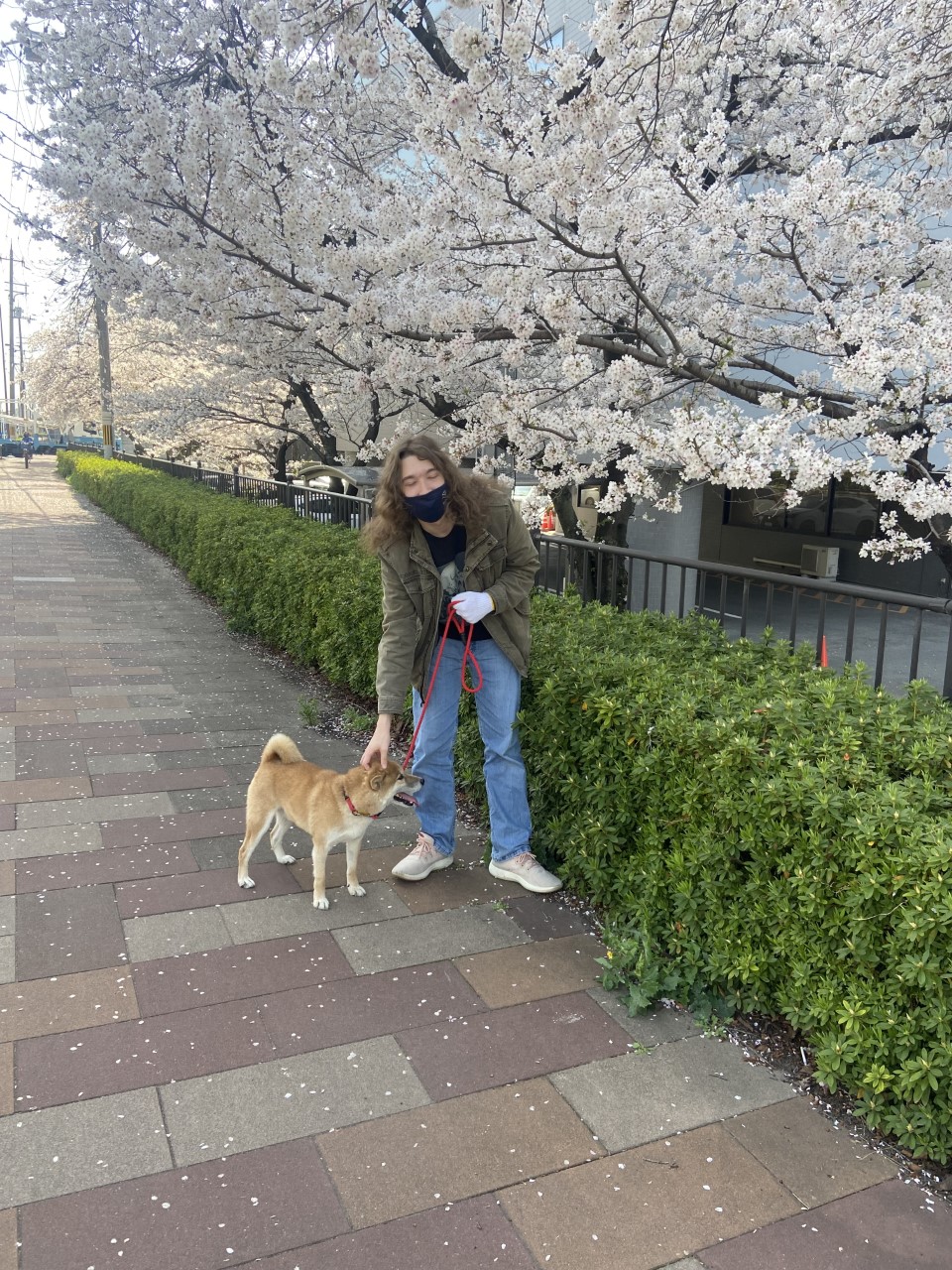
My CIP was to volunteer at the Kyoto Animal Shelter 動物愛護センター. Our weekly session usually involves walking the dogs and cleaning the dog pens and cat pens. I really enjoyed walking the dogs—the best part of it is that, as we gradually gained the dogs’ trust, we got to know the name and personality of every dog and truly became friends with them. We were even able to teach them how to listen to instructions to sit down. The workers there are also extremely friendly and encouraging.

For future students looking into volunteering at the shelter, it does require some tough mentality to clean up the dog pens at times because it can get very nasty, but I think being able to spend time with these adorable animals outweighs the tediousness of work.

Xinlan Chen: Volunteering at Kyoto Animal Care Center

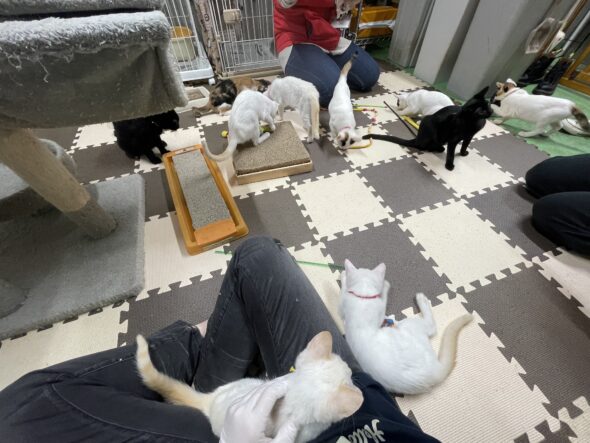
This semester, I am volunteering at Kyoto Animal Care Center for my Community Involvement Project. The center serves to help cats and dogs in need to connect with their prospective adopters, and we are there to help take care of them before they find their new home. Activities at the center includes taking the dogs out for walking, assisting with their training (teaching them to sit, wait, or to walk by the owner’s side, etc.), cleaning the dog pens, feeding the cats and cleaning their cages, and play with the cats to help them release their energy and get use to people. Once we were also invited to help create message cards for the household who’ve kindly adopted the kittens, using the photos of their new family member.

It was a very enjoyable and rewarding experience. To be able to work at the facility requires a decent level of Japanese skills as you’ll need to be able to communicate with the staffs and frequently changing volunteers working at the facility, and most of them are not skilled in communicating with foreigners or language learners and usually speaks fast & with accents. That being said, everyone at the center are all very nice and welcoming, and the animals are just ADORABLE, making volunteering at the center a wonderful experience and a great stress relief opportunity and a nice break from everyday class.

This opportunity is 100% recommended for whoever loves animals (you will not find any better place than here, esp. if you like kittens). Be somewhat prepared for needing a little time to fit in and for not being able to participate fully in their activities (taking care of some certain animals require more professional skills), but relax and do not feel stressed as all the staff and volunteers here are all very warm and understanding.

Jian Soo: Volunteering at Miyakoshi Fukakusa Youchien

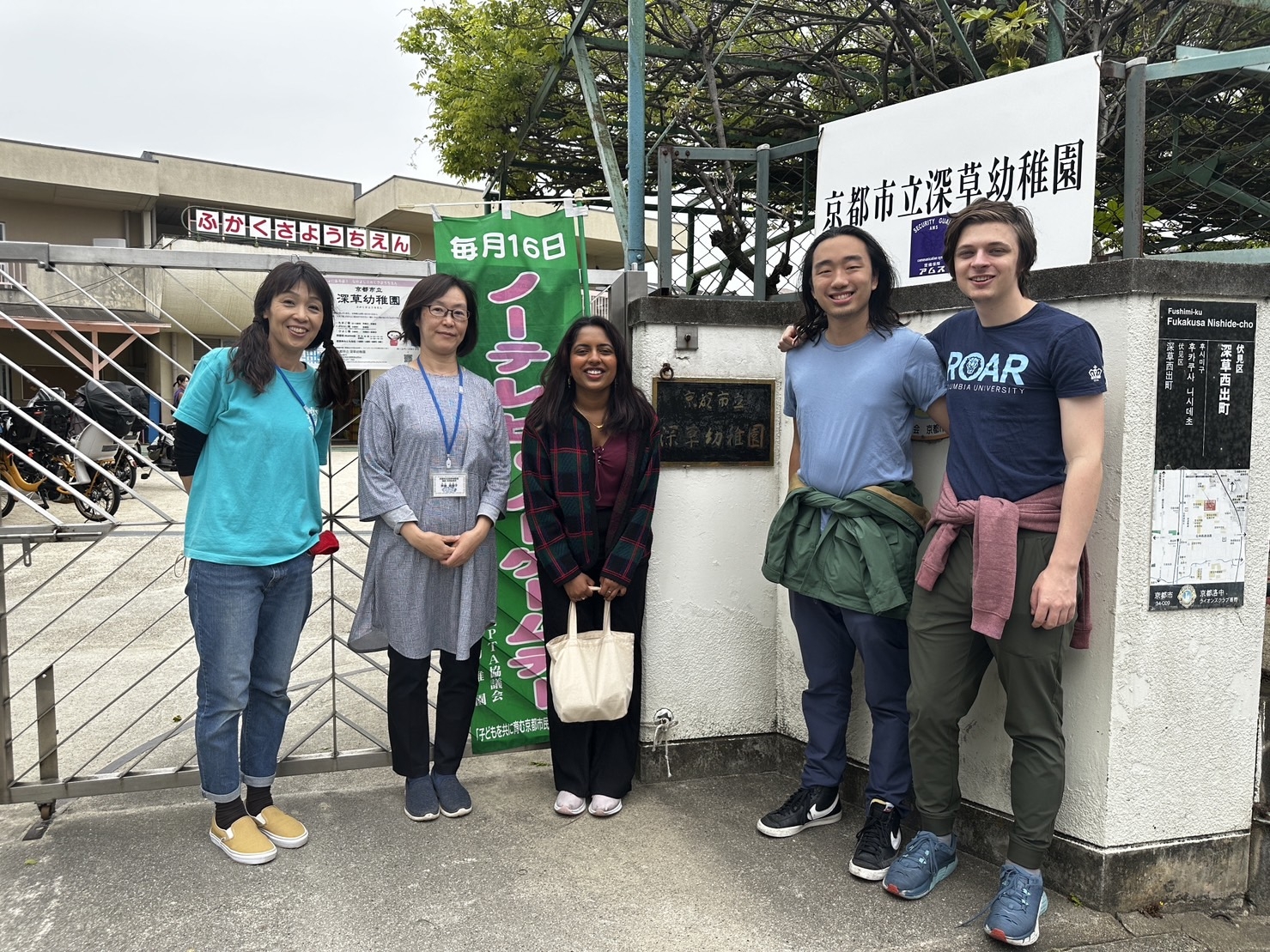
I volunteered at Miyakoshi Fukakusa Youchien; activities included reading simple English books to the children (and doing translation to Japanese), playing board games with them (which they loved to cheat at), and generally being a good playmate with the kindergarteners.

Volunteering at the Youchien has been an experience that I will carry with me my entire life. If you like working with kids, there is no better CIP to choose.

Some advice to incoming students: the kids really like to have ‘skinship’ with you: this sometimes includes them just randomly jumping onto your back, sitting in your lap and hugging you. Make sure you are comfortable with some physical contact if you want to do this as a CIP.


Tyler Popp: Kyoto University Running Club

This semester I joined the Kyoto University Anpan running club for my CIP. Though it’s run by students of Kyoto University, there are members from many different schools in Kyoto, and the club meets weekly on the Kamo River.

I had a lot of fun this spring being able to run and meet new people in a very social setting in this club. It was a great opportunity to meet other Japanese students not only outside a campus/classroom situation, but also students from other schools in Kyoto that I would normally have met people from.

I definitely struggled a bit in integrating myself in the club initially, and I was too self-conscious about being the only non-Japanese member or making language mistakes when talking to others. However after a few meetings initiating conversation gets easier as I got to know those around the club. My advice would be to get out of that comfort zone as much as you can, as making good relationships with other students makes the experience so much better.

Matthew King: Volunteering at Kyoto Animal Care Center

My community involvement project for this semester was volunteering at the Kyoto Animal Care Center in Fushimi Ward. During this time, I was able to walk some of the dogs ready for adoption and assist in their training, clean the cat room and play with them to help release some of their energy, and washing the kennels when the center was short-staffed. I was even able to accompany some of the center employees when they were to pick up or drop off stray cats from around the city.

Getting to talk with the center staff and my fellow volunteers was a great way to improve my Japanese and learn how to more effectively express myself, and spending time with the animals was a great way to relieve some stress after my morning class. It also ended up being a good way of exploring the nearby area when walking dogs and helped me get an even better understanding of Kyoto.

If you’re interested in coming to KCJS and love animals, I would highly recommend volunteering at the center. The people there are very kind and understanding, and you’re given many opportunities to talk with them throughout the day. Just be prepared to deal with some rowdy dogs – they’re incredibly sweet, but they can definitely knock you over if you aren’t paying attention.

John Henry Waymack: Kendo lessons

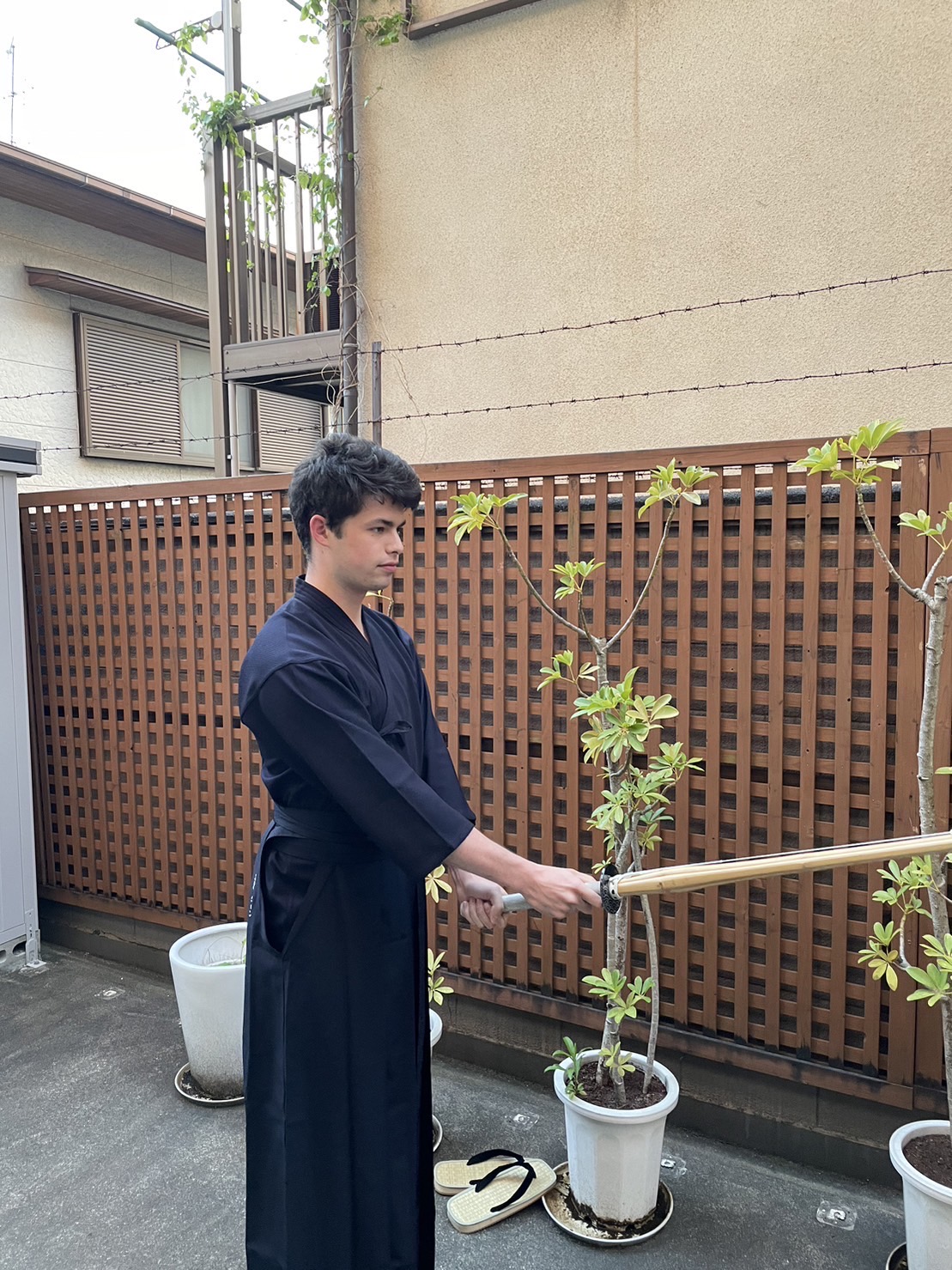
My CIP this semester was Kendo, a martial art centered around swordsmanship. The martialart focuses just as much on the practitioner’s abilities as it does on self discipline, as well as respect for your teachers, your opponents, and your Dojo. I was surprised by how specific and precise all elements of Kendo were, from the exact degree of angle you have to achieve when bowing, to the perfection of form required for all of the basic strikes. To anybody else starting Kendo in their time at KCJS, I would say go to every practice you can, and practice outside of the Dojo. The learning curve is incredibly steep, and your time in Japan will probably be very short. 

Nathan Reichert: Bazaar Cafe

Introduction:

My CIP was Bazaar Café in which I worked as a volunteer in a café primarily washing dishes. It was almost always a good way to practice my Japanese and talk with locals.


Comments:

When the café got busy, the CIP became extremely tedious and boring as everyone would be busy working and I would be busy washing dishes. However, when the café was not busy, people would converse and sometimes even feed me.


Advice:

My advice is make sure you know your goals before choosing your CIP. Understand what you want to get out of your CIP, such as improving language skills, learning a new skill other than Japanese language, and/or surrounding yourself with locals, before picking an activity. Also, do not be afraid to come up with something on your own and do the research to facilitate it.

Veronica Seixas: Kyoto University Choir


Formy CIP,I went to Kyoto UniversityChoir’s rehearsals once a week on Wednesday from 6-8:30. It is an all gender/all voice part choir that learns Japanese, English, and Italian songs. Everyone in the choir was extremely nice and welcoming, assisting me whenever I needed help. I really enjoyed learning and singing songs in Japanese, and if the timing works out well you can sing in one of their concerts. If you have some experience with a choir and want to continue singing in Japan or try singing in Japanese, this is a great CIP that is easy to join.

Kyra Douglass: Tea Ceremony

For my CIP this semester, I took tea ceremony lessons. When I came to Japan for the first time in 2018, I had the opportunity to go to a rural high school’s tea ceremony club. Admittedly, I didn’t really like matcha at the time, so I was having a hard time drinking it then. However, between then and the start of this last semester, I’ve come to love matcha, so deciding to take tea ceremony lessons was a no-brainer for me. Our first day was more of a demonstration and less of a lesson. It was still winter at that point, so the more suburban/semi-rural area that we traveled to for the demo was even more beautiful because of the snow on the ground. The windy streets surrounded by trees and mountains were like nothing I had ever seen. When we finally found the ryokan we would have classes in, we met Fujimura Sensei. She was wearing a kimono, which fit right in with the general traditional vibe of the small tatami room where our classes would be held.  


I was extremely nervous at that point. Everything in the room was so perfect, intentional, and unfamiliar to me, and I was afraid that I was somehow going to break something. Since this was very early into the semester, this had become a very common feeling since arriving in Japan: being generally uncomfortable. As Fujimura Sensei was doing the demonstration, I was so impressed by not only the intricacy of the ritual but how graceful and sure she was in each of her movements. I was a little intimidated at first, thinking there was no way I would be able to come close to that level. Even so, Fujimura Sensei was extremely kind, and I would later find out, just as patient and encouraging. Our lessons were completely in Japanese, and when I would struggle with the language, she would use hand movements to help me understand. Also, Connie Situ and Geetanjali Gandhe, the two other KCJS students who were taking the lessons with me, were beyond helpful when it came to helping me understand some of the Japanese instructions. Through their help and Sensei’s teaching style and overall friendliness, I was able to let go of the need to be perfect, and this made me so much more confident and, ultimately, have a lot more fun. This is something I want to carry with me after the end of the program because it can open more doors for me because I am less afraid of failure and am more comfortable with being uncomfortable. 


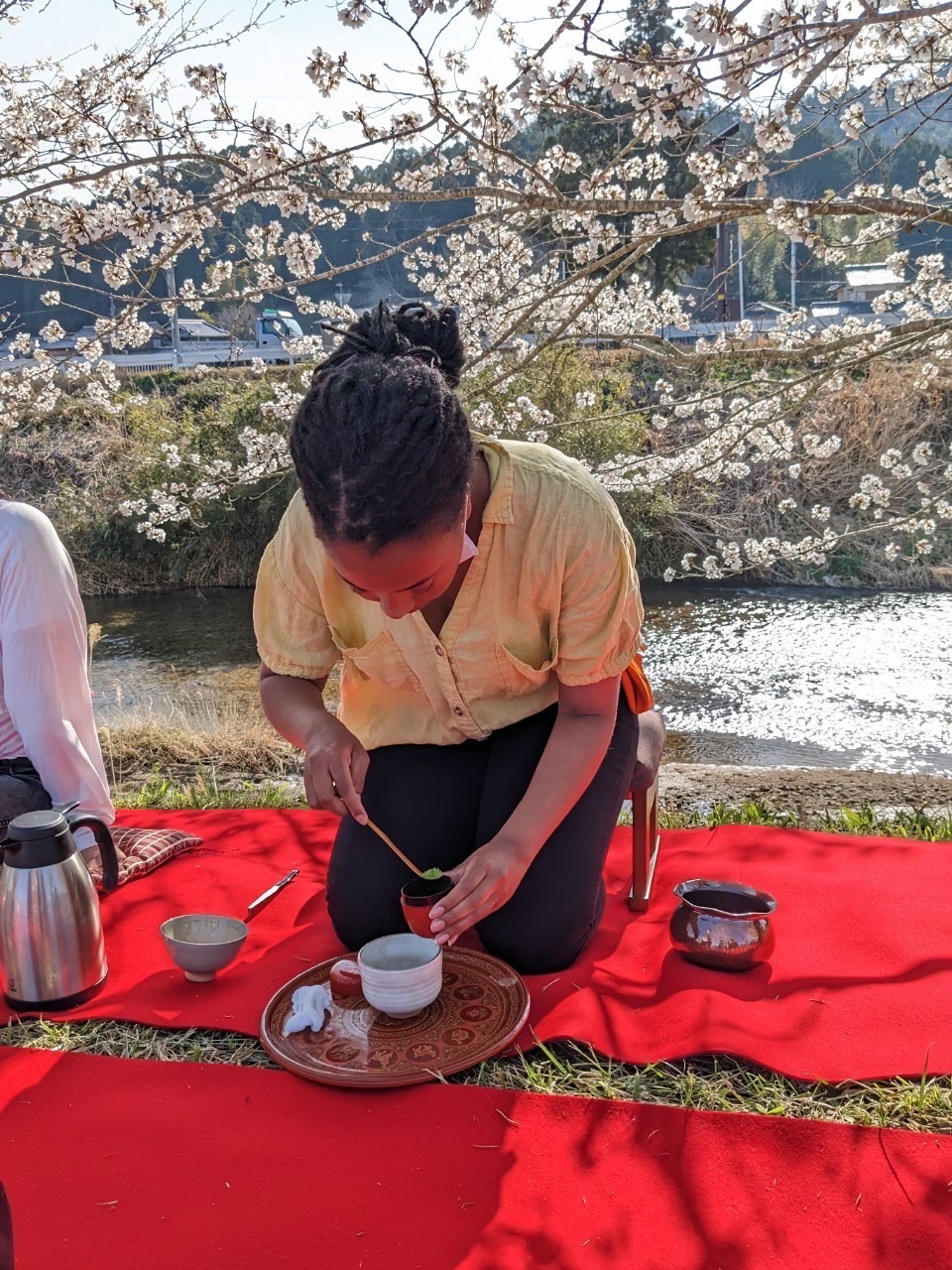
My CIP was also special because Fujimura Sensei went out of her way to teach us about the cultural history of Kyoto and Japan at large. To celebrate White Day, she prepared a multiple-course meal for us and explained the meaning and traditions behind each dish. It was delicious and I was really happy to participate in this holiday for the first time. Later in the semester during sakura season, we did an ochakai, or formal tea ceremony, at Heian Jingu, and later drove out to the countryside to do our own tea ceremony. It was such a beautiful experience, and I’m grateful to Fujimura Sensei for putting it all together. This semester was definitely full of awkward moments and small failures, but because of that, I feel like I am a more confident person than I was at the start.