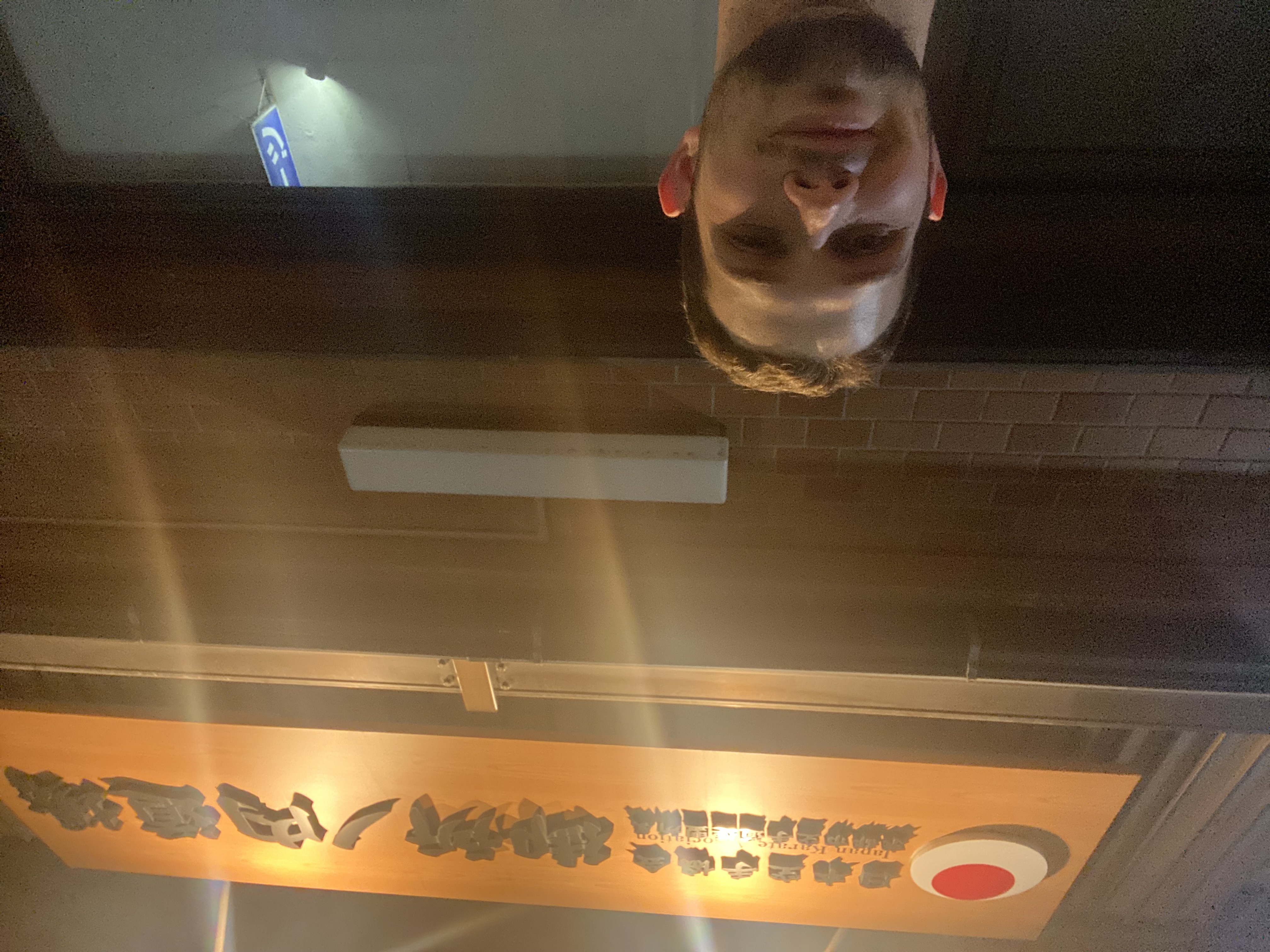
 For my CIP, I chose to join a local Shotokan Karate dojo, Goshonouchi dojo, run by Kato Sensei. I joined because I had seen good things in what I found online, and a fellow CIP student was attending and she spoke very well of it. Prior to this I had several years of experience in martial arts, but only in the US, which I can now say, definitely has bit of a culture gap. I found everyone to be very friendly and nice, but they also weren’t afraid to be straightforward when instructing or teaching the formality of karate, something I very much appreciated. If I were to give advice, I would say to ignore any fear or nervousness. One of the strongest points of martial arts is it’s relative simplicity, and in that, a direct way to improve. No one expects perfection and to make a mistake is to learn, so don’t fear making them. Likewise, everyone comes to a dojo for the same reason, so don’t be scared of any of them, even the most serious practitioners are very much friendly if you take the time to talk to them. I actually went out of my way to train with the pro fighter during breaks in between class activities and it’s probably some of the best training I’ve ever gotten. If you don’t let fear hold you back, I promise it’ll be a great time.
Mary Wilson: Kpop Dance with Doshisha ASH
Ash, Doshisha’s kpop dance circle, is a circle where you learn and perform kpop choreographies, with generally two performances per semester.
Everyone in the club was quite friendly, and you can get lots of informal Japanese practice, especially if you join a lot of dances.
My advice to incoming students is: be as friendly and outgoing as you possibly can. A lot of people may be apprehensive about possibly having to speak English to you because of their own discomfort speaking English, so it’s best to start interactions and sort of “prove” that you can speak Japanese well enough first. Even if you think your Japanese isn’t that good, the fact that you’re trying at all will make it easier to approach you. Be proactive and persistent about trying to make friends, because it is probable that people won’t come to you first. Don’t be scared of asking for help and asking questions, even if you don’t know how to phrase what you want to say ‘properly’. In most every case, it’s the effort that counts.
Here’s a recording of a dance I led in one of our spring performances!
‘The Eve’ by EXO
Uriel Doddy – Kyūdō
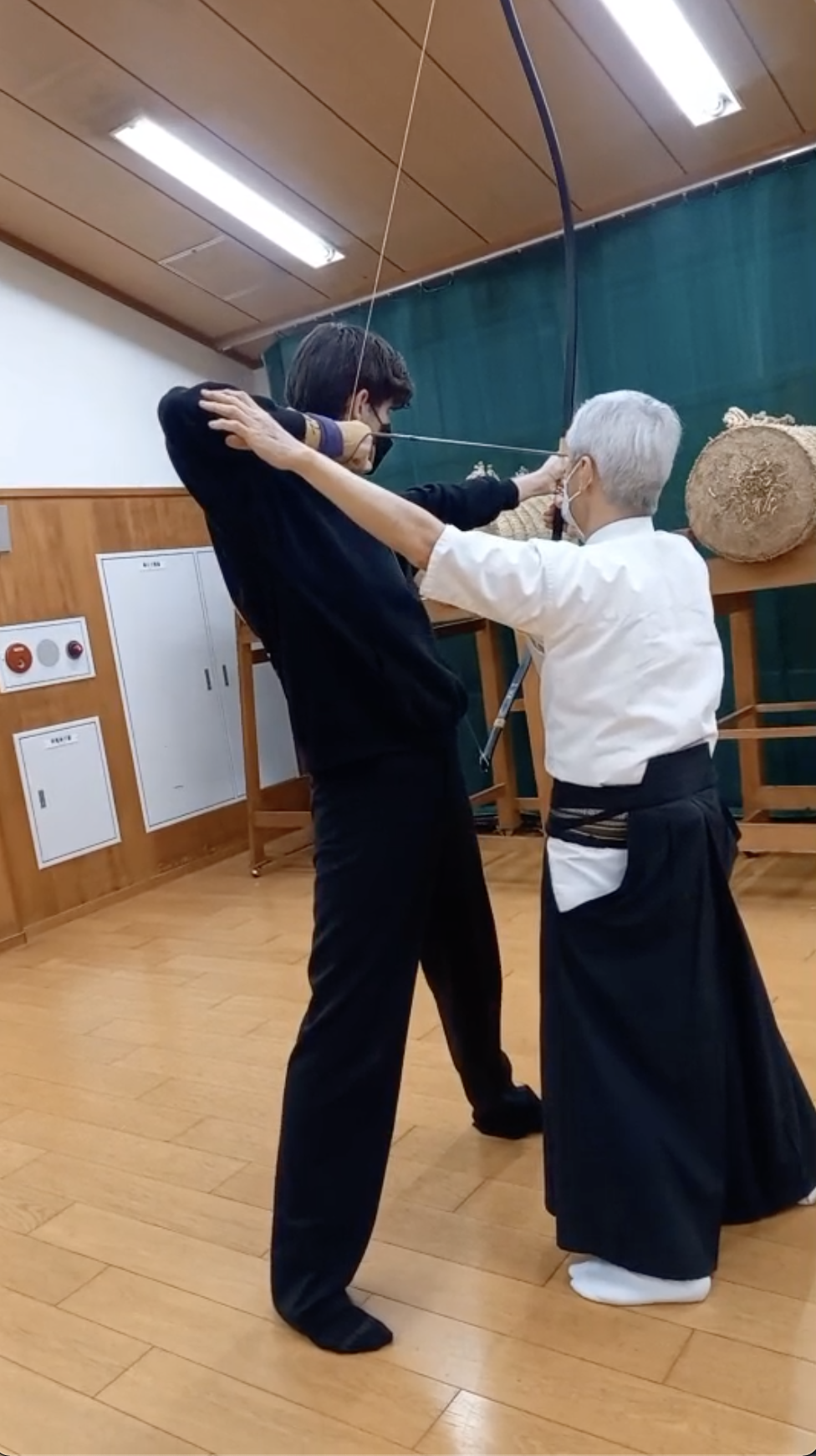
For my CIP, I took kyūdō lessons at the Kyoto City Budō Center. Kyūdō is a very unique and interesting sport (quite different from western archery) with a pretty steep learning curve, and because most people in the dojo speak little English, I would imagine it would be a bit difficult for someone without a fair amount of conversation experience in Japanese.
However, for someone who is patient and passionate, the language barrier shouldn’t stop you from trying it. The instructors are very kind and patient and often physically demonstrate the techniques they’re describing, and it’s very rewarding to feel like you learned a traditional Japanese sport in Japanese. It gave me a lot of valuable firsthand experience in a new context, and was a true highlight of my semester.
Lola Simon: Karakami Papermaking
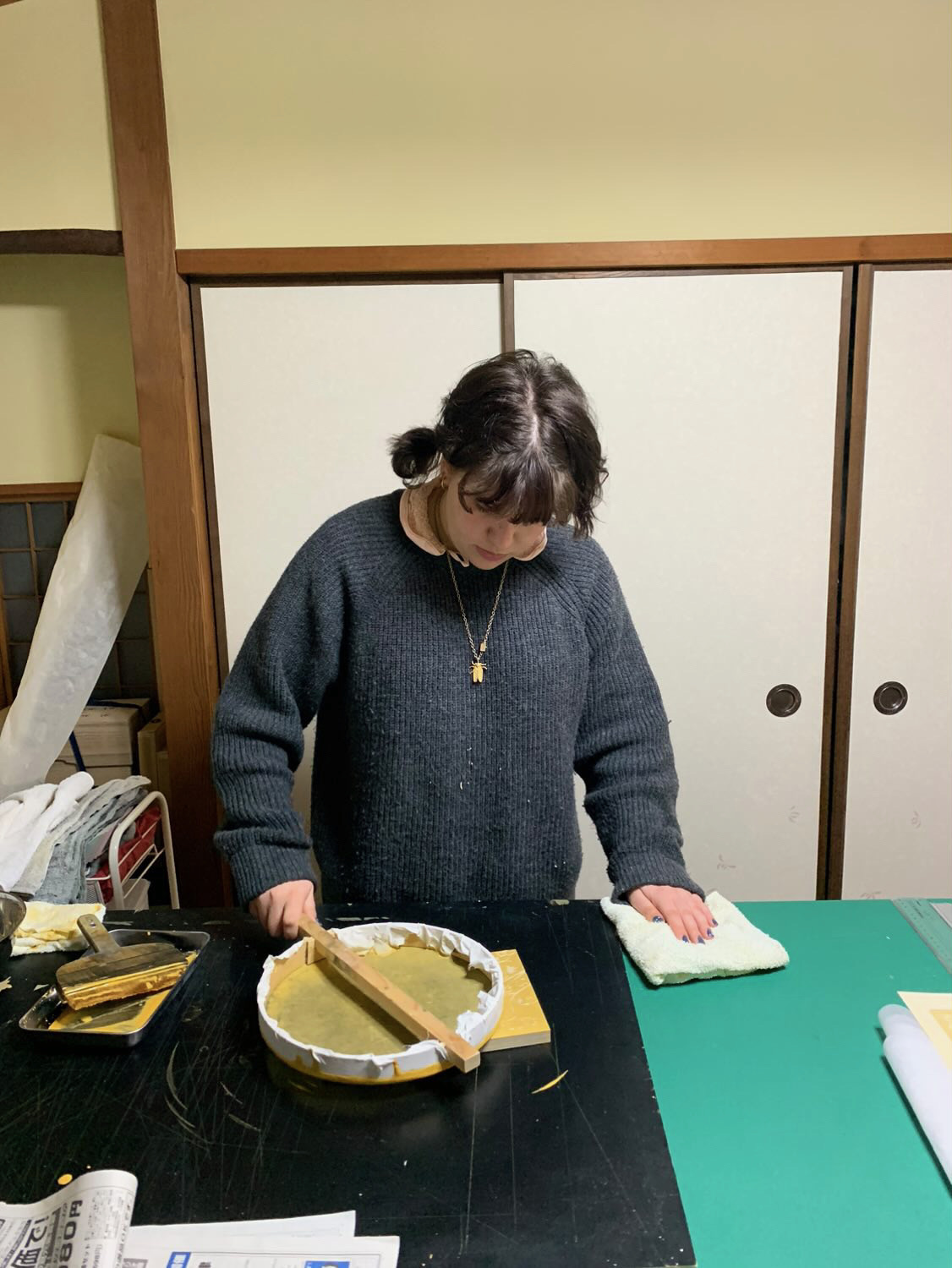 This semester, I studied a form of traditional decorative papermaking known as karakami with Sugawara Fumiha, a karakami artisan based in Kyoto. Professor Melissa Rinne, who I took the class Kyoto Artisans and their Worlds with, connected me to Sugawara-sensei, who graciously offered to work with me for my CIP.
I study visual art at Brown with a particular focus on printmaking. I hoped to learn something related to printmaking or papermaking for my CIP. Karakami is at the intersection of both! It involves using carved wood blocks to create patterned papers that are typically used to decorate fusuma sliding doors or shoji screens. Karakami came to Japan from Tang Dynasty China during the 8th century, so it is an extremely old art form that still maintains traditional techniques. This involves mixing pigments using mica, a type of crystal found in granite, with gofun, a white pigment made from ground seashells, and funori, a type of glue that comes from dried and boiled seaweed. The ink is brushed onto a special sieve made of gauze, which is then pressed directly onto the woodblock to transfer the ink to the carving. Finally, a piece of paper is placed onto the block, and, using pressure from your palms, the design is transferred onto the paper.
I was able to create and carve my own karakami woodblock designs of bleeding heart flowers and blueberries. I learned how to mix inks, print the blocks, and cut and glue together the papers in order to create a continuous pattern. I even got to make my own karakami panel which I can hang up in my room.
This experience was one of the most meaningful opportunities in my study of both art and Japanese. I learned so much from Sugawara-sensei, who was an extremely kind, generous, and patient teacher. Over the course of the lessons, I grew more and more comfortable talking to Sugawara-sensei in Japanese and was able to form a life-long connection. I was able to learn an art form that I never could have studied without my time at KCJS, and will be forever grateful for this experience.
Advice to future students: if you have a particular interest you hope to pursue in Kyoto, go for it, even if it seems like something that could be difficult to find! I never thought I’d be able to study printmaking with an artisan in Kyoto, yet alone something as special as karakami. However, after talking to KCJS staff and professors about my interests in printmaking, I was able to be connected with Sugawara-sensei, who, despite having never taught lessons before, enthusiastically agreed to teach me. The KCJS program is incredibly supportive and well-connected to Kyoto and may be able to find you opportunities you’d never expect.
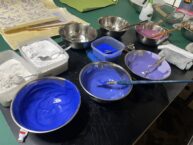
Ink mixing!
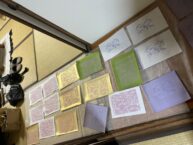
Karakami paper laid out to dry.
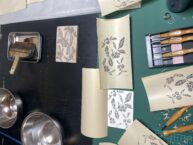
Carving a design.
Skyla Patterson: Fly Dance Studio
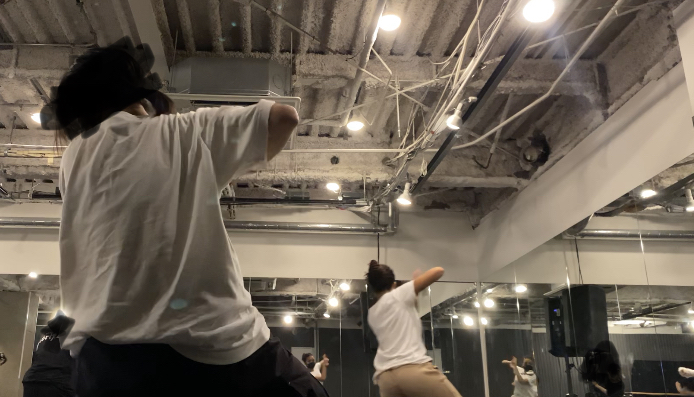
For my CIP I took dance classes at the Fly Dance Studio. It was a very immersive experience, and an amazing way to practice my Japanese skills whilst having fun. My advice to incoming students is to enter with an open mind, and take a bunch of different classes before committing to the same dance teacher every week. That way, you 100% know which class is the best vibes for you.
Jessica Frantzen: Kyudo
For my CIP, I learned kyudo, or Japanese archery, at the Kyoto City Budo Center Kyudojo under Furuya-sensei (entirely in Japanese!). I learned the process of kyudo all the way from entering the dojo properly and respectfully to firing with two arrows in hand, which was surprisingly complex and something I still make mistakes with from time to time.
In learning kyudo, I’ve had both times where I get frustrated with myself for making the same mistakes over and over and times where I’m proud of the progress I make. Moreover, I’ve learned a lot about the importance of respect for others (as seen in the proper bows and procedures we learn for entering and leaving the dojo, and even in the process of firing the bow) and self-improvement in this sport that I hope to take with me to other, future activities. In kyudo, what matters most is not winning, but slowly and surely improving on oneself without being in a hurry.
To anyone interested in practicing kyudo as a CIP, I would advise you to remember that kyudo is a complex sport, and you’re not going to be able to perfect all of the movements in one go. One place to start is learning the eight steps of kyudo before going in, so you can know what your teacher’s talking about when they mention them. If you can, coming in early and staying late will allow you to learn a bit faster, since you’ll get more practice in, and you’ll also get a chance to get to know your teacher better. But mostly, be sure to give yourself patience, ask your teacher often if you have questions on whether you’re doing something right, and enjoy being able to take time to slowly improve on yourself and learn such a traditional and complex sport!
Volunteering at Klexon (English Conversation Circle at Kyoto!)
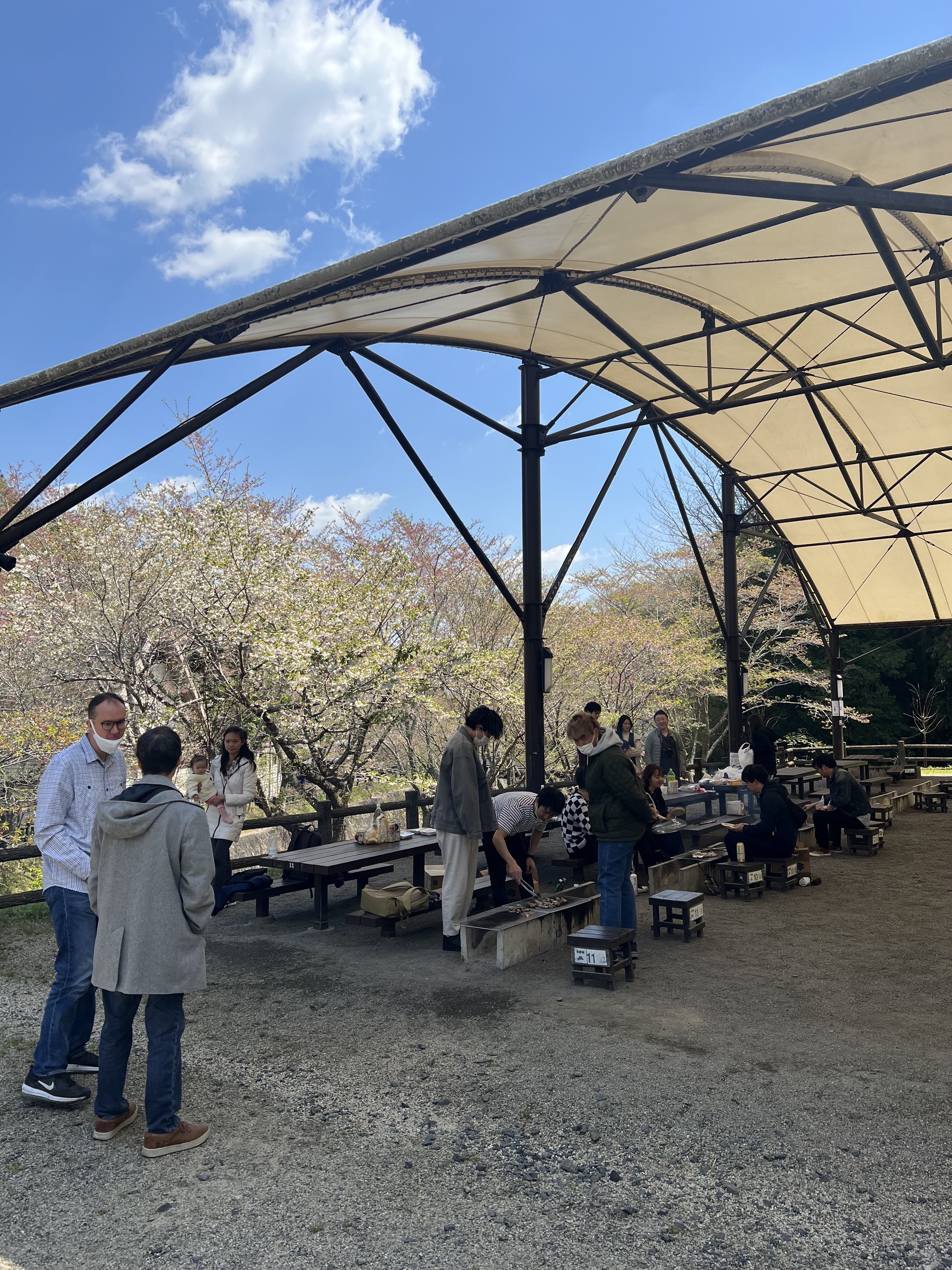 During my time at KCJS, I have decided that my community involvement project will be volunteering at Klexon English-speaking Circle located at Wings Kyoto. It was simple to speak with native residents who wanted to converse in English. At every meeting, we were met with different Kyoto residents. We were given a topic or a format of what we should talk about. Afterward, we talked about our daily life, childhood memories, and traveling.
Initially, I was a bit shy to make contact with the conversation partner, but as time passed, I was able to thaw out and trade our line or SNS accounts. Afterward, I was able to communicate with conversation partners frequently and have natural conversations in a language that was fitting for the atmosphere at the time.
In the end, I was able to join an event where all of the group members went to Mie prefecture and enjoyed a relaxing Hanami at Iwakurakyo Park. If anyone wants to enjoy talking with locals and have an intercultural connection, Klexon has the best suitable environment for it.
Bryce Okihiro: Volunteering at Hiroto Yoshida's Sweet Potato Farm and Toshiharu Nagao's Shop in Miyama
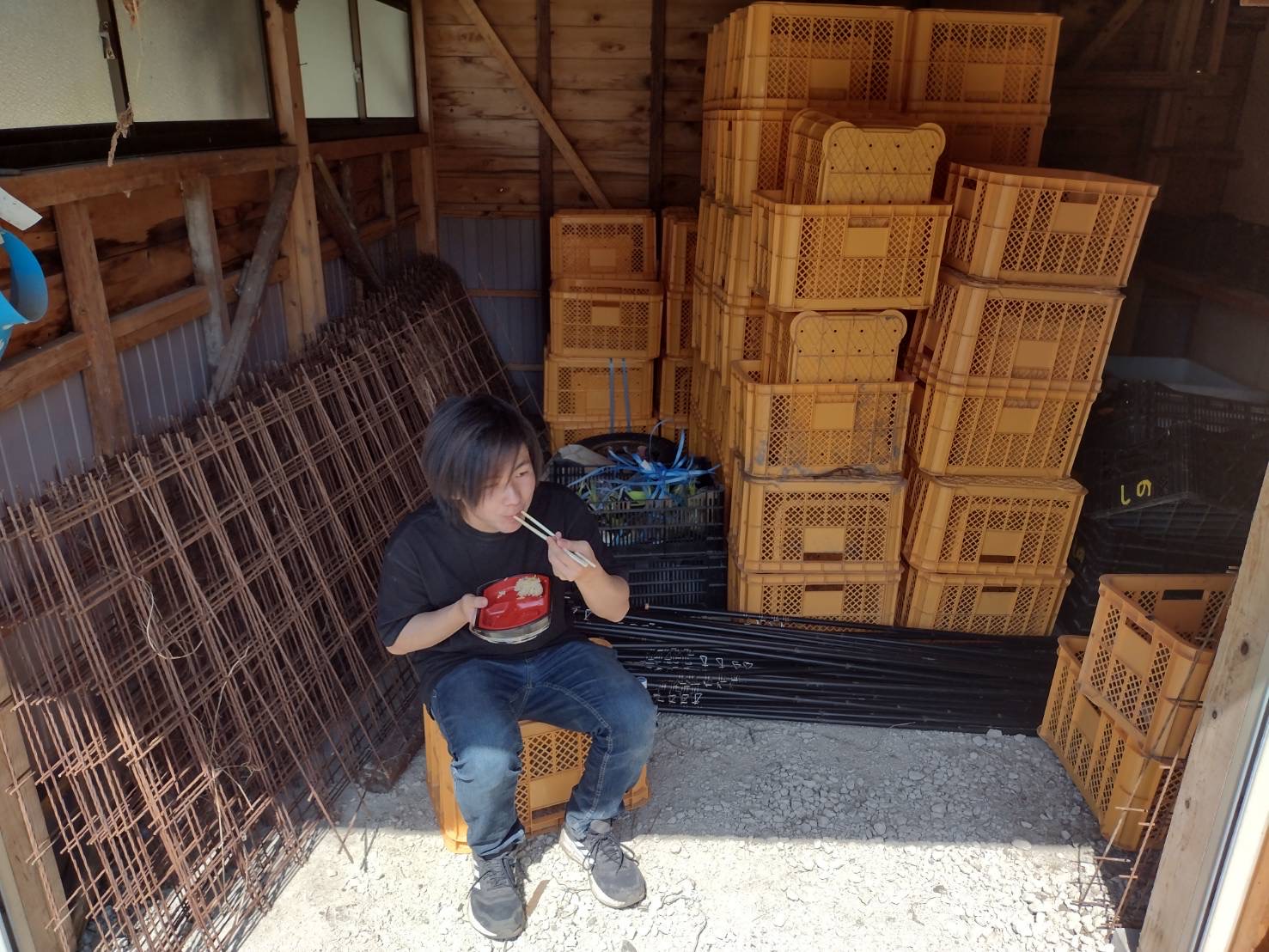
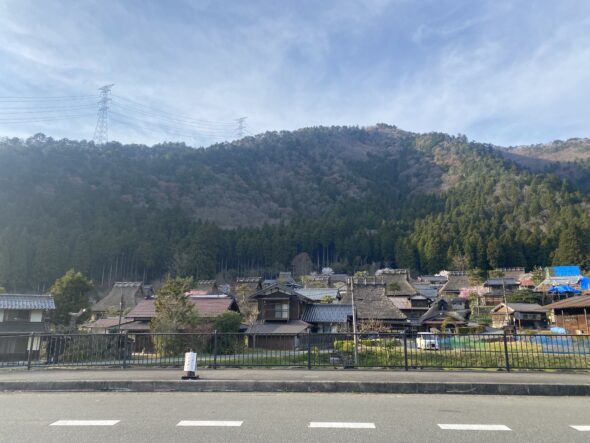
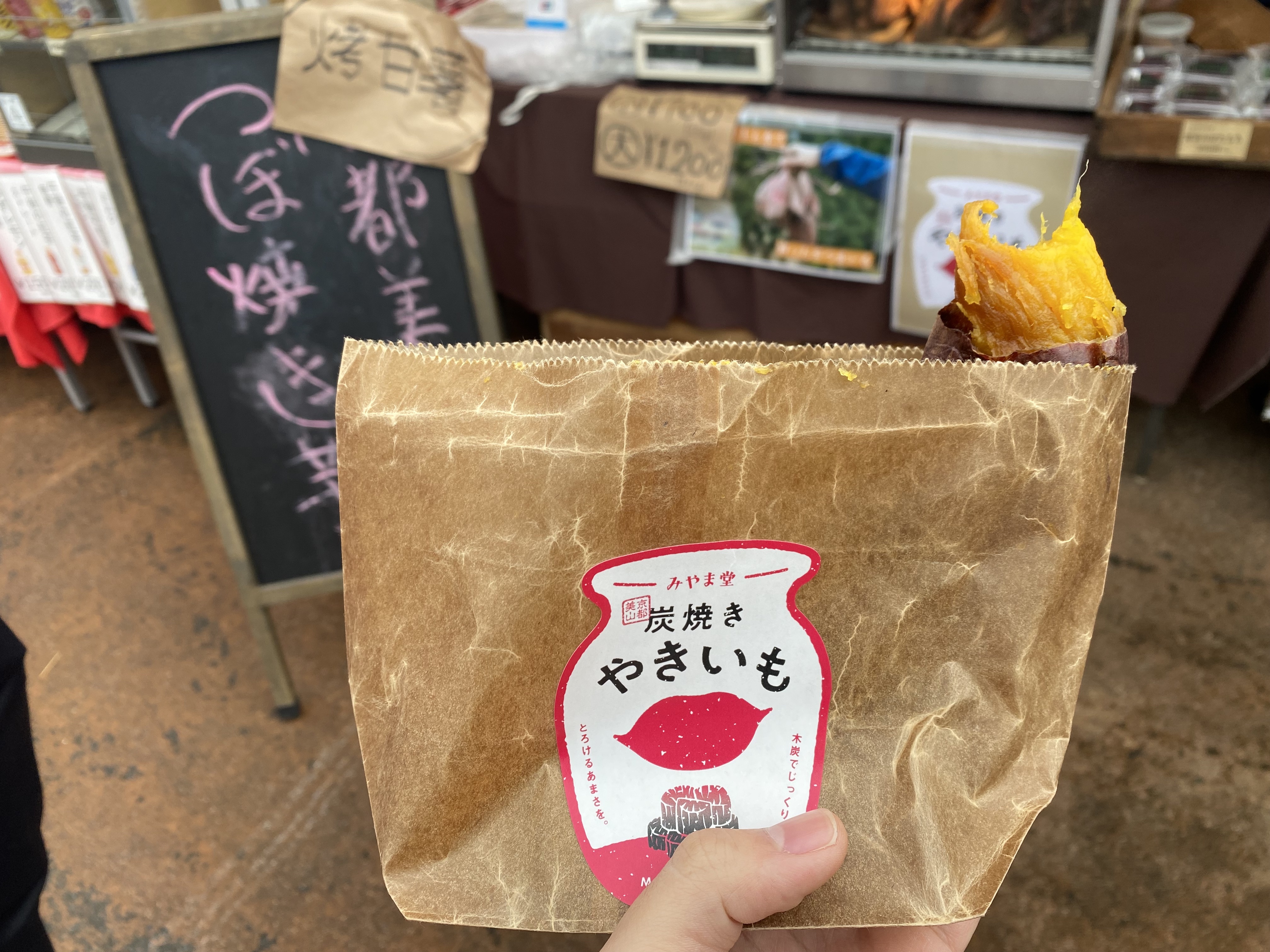
The CIP I undertook this semester involved working at Hiroto Yoshida’s sweet potato farm (e.g. constructing fencing, tilling the soil, planting sweet potato shoots) and assisting a local shop owner Toshiharu Nagao (e.g. packaging sweet potato products, learning about roasting sweet potatoes) in a rural area called Miyama in northern Kyoto. Through the experience, I learned about the processes and challenges of farming and having a business in the countryside and the methods through which young people are trying to revitalize Japan’s declining town areas.
The experience was a once-in-a-lifetime opportunity, not merely because I had the chance to explore a region of Kyoto not so commonly visited, but more importantly, because of the transparent conversations I had with locals and the perspective-altering experiences I had whilst working on the farm and interacting with people in the community!
I would definitely recommend this CIP to students who have a passion for farming and a deep interest in the challenges facing Japan’s rural areas. The time and labor commitment to this CIP is intensive (one volunteering session will run from morning to evening (it takes two hours to commute to Miyama and another two hours to come back!)), so if you aren’t genuinely interested in experiencing and learning about life in Miyama, I suggest not even thinking about doing this CIP. But if you do have a genuine passion for farming and learning about rural life in Japan (as well as learning Japanese since most residents in Miyama don’t speak much English), this CIP will undoubtedly be an invaluable and extremely worthwhile experience, and perhaps even life-changing as well!
Derek Shao: Volunteering at Mitsuba Kindergarten
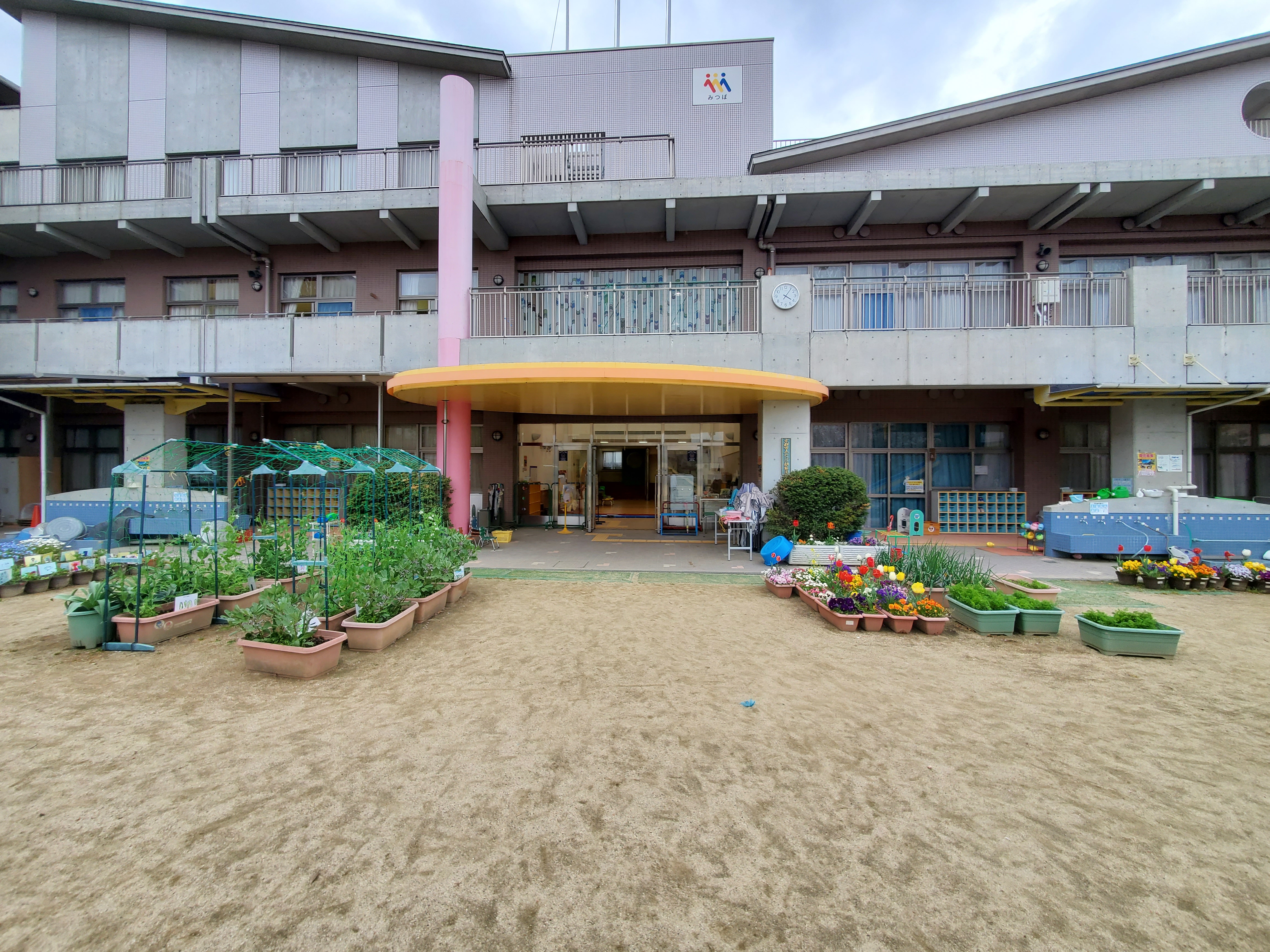
This past semester, I had volunteered at Mitsuba Kindergarten, and helped out teachers and other volunteers there play and manage kids aging from 3-5 years old. I volunteered from 1-4pm every week, of which, from 1-2pm, the Kindergarten had classes in which they would do various structured activities such as singing, watching a show, or reading books. Then from 2-4pm, is the after-school program, in which after some kids leave, the Kindergarten has a daycare style time, where kids would play until their parents came to pick them up.
Volunteering at Mitsuba Kindergarten was not only a great way to practice my Japanese through both speaking and listening, but every week was also extremely fun and fulfilling. When I first started, I was not sure about how to interact and communicate with the kids, especially since they could only speak Japanese. However, the kids are all extremely friendly and are not afraid to talk to you, ask questions, or in general just ask to you to play with them.
I would highly recommend working at a Kindergarten for those who like working with kids, and want a gratifying and fun experience. Some advice that I would give those interested in volunteering at a Kindergarten or any CIP in general, is that don’t nervous about speaking Japanese and interacting with kids and other volunteers and teachers. All of them are extremely friendly and are more than happy to help you out and talk to you!
Chris Elson – Boxing
My CIP Activity was taking boxing lessons at a local private gym. While there, I could as many times as I wanted, given I paid for the month. Sessions usually started with a couple rounds of jump-rope, then shadow-boxing, punching bag, and finally a session of hitting the mitts with an instructor.
My experience was alright. I had never boxed before starting this CIP and I felt they were encouraging of me despite that fact. Still, I managed not to care too much for boxing and didn’t really care about going every week.
My advice to others would be that to just keep going. Regardless of skill level, you will gain respect the gym as long as you consistently show up. I was always weak, but I found towards the end that as I consistently attend, the better I would be treated, which honestly makes sense as its easy to build a better connection with the instructors and gym-goers at that point.