Victoria Raiken: Shamisen at Greenwich House

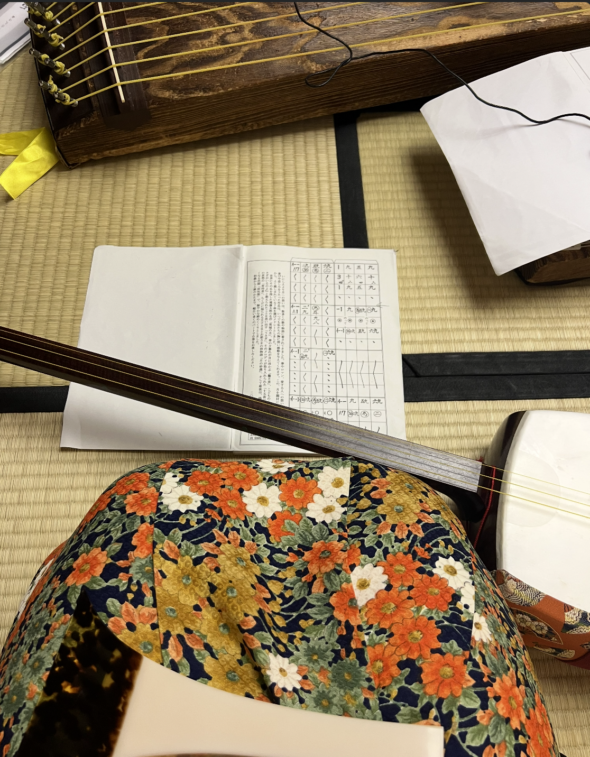
For my CIP, I took lessons at Greenwich House to learn the shamisen. I was joined by two other students from KCJS where we learned how to play a variety of traditional music pieces and ended the semester with a concert that involved the whole music school.

Before coming to Japan, not only did I have very limited experience with stringed instruments but I had also never seen a shamisen in real life before. Learning the shamisen in such a short time to perform at the concert was a big challenge for me but I’m so grateful I was given the opportunity to be a part of this community and learn about such a valued piece of Japanese culture.

My advice to incoming students would be to apply an interest you already have and use that passion to create connections within the community. Despite my skill-based challenges, I had a genuine interest in music and because of that I was able to bond with both the other KCJS students as well as the wonderful people at Greenwich House.

Malia Marinchak: Yoga at Tamisa Studio

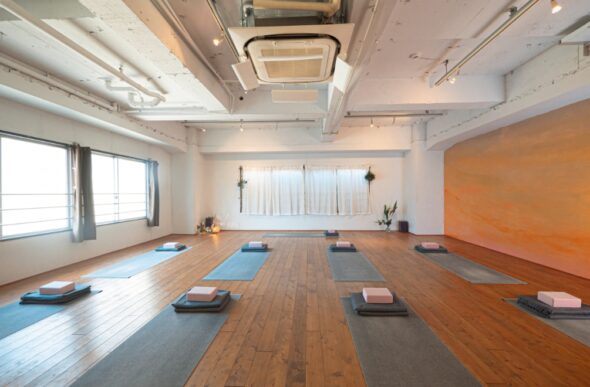
This semester I attended weekly classes at the Tamisa Yoga studio in Sanjo Teramachi as part of my CIP. Throughout my classes I was able to experience what Yoga practice looks like in Japan as well as join as forge connections with the other students and have meaningful conversations with the variety of instructors on ways to improve and deepen my practice. The studio offers classes taught in Japanese only or dual taught in English and Japanese, and while I mainly attended the Japanese only ones, both were incredibly helpful as listening practice.

Since I had attended a different study abroad program in Japan for 8 weeks before the semester started, where I got to study Japanese traditional dance (本舞踊), this fall I was interested in returning to something that I do back in the US, that allowed me to prioritize mindfullness and exercise while I studied abroad. This kind of CIP worked for me since I also volunteered at a teahouse throughout the semester, so the project was more like a supplement, rather than the main way I interacted with my community.

While this worked for me, my circumstances were a bit unique, so If you haven’t experienced a traditional Japanese art, I would definitely recommend trying that, or volunteering with local organizations. 

Susan Flatt: Koto

This semester, I had the opportunity to practice the koto twice a week at Greenwich House, along with two other classmates, who were learning shamisen. At the end of the semester, we all performed a traditional piece together (月に寄せる日本の歌) at the Otsu Traditional Performing Arts Center.

Through my time practicing with the musicians at Greenwich House, I was able to learn a lot about Japanese traditional music, including the many ways in which it differs from Western music. I also enjoyed the opportunity to develop meaningful relationships with the other musicians, who were all incredibly welcoming to the KCJS students.

My advice to future KCJS students is to never be afraid about trying something new, even if you aren’t sure whether you can succeed. No one will expect you to be perfect right from the start, and the people around you will appreciate the effort you put in, even when you’re struggling.

Ben Grijalva: ‘Wasshoi’ Circle at Kyoto University

For my CIP, I joined Wasshoi, a circle at Kyoto University focused on agricultural activities, community engagement and rural revitalization in the small but beautiful village of Miyama. Together with a group of core members, I traveled to this village bimonthly to participate in activities such as edamame harvesting, building a corn maze for kids and harvesting thatch for a local renovation project!

Though this was a massive time commitment, my experiences in Miyama were among the highlights of my semester at KCJS. Between sobering conversations about rural life and late nights bonding as a group, I can confidently say that being able to connect with fellow college students, local farmers and children alike was an invaluable opportunity that taught me a lot about rural Japanese community and culture.

I would definitely say don’t be afraid to look outside of the provided CIP list! If there’s a group or club that really interests you, reach out! Chances are the first one you find won’t work out, but don’t be afraid to keep trying; it paid off for me! For anybody interested in rural agricultural work like this and willing to commit several of their weekend days, I wholeheartedly recommend Wasshoi. They welcomed me with open arms, and I’m glad to consider many of them my friends. I only wish I had more time to see what they do next!

Penelope Hartogensis: Crochet at Itokobako

For my CIP activity, I participated in a crochet workshop at a local yarn store called ‘Itokobako’ and created this horse amigurumi. You would bring your own project and the staff members would help you with it; there were all sorts of different projects such as knitting, weaving, sewing, etc.

I had a really great time at my CIP, and while it was a little intimidating to talk to some of the other participants as they tended to be older women, I had a lot of fun conversations with them. I also learned a lot of vocab for knitting/crochet and got some practice reading the patterns (and figuring out which kanji meant what), so it was a very enriching experience.

For choosing a CIP, like many others have said, I’d suggest focusing on things you’re interested in, because it was fun for me to learn crochet terms as it’s my hobby, but someone uninterested in the subject probably wouldn’t care, so it’ll be much more enjoyable and fulfilling to pursue your interest. Additionally, I think it’s worthwhile to think about the types of people that are going to be at your CIP, so taking mine for example, I know it’s easier for some people to talk to other college students (there’s just more topics to talk about), so keep that in mind when picking a place.

Alex Wills: Taiko

This semester, I had the opportunity to participate in the Fujinomori Preservation Society’s Taiko Drumming Practice! Along with one of my fellow KCJS students, I learned the basics of how to play Taiko while also learning more about its significance in Japanese culture. Over the course of the semester, we prepared a roughly 2 minute long piece and performed it for the group, making connections with the team members and practicing our Japanese along the way. At first it was a little intimidating, but once you’re there, it gets to be very fun and rewarding.

Gaby Jacobs-Alarcon: Weaving

For my CIP, I did weaving with Kawasaki Haruo and Kawasaki Yuri, a couple who have been weaving for most of their lives. I learned how to use a loom to make textiles out of wool and silk.

I think my CIP was one of the most rewarding things from my time at KCJS. I was able to be creative and get help from very skilled weavers while also having nice conversation with my teachers and other students during tea time.

I would recommend anyone to choose this CIP as absolutely no experience is required. You can tailor the experience to fit your needs. If you are more advanced, you can learn how to set up the loom and ask about certain techniques. Kawasaki-sensei has many books of his teachers work and books he was published in with other artists works as well.

I made a silk scarf and 3 tapestries, but I could have made more if I started with a more simple project at first.

If you choose this CIP, I would recommend you think about how much time you have in the semester. There is the ability to go 2 times a week for up to 6 hours each class. When I first did this, I got too tired and had to scale back. Do not be afraid to say no because you are not required to do this. But if you are really interested in weaving this is a great opportunity to go all in. Note that there is a fee, but half of it should be covered by KCJS.

Julia Ramsay: Kyoto Echo Choir

Introduction: Kyoto Echo Choir is a tight-knit, extremely welcoming community choir. They sing choir music in a variety of languages, including Japanese, English, and Latin.


Comments: I had an incredible experience singing with the Kyoto Echo Choir. Not only did I advance my musical ability by rehearsing with a talented group of singers, but my Japanese got better through chatting with the members and sight-reading music in Japanese.


Advice: Kyoto Echo Choir is a very welcoming group, so there are no worries about not fitting in. However, since they take members all year long, they move very quickly musically. If you are considering joining this choir, I would recommend being sure you are confident in your ability to pick up music quickly, since they will not teach it to you directly and in my experience you are not allowed to take the music home to practice.

August Kittleson: Fujinomori Taiko Preservation Society


For my CIP, I learned how to perform Taiko drumming with Fujinomori Taiko Preservation Society! This large, multigenerational group met at Fujinomori Shrine twice a week to practice compositions they would practice in many festivals around Kyoto. I loved meeting all sorts of different people while connecting to my passion of drumming. For any incoming students stressed about the prospect of a CIP, it will feel very stressful the first couple weeks. But, after that, things will mellow out and you’ll meet some incredibly friendly, non-judgmental, and playful people ever–that’s when you’ll make so many wonderful memories. But don’t give up!

Evan Arbolante: Volunteer at the local Animal Shelter

I worked at one of Kyoto’s local animal shelters for my CIP.

I had a great time taking care of the dogs and cats. Some of my responsibilities included walking the dogs, teaching them how to sit and walk alongside you, and cleaning their living spaces.

This CIP is perfect if you love animals and share a passion for protecting and caring for them. For me, it felt like a weekly therapy session where I could destress and build bonds with both the animals and the shelter staff.

For those wondering what CIP to choose, find something that excites you and offers a space to connect with others. The most valuable part of the CIP is that it gives study abroad students a chance to form a special community within Japan. Think about what kind of community you’d like to be part of when deciding on your CIP. No matter what activity people choose, CIP often leaves a warm and lasting place in our hearts—so my best advice is to come excited and ready to participate!