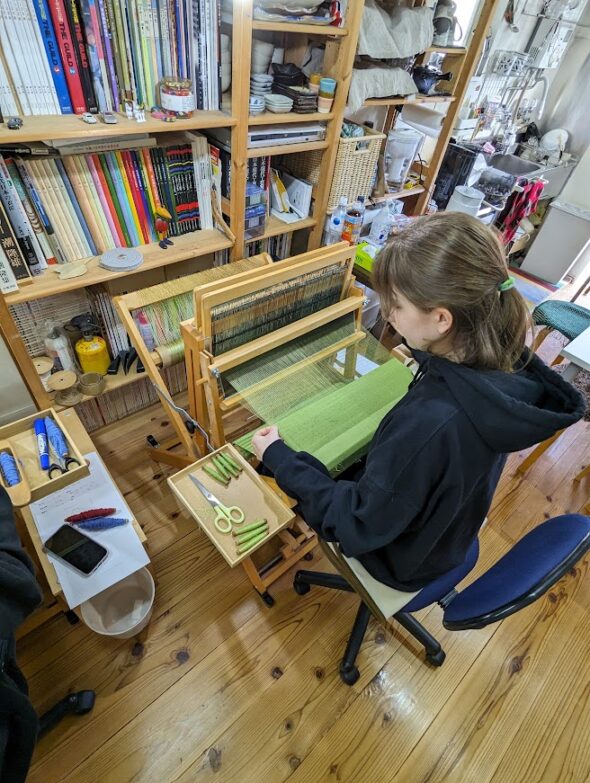
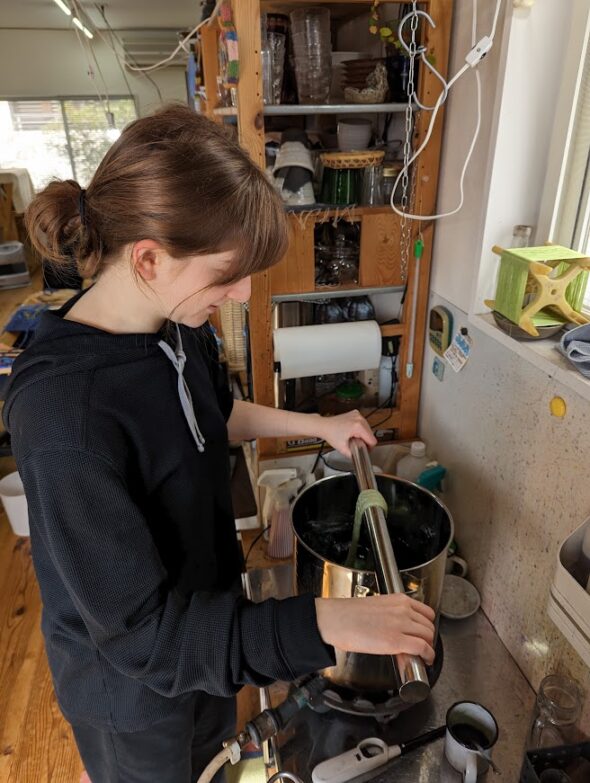
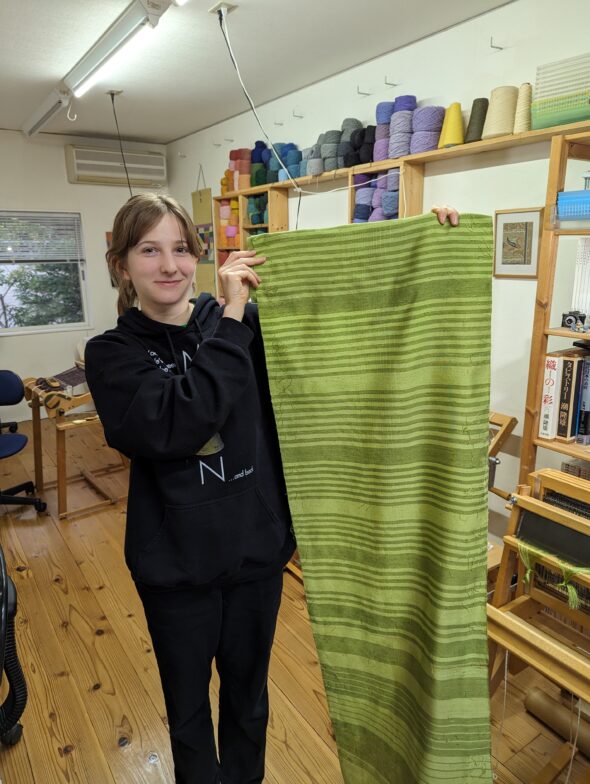
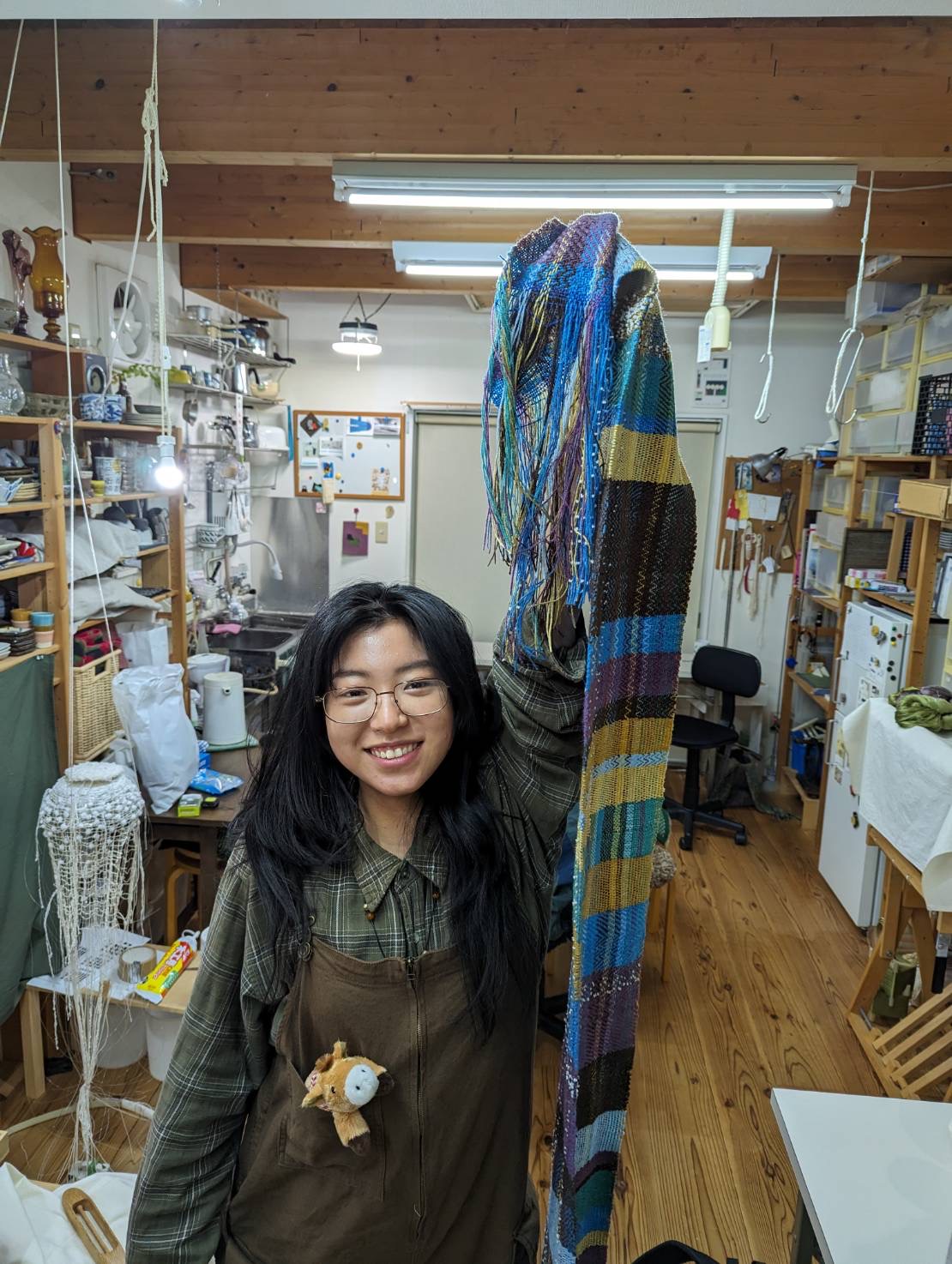
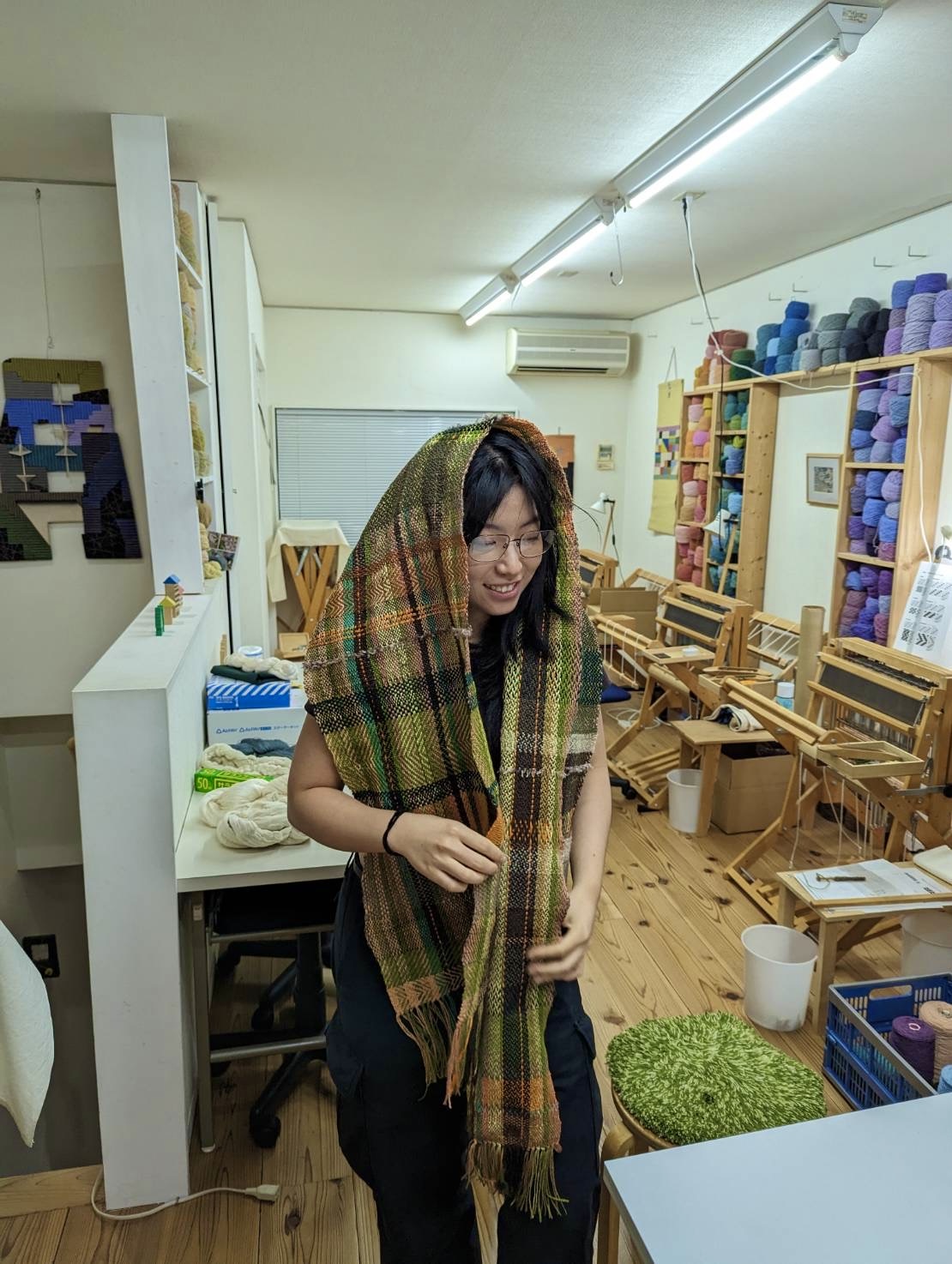
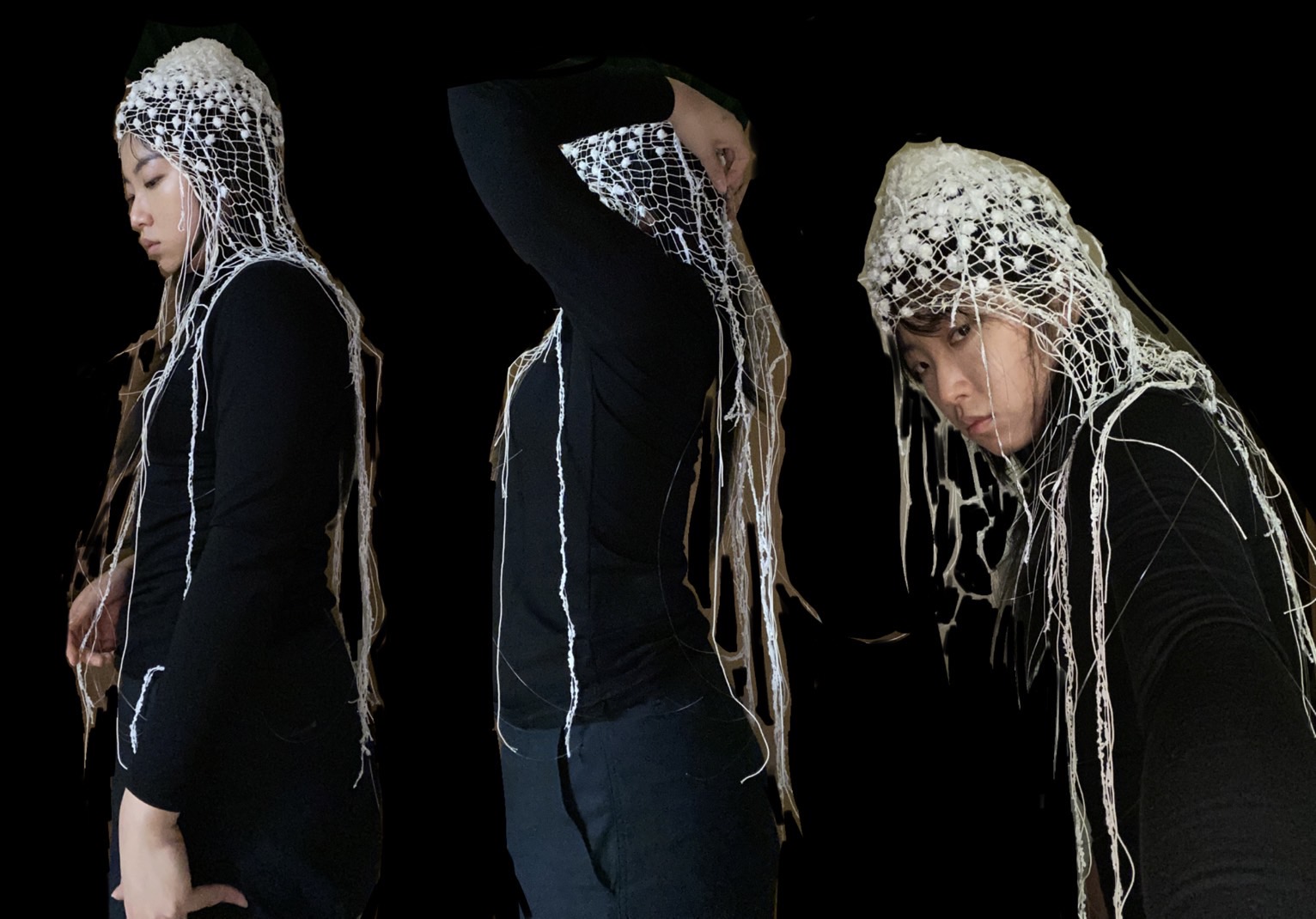
 For CIP I took weaving lessons with 河崎先生 and ゆり様. I learned to weave on the loom, develop my ideas into physical form, dye threads, etc. – creating 6 projects this semester (3 scarfs, two mats, and a wall piece). Having this time with 河崎先生 and ゆり様 has left me with much more than a new skill set – I have gained confidence in unfamiliar territory and have grown in my ability to enjoy the present. When I look back on this time and at the pieces I made I will be thinking of the laughs shared and enjoyment in problem solving that I experienced with 河崎先生 and ゆり様.
My advice around the CIP experience is to be as present as possible – it is easy to fall into routine and feel academic (or other) pressures but I think the CIP is a designated time where your personal growth and wants from study abroad can be centered. Also, I would not be afraid of the “boundaries” or “differences” (ex. Language barrier) you may perceive as hindrances to your ability to connect with those around you – showing up and choosing to be excited about what you are doing is enough to build meaningful relationships with your CIP hosts.
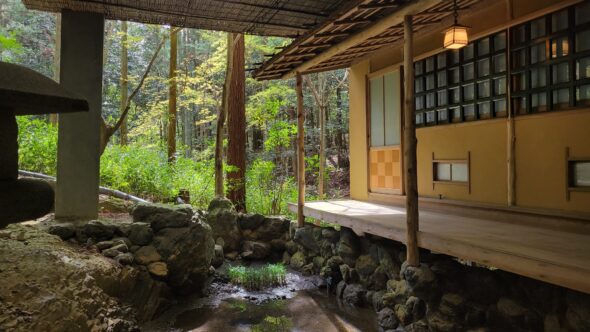
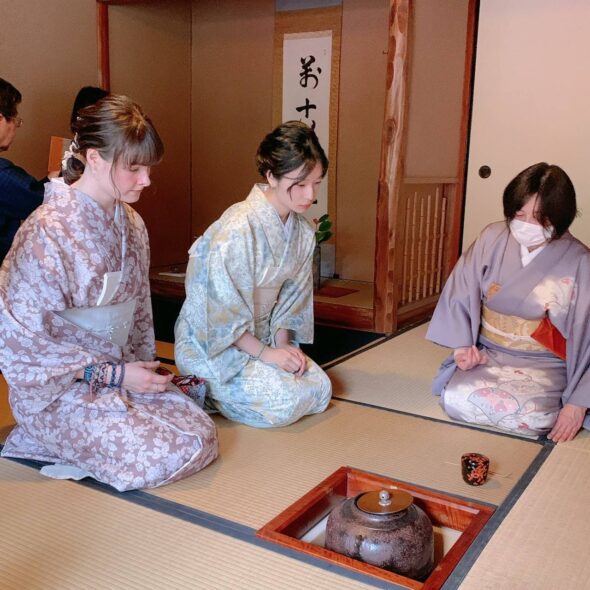
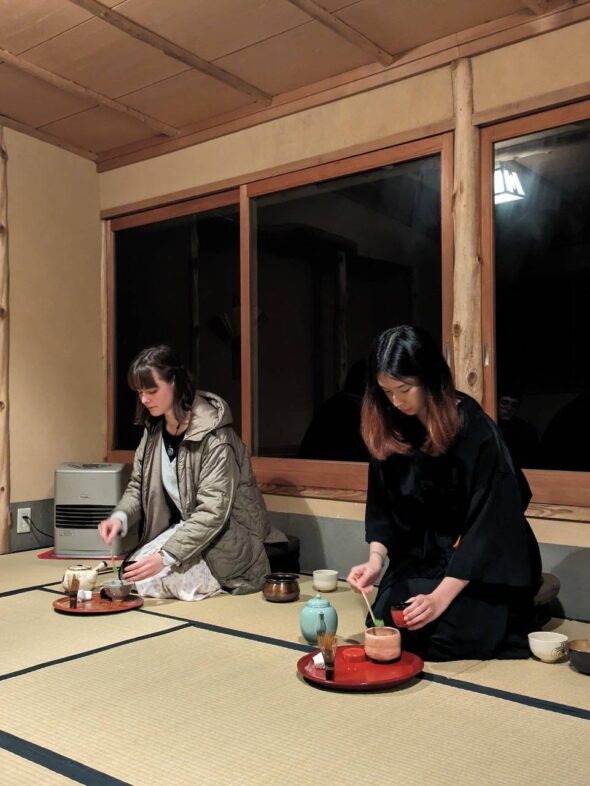
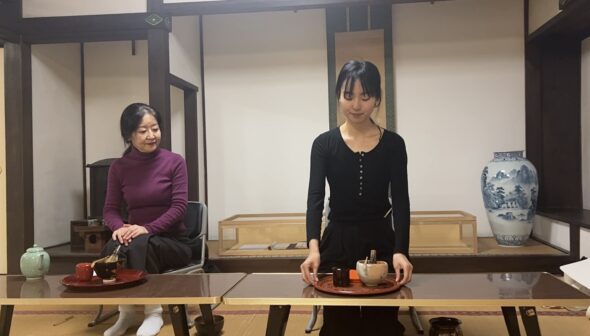
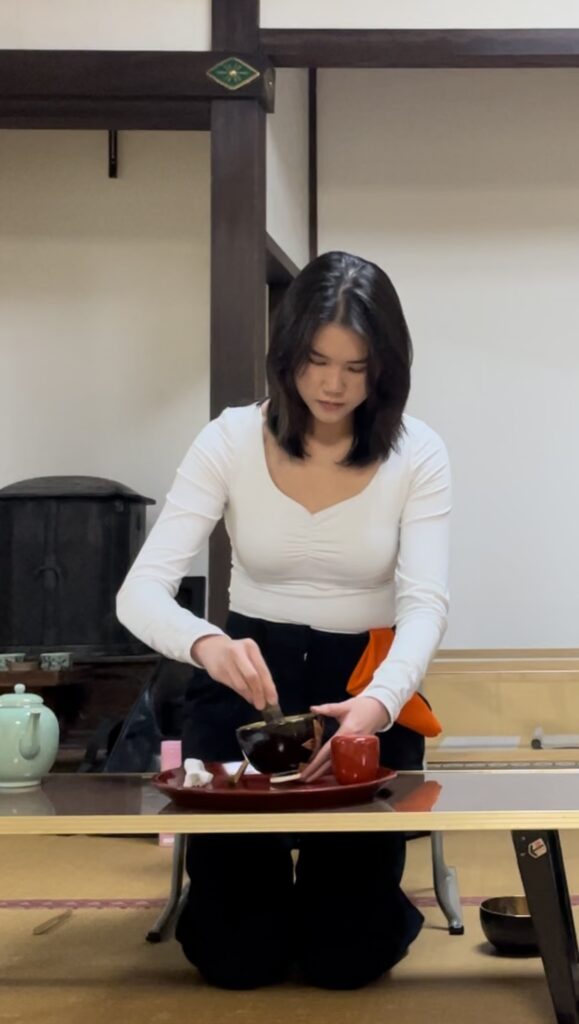
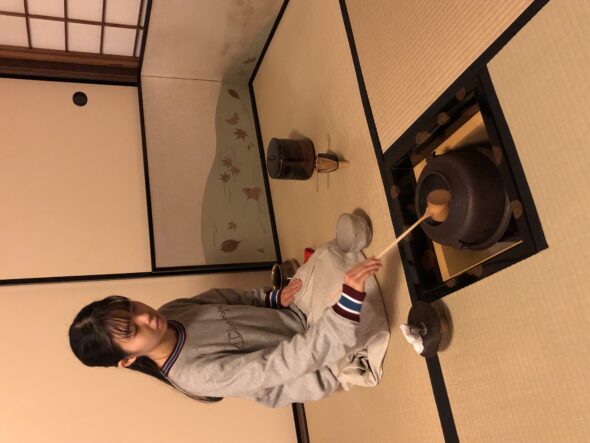 For my Community Involvement Project (CIP), I learned Japanese tea ceremony at 幽静庵 (yuseian), which is a tea room that was designed by 井口海仙宗匠 (Iguchi Kaisen), the brother of the 14th Urasenke Grandmaster 淡々斎御家元 (Tantansai). At the 幽静庵, I had many precious experiences, including learning various tea preparation procedures (お点前, otemae) and participating in a special ceremony to celebrate the change of season called 口切 (kuchikiri).