
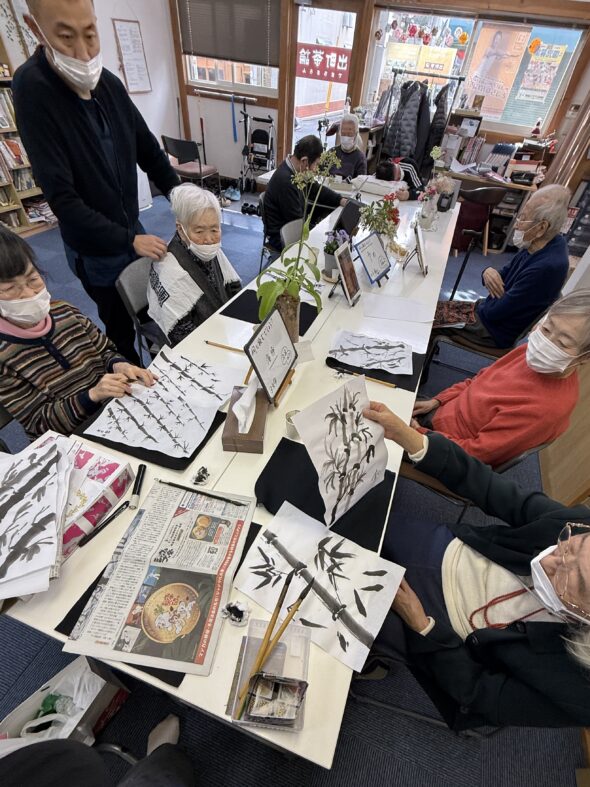
 At Demachi Salon, I led activities (Chinese, English, Ink painting, etc.) for a group of elders that come to this elderly care center. Throughout the 2 hour session, we would start with a casual chat while they do their daily health check ins, then I lead the activity of the day, we go on a virtual trip to places in Japan, daily exercise, and games at the end. I really had a lot of fun talking to the obaachans,and they were incredibly nice and warm to young people. The experience really made me appreciate the multigenerational connection. If you like interacting with or want to help elders, I think this would be the perfect place to practice your Japanese! But one advice would be to be aware that a lot of the elders speak Kansai dialect, which can make it hard to understand them at first.
「Institution」カテゴリーアーカイブ
Kayla Hall: Weaving Lessons
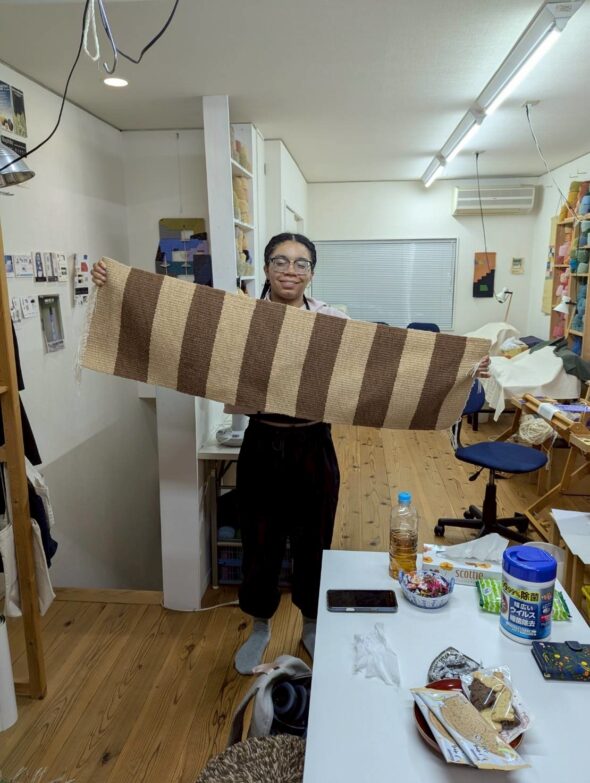
For my CIP this semester, I chose to do weaving lessons with Kawasaki Sensei once a week. Through this CIP, I learned to weave a new pattern each session.
I found this experience to be enjoyable and, honestly, very relaxing. I used these sessions to take my mind off work and focus mainly on improving my speaking skills. However, not only did I get to practice my Japanese speaking skills, but I also got to learn a new skill that I had never tried before. Even though I started very unconfident, with the encouragement of my sensei, I felt more at ease trying new things and holding genuine conversations with him and his wife.
I think for future students choosing their CIP, please don’t be afraid to ask questions and allow yourself to make mistakes. Especially when doing lessons like weaving, just being myself and allowing myself to relax around my sensei was the best way for me to learn from him. Additionally, once you allow yourself to be more open, your conversations each week will become less strained and/or robotic, and instead, friendly and like catching up with an old friend.
Sam Lindwall: Volunteering at Umekoji Koen
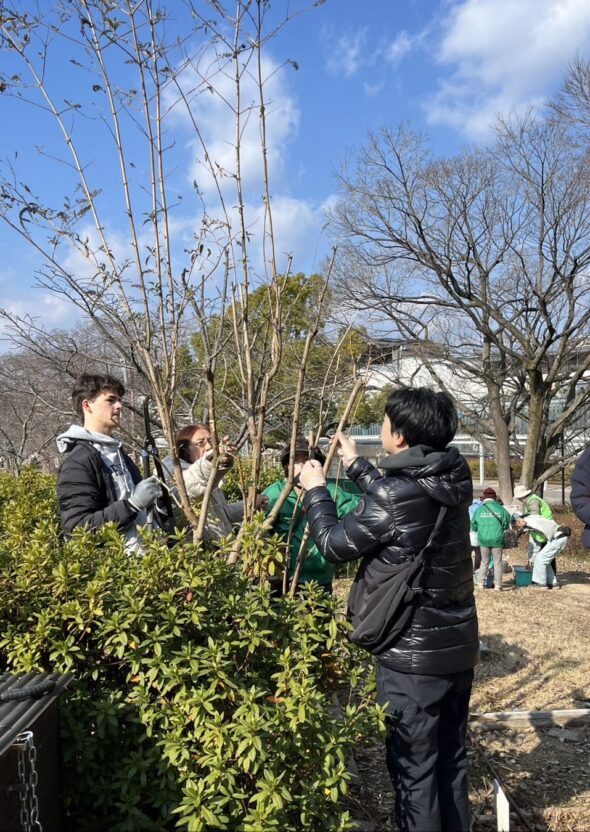 For my CIP, I volunteered at Umekoji Park, working roughly 2 hours every Saturday morning alongside a group of 10-15 Kyoto locals. Each week had a new goal: planting and maintaining flower beds, trimming trees, improving soil quality, etc. It was a fantastic way to become part of a local community. Everyone was welcoming and eager to make conversation (especially during tea time at the end of each session!). I enjoyed gradually building relationships with a few specific members as the weeks went on. Many Saturdays ended with small group meals or time spent riding the bus together back to our respective homes. I would highly recommend this CIP to anyone looking for a low-pressure way to practice your Japanese and connect with people of varying ages, while soaking up—and contributing to—one of Kyoto’s most lush yet lively areas.
Alexandra Klein: Pottery
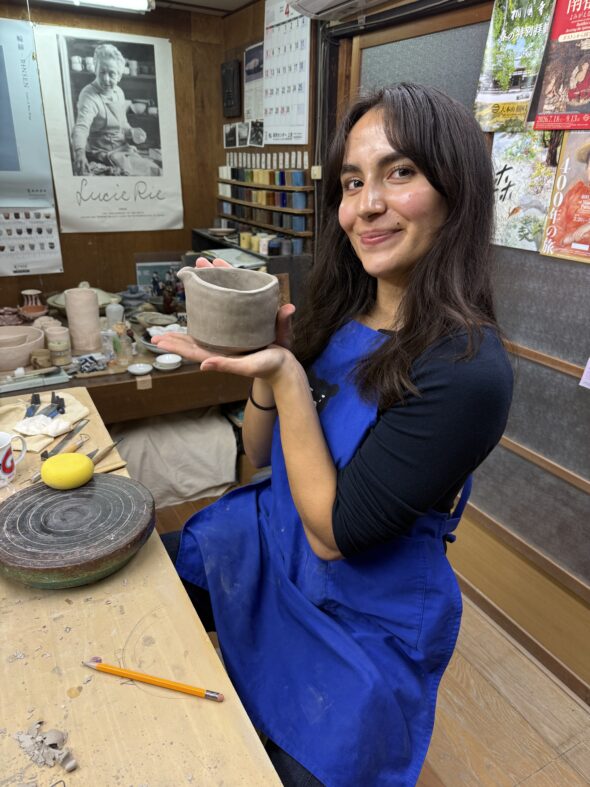
My CIP activity was attending group pottery lessons three times a month at Ikoma Ceramics. The studio offered a very nice intimate setting where I worked with the instructor and four other local participants. Since we all shared one large table while working on our individual pieces, it was easy to have fun, engaging conversations. Being the only college student in the group meant I was always with people older than me, which provided a great real-world environment to practice the polite Japanese I learned in class.
The sessions were held on Wednesdays or Sundays and lasted two hours each. I really enjoyed the relaxed atmosphere; it felt like a safe space to ask questions or simply work on my pottery to de-stress. Through this activity, I became more confident speaking Japanese and understanding the local dialect.
I really recommend Ms. Ikoma’s studio! She is very approachable and flexible with scheduling through text. If you’re looking for creative freedom and want to craft some unique pottery pieces to take home, this is the perfect opportunity.
Mica Brabander: Volunteering at Mitsuba Preschool
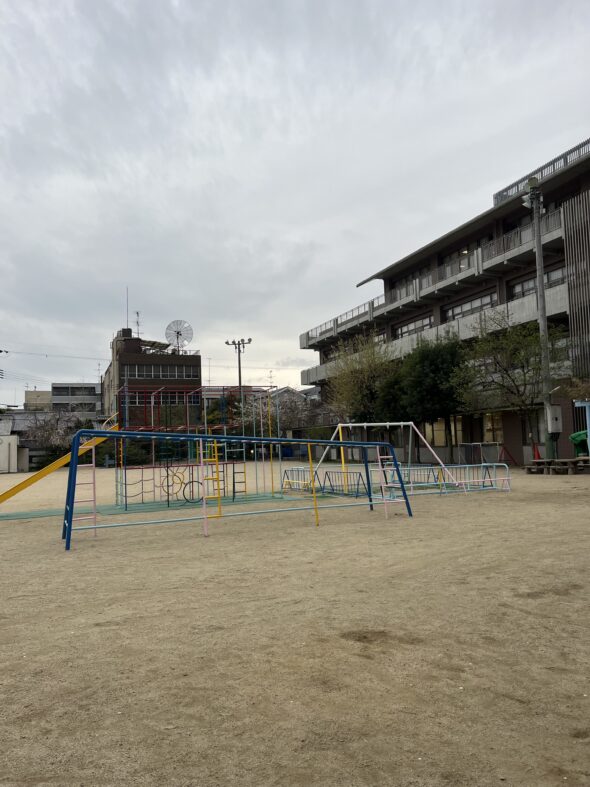 For my CIP this semester, I chose to volunteer at Mitsuba Preschool right near Doshisha’s campus. I had the opportunity to play with a large group of kids (~30–40) aged 3 to 6 once a week.
Each week, I joined the kids for activities including drawing, playing tag, reading, and origami. I had an amazing experience getting to know many of the kids well, and I always looked forward to going each week. I was able to practice my casual Japanese speaking skills with the kids, and formal Japanese with the teachers.
I would highly recommend this CIP to anyone who wants to play with a ton of energetic kids. Although it was a bit challenging to understand the kids at first, it became very rewarding as I got to know and understand them! My advice is to try your best and don’t worry about making mistakes because kids are very forgiving!
Jake Lefort: Ohara International Clubhouse

My CIP was with Ohara International Clubhouse, an after-school program at Ohara Elementary/Middle School that focuses on teaching the students in Ohara about other cultures from around the world. My responsibilities mostly included planning games for the students, reading storybooks in English (while another teacher read the Japanese), and building strong relationships with the students!
Ohara is a really special place, and having the chance to volunteer there is an amazing opportunity to get out of the city and spend some time in nature every week. All of the teachers and staff at Ohara are also incredibly welcoming, especially the woman in charge of the Clubhouse, Hijino Kaoru-san.
If you’re interested in volunteering at Ohara, my advice would be to really understand the commitment you’re making – the commute can be a lot! But the work is really rewarding, and working in a small community like Ohara will let you really see your impact every time you come back.
Miya Whiteley: Futsal with G.1 Kyoto
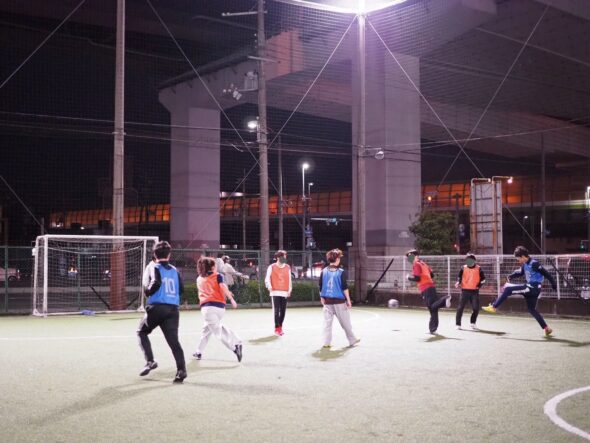
For my CIP this semester, I played futsal with the group G.1 Kyoto at the Takeda Futsal Courts. We played on Monday or Thursday nights, and the group was coed with a mix of students and working adults.
I had a lot of fun in this CIP because I was able to continue playing my sport and connect with Japanese locals over that interest. I learned a lot about what recreational communities are like in Japan, and made friends who shared their experiences of being in school or working in Kyoto.
I would suggest something like this for anyone who wants to be active in their CIP and be in a casual setting where you can make friends with people of a similar age! Don’t be afraid to reach out to potential CIP groups you’re interested in just because they don’t already have a relationship with KCJS. They will most likely be excited for you to join! I found G.1 through the website https://www.net-menber.com/ which has many other kinds of groups posted as well.
Sasha Jiang: 弓道(Kyudo)
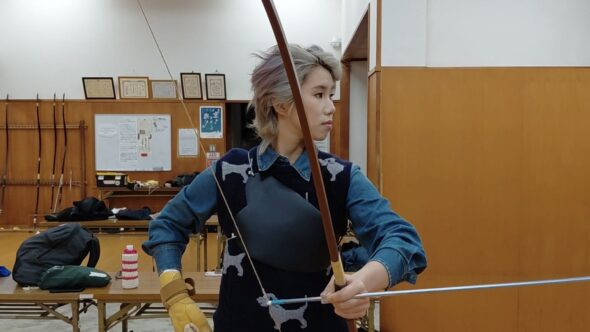
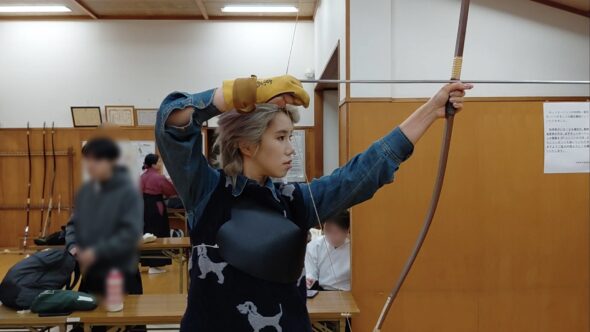
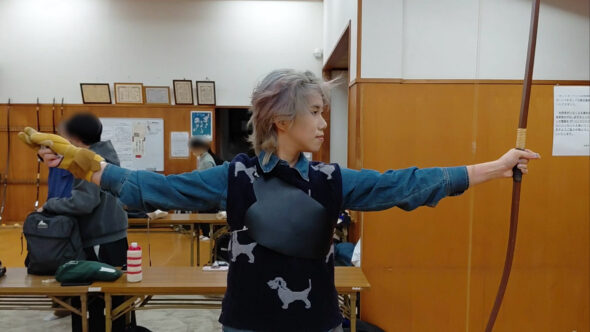 My CIP activity was Kyudo, where I practiced traditional Japanese archery while learning both the physical techniques and the underlying mindset behind the sport. Through this, I was able to engage with Japanese culture in a more hands-on and meaningful way.
What stood out to me the most was how much Kyudo emphasizes patience, control, and intention rather than just results. The sensei was incredibly kind and supportive, which made the learning environment feel welcoming and encouraged me to keep improving.
I would strongly recommend choosing kyudo as your CIP activity. It’s a unique opportunity to experience Japanese culture through a traditional sport, and even if it feels challenging at first, the process is incredibly rewarding if you stay patient and committed.
Emilija Strydom: Fly Dance Studio
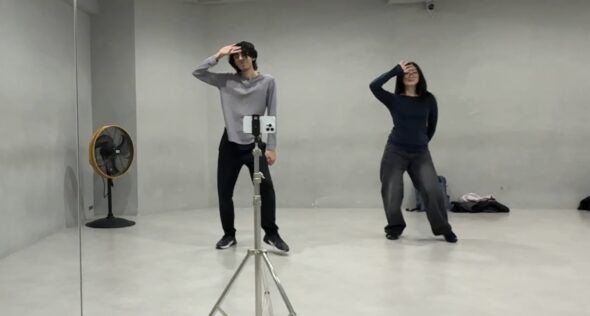
For my CIP this semester, I attended dance classes with a friend at Fly Dance Studio once a week. Here, I learned a new short choreography every lesson.
This was an amazing experience, as not only did I get to practice a new kind of dance, but I also got to meet and interact with other Japanese people who attended, as well as the teacher. Through this, I feel that I was not only able to improve my dancing skills, but my Japanese speaking as well!
Some advice I would give is not to be afraid to ask questions in class! I think it can be easy to get stuck in the headspace thinking you have to suffer in silence if you don’t remember a certain part of the choreography, for example, but the dance teachers are so welcoming. Also, asking questions is a great way to interact with the teacher as well as other students who may attend class!
Kaya Kamei: Ikebana
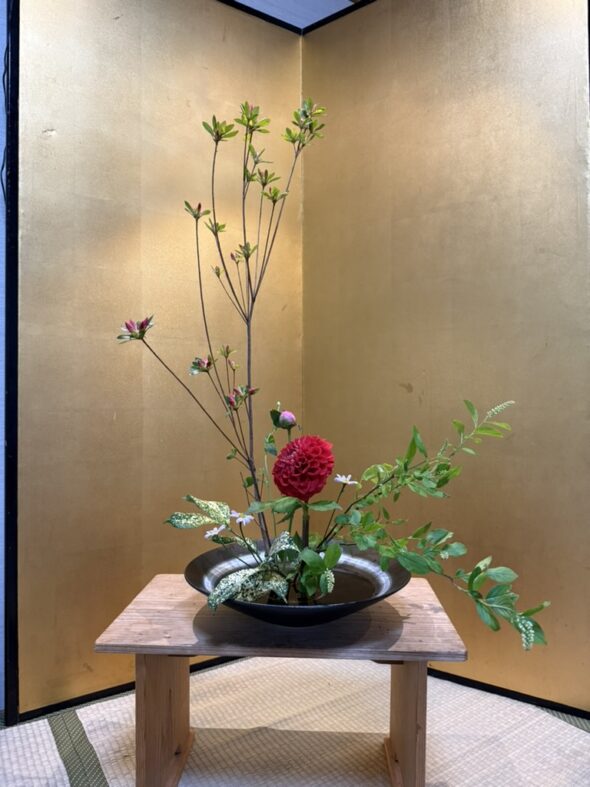
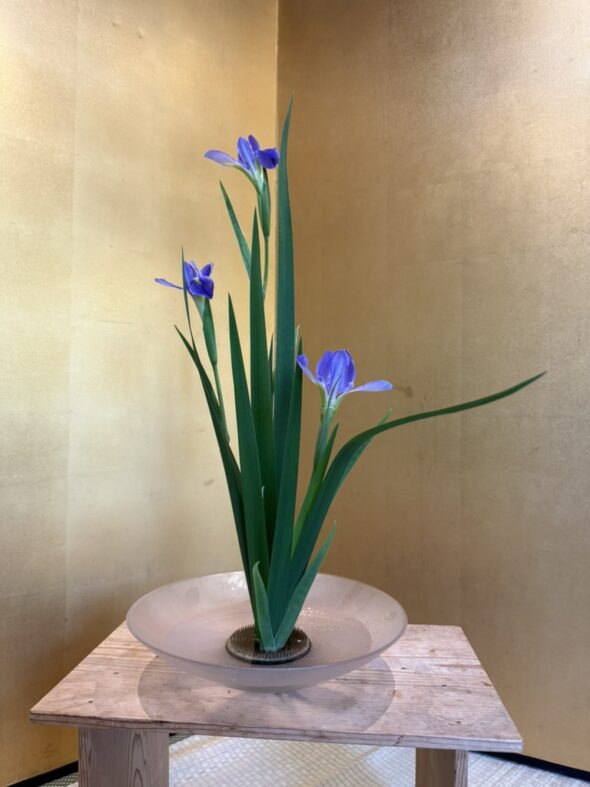
Our ikebana lessons were under Ashida Ichiju Sensei at the Kadou Enshu School of Ikebana. We had opportunities to take small group/one-on-one lessons at the Kadou Enshu School, or larger group lessons at the Heartopia Kyoto Community center. During these lessons, we would begin with a short explanation of the names of the flowers we were using that day, and an explanation of the style we would be arranging. Then we slowly worked on our own arrangements, getting feedback from Ashida Sensei as we worked.
I had such an amazing experience learning from Ashida Sensei. Beyond just teaching the stylistic philosophy of ikebana, he would also explain the rich history surrounding the art. While he does speak English, I wanted to challenge myself to speak only in Japanese, and he was very patient and always made sure to explain words I was unfamiliar with. After the one-on-one lessons, we had the honor of sharing tea with him, and during this time I was able to chat with him more about his career, and he asked me questions about my semester as well. At the last lesson, it was so hard to say goodbye as I really enjoyed the calm and kind atmosphere, but Ashida Sensei said we were welcome to come visit and take lessons again, so I hope to be able to return to Kyoto soon!
A piece of advice I would give is to really make an effort to talk to your Sensei (if you’re doing a CIP with a Sensei, but also all of the Senseis within KCJS as well)! The first few weeks I went, our conversations were mostly about ikebana, but as time went on I was able to ask about all of my curiosities and Ashida Sensei was so enthusiastic to talk to me, it was overall just such a welcoming and fulfilling experience and I think it would have been completely different if I hadn’t made an effort to make conversation. Also, don’t be afraid of one-on-one lessons! I was definitely nervous about it since there are certain rules and manners to be careful of, but over time I found that the one-on-ones was where I was able to chat with my Sensei the most and also get lots of feedback!