Christine Kang: Volunteer at Mitsuba Kindergarten

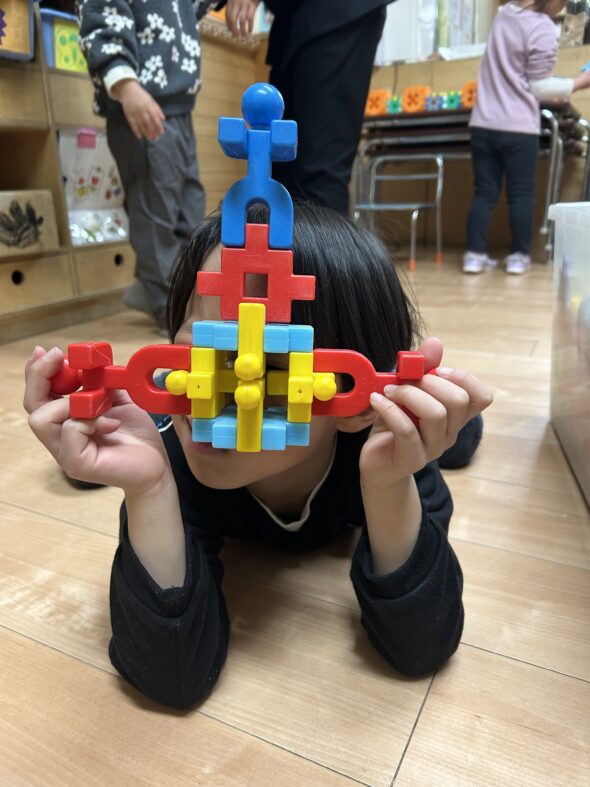
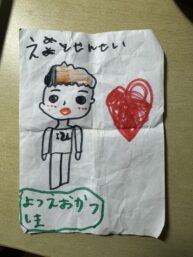
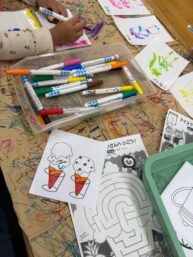
I volunteered at Mitsuba Kindergarten, a local preschool in Kyoto, where I spent time each week interacting with children aged 3 to 6. My responsibilities included playing games, drawing, singing songs, helping with origami, assisting children with snack time and bathroom trips, and participating in their daily routines alongside the other teachers. I was essentially a “sensei” figure to the kids, helping out wherever needed while using the opportunity to practice and improve my Japanese.

The experience was both heartwarming and humbling. While the children were incredibly affectionate—often drawing me pictures, hugging me, or sitting in my lap—there were also moments when the language barrier made me feel unsure or overwhelmed. I struggled at first with basic vocabulary and knowing how to communicate in a way kids would understand, but over time I gained confidence by listening carefully, asking questions, and even laughing along with them when I made mistakes. I also learned a lot about Japanese culture, especially how structure and rule-following are emphasized even from such a young age.

I highly recommend Mitsuba Kindergarten to students who enjoy working with children and want to practice their Japanese in a natural and supportive environment. It helps to go in with an open mind, a playful spirit, and the willingness to learn—not just language, but how to communicate and connect without always having the right words.

Dake LaSala: Weaving

This semester I got the chance to learn to weave under 河崎先生. After learning to weave, I spent many hours a week working on projects. I had a lot of artistic freedom, so it would be great for people who want to create something in their own vision while receiving assistance! I had so much fun. I would recommend that those doing this CIP be explicit with the amount of time they are willing to invest from the beginning. Many weeks I was at weaving for 12 hours. I was okay with that, but it could be hard if you weren’t meaning to be doing your CIP for that much time. I will say you do have to invest a significant amount of time if you actually want to finish projects.

Daniel Kryzhanovsky: Dance

While here in Kyoto, I did dance lessons at Fly Dance Studio near Teramachi. While here, I specifically focused on hip-hop dance lessons, slowly and surely improving my skills one class at a time. For those interested, they offer a variety of dance lessons other than hip-hop, like K-pop and jazz.

Although I wasn’t super good at it at first, I gradually improved and learned several dance moves and movements I wasn’t sure I could pull off, isolation in particular being one of the techniques that challenged me in a good way. I also met some cool people along the way who ended up chatting with me from time to time in between lessons.

If you want to do something that makes you feel a little intimidated or out of your comfort zone, don’t worry about those feelings and do what’s calling to you. You’ll end up regretting that decision–do whatever is calling to you and you’ll have the time of your life!

Sergianni Jennings: Volunteering at Mitsuba Kindergarten

This semester for my CIP I volunteered at Mitsuba Kindergarten. As a volunteer, I was able to play with children and also act as an assistant to the teachers for any help they needed. I had a really great experience at my CIP this semester and was able to make a lot of memories with the kids. I especially enjoyed sitting down and drawing together with them and was touched by the amount of drawings they gave me throughout the semester.

The teachers were also incredibly kind and I always enjoyed talking with them during my volunteer hours. The kids also have a daily snack time and the teachers would often include me as I had not tried many of the Japanese snacks that they served!

I would recommend this CIP to anyone who loves playing with kids and being in a lively environment. I would also suggest to those who do this CIP to have confidence in your Japanese when speaking to the children or teachers as they are all kind!
Annika Crawford: 茶道 Tea Ceremony

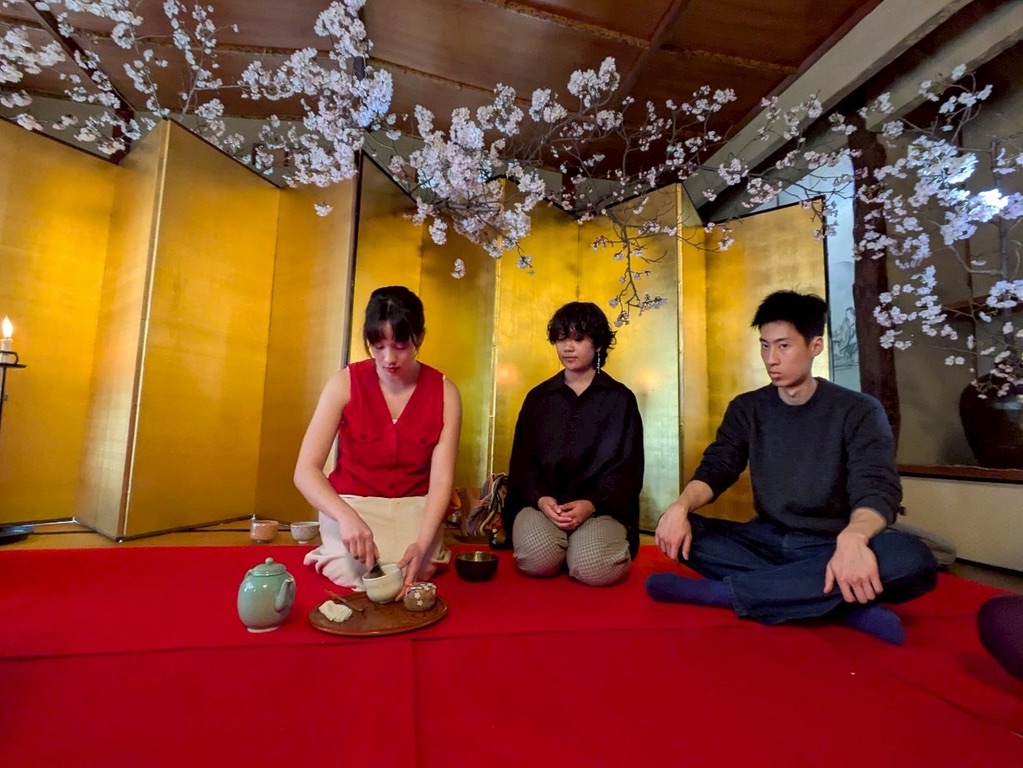
For my CIP, I learned tea ceremony with the wonderful Fujimura sensei. Every week, we met at a quaint tea house in Takagamine, a mountainside town, accessible from the nearest bus stop by a 25 minute walk over a creek and through a bamboo forest, which always helped quiet my mind and get me in the mood.

During my practice, I learned how to serve tea, but more than that, the culture of hospitality and reverence to the present moment that belies the tradition. While this might sound intimidating, Fujimura sensei, with her patient warmth and bubbly talkativeness, never made it feel that way. Like a true tea master, she always made me feel at home; serving me delicious homemade Wagashi, and taking care to take me on special trips based on my interests, such as cherry blossom viewing in kimono, and visits to Raku ceramics museums.

If you are curious about Kyoto’s traditional culture and beliefs, or just want to meet an amazing and fascinating woman, I can’t recommend this CIP enough. If you are concerned your Japanese level will hold you back, I can confirm I took this CIP with the lowest level of Japanese, and while it was super difficult at times, Fujimura sensei and I built a beautiful relationship and discovered new ways to communicate. Not only do I hope to continuing serving tea to others when I return to America, but I carry with me a deeper understanding of how to tap into peace, confidence, and selflessness wherever I am, that equips me well for the future.


Stella Tsogtjargal: Shamisen


For my CIP, I decided to learn shamisen! I haven’t played a musical instrument since middle school and I think classical Japanese music is really beautiful, so I really loved learning shamisen, which is kind of like a guitar.

Two other KCJS students were at our lessons, and it was really nice to have people there that weren’t just the students/teachers at the studio. Everyone at the studio was very kind, and we’d often all get dinner after the lesson.

The final performance was very special. It was the first time I had worn a kimono, and everyone from the studio was very encouraging. I’m happy with how everything turned out!

If you’re interested in engaging with Japanese culture through music, I couldn’t recommend shamisen, koto, or shakuhachi more!

Zhihe Tian: KGK (Christian Student Association)

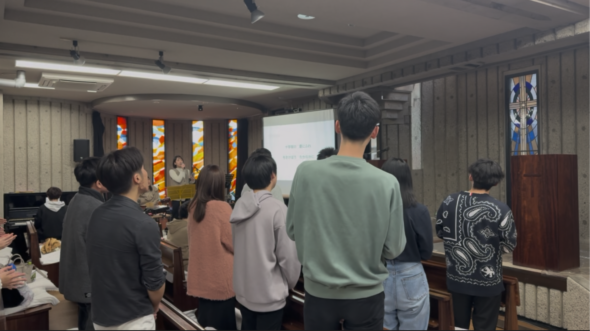
My CIP activity is participating in KGK (Christian Student Association). KGK is a circle that any student can join to meet other students and learn about God and the Bible. There are weekly meetings (Tuesdays) starting at 6:30 PM. We will start with worship (singing songs), then self-introduction, then break up into small groups (4-5 people) and chat about a given topic to get to know each other and learn about the Bible. 


As for advice for incoming students, I encourage you to come to KGK’s meeting even if just once. The friendliest and most open people I have met in Japan are from KGK. The first time I joined, people came up and introduced themselves to me. Everyone is curious about the newcomers and wants to be your friend. I was one of 2-3 foreigners who participated regularly. KGK is majority Japanese students and everything is in Japanese. Despite not being able to understand everything (especially when I first arrived in Kyoto), the warm atmosphere makes going worthwhile. There is an Australian missionary who comes to the meeting weekly, so if you need translation, someone is there for you. Also, I’m not a Christian, but just interested in Christianity, so even if you are not Christian, you are more than welcome to come. 


In spring, there is a 3-day camp for KGK that I attended. It was a bit scary because there are a lot of people and the number of foreigners is few, but I’m really really glad I went because I bonded with the locals and had a once-in-a-lifetime experience.
Going to KGK has made my time in Japan very special. I bonded with the locals and had cheerful moments I otherwise wouldn’t have.

Alex Li: Volunteering at Mitsuba Youchien

For my CIP, I volunteered in the Mitsuba Youchien every Tuesday for three hours. I would help the kids with drawings, puzzles, and other games as well as talk with them in Japanese. It was an extremely enjoyable experience and I was able to improve my Japanese through talking with the children. Although it was a bit intimidating at first, I thought they were much more patient and understanding than I had initially thought and it became second nature to talk about what they were doing and their hobbies and interests. I would recommend for people looking to do this to start asking specific questions and not being afraid to put yourself out there: that’s often the only way you will be able to start making deeper connections with the children.

Kylie Gillen: Wasai

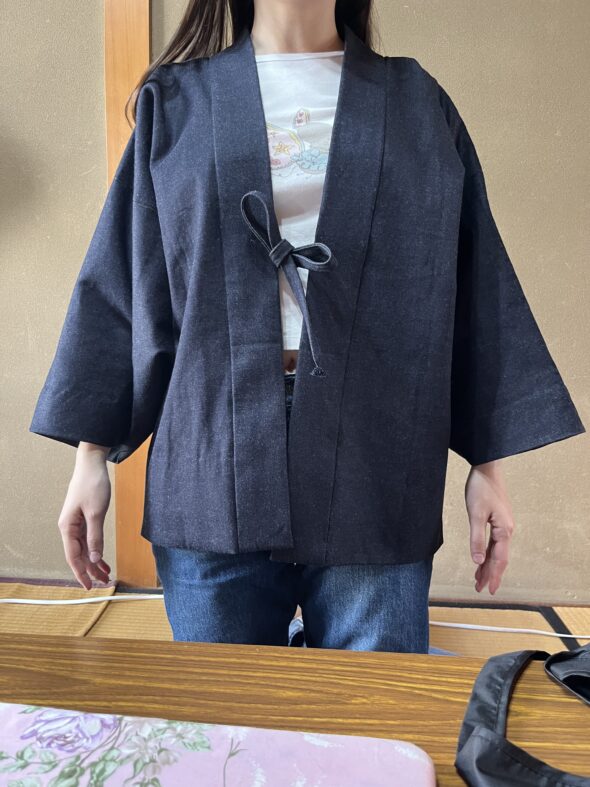
For my CIP activity, I did Wasai (和裁) which involves the traditional Japanese art of hand-sewing garments including a Haori (羽織), which was what I ended up making. 

The environment of the particular Wasai classroom I went to, Kyoto Japanese Dressmaking School Rokkaku Omiyacho (京都和裁教室六角大宮町), was conducted in an old, Japanese-style house with traditional sewing notions, providing an authentic, comprehensive experience. I had the opportunity to participate in the course alongside Japanese students of all ages. 

Although it can be intimidating, please try to speak in Japanese whenever you can! Most times, it will turn out better than you think 🙂

Mia Nakamura: Volunteering at a Nursery


For my CIP, I volunteered at Pesutarotchi Nursery, which is a place for kids from ages 0-6. Every week, I would go to the nursery, wake the kids up from their nap, gather them and eat a snack together, play with them, and then help clean up. The reason that I wanted to do this activity for my CIP was because I do not have much experience with young kids since I am the youngest child and cousin on both my dad and mom’s sides, so I wanted to get more comfortable playing and interacting with them. A lot of the time I felt very awkward, but after some time, just being around the same kids allowed me to build a rapport with them, so after a while they would come and play with me. My advice to incoming students is to just act like a kid when you’re playing with the kids and don’t overthink how to interact with them.