Tamar Feinland: Volunteering at the Kyoto Animal Protection Center

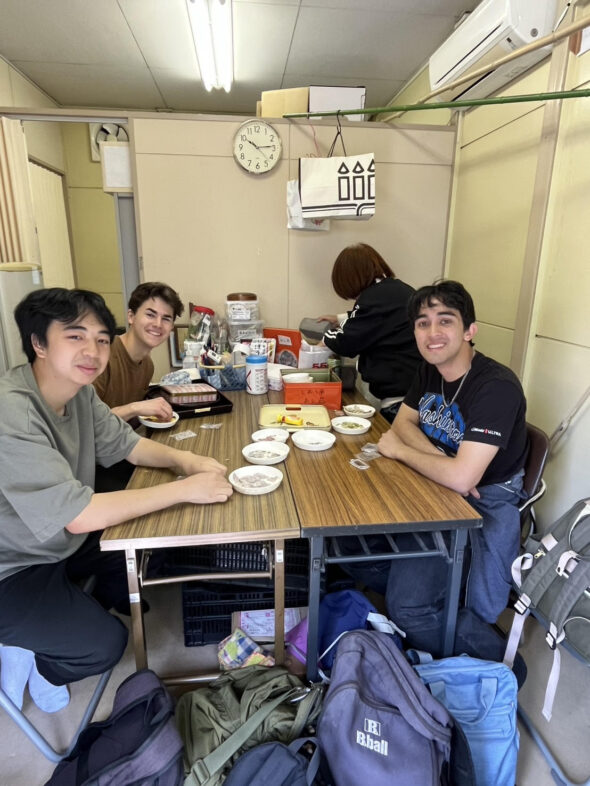
I decided to volunteer at an animal shelter for my CIP. I mainly took care of the dogs, and the members at the center would teach me how they walked, trained, bathed, and played with the dogs, as well as how they cleaned their enclosures.

I was able to interact with the other members quite a bit, as we would always take care of the dogs together, so if we were playing or walking them then I was able to engage in conversation with them. I also really enjoyed spending time with the dogs, and it was clear that the people at the center cared a lot about each of them.

I would advise future students to try starting a conversation with the people at your CIP. I was always nervous that maybe the other members wouldn’t want to talk to me because I’m a foreigner and my Japanese is far from perfect, but whenever I worked up the courage to ask them a question about themselves or the dogs we would always end up having a nice conversation, and it was a great opportunity for me to practice Japanese and connect more with the culture.

Ilya Solovjov: Theatre

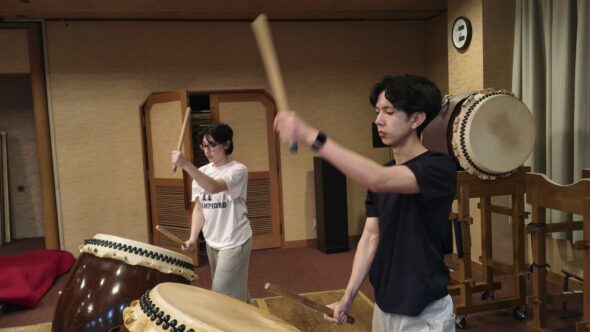
'あなたの”はたらく”を想像してみよう' performers acting during a rehearsal of the show.

‘あなたの”はたらく”を想像してみよう’ performers acting during a rehearsal of the show.

For my CIP, I took a part in a community program that involved meeting over the course of three months to talk about working and then taking part in a performance at the end of the program. The performance was like documentary theatre in which everyone talked about their own experiences or thoughts about working, in their own words.

My CIP was really difficult, especially at the beginning, and left me confused a lot of the time. It was hard being part of a group conversation in Japanese so I was often confused. But, I’m so glad that I kept going because performing and getting to know the other participants in the program was incredibly rewarding and I felt like I grew so much – both in Japanese ability and personally.

This activity required a high level of Japanese, and an ability to keep going and trying to be open to interacting with people a lot. It will probably be very difficult, but I recommend that you try to be as open as you can to meeting knew people – just saying hello and asking them about their week will help so much, even if it feels like you’re out of place. This program benefits so much from discussing your opinions and experiences, so if you share them, they will truly make a difference.

Jake Korde: Stargazing At Doshisha University

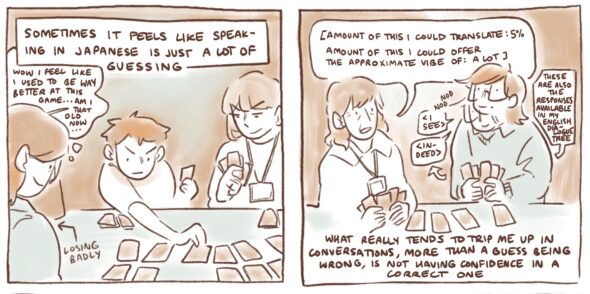
This semester, I joined a stargazing circle at Doshisha University. The activities ranged from field trips to see meteor showers, to selling fried ice cream at the school’s anniversary festival. There were also several days where the activity was just hanging out. For instance, there was one day where we played card games while waiting for the sun to set, and then went out to dinner after the activity ended.

I had an amazing time at my CIP. Initially, I had wanted to do join a photography circle, but none of them ended up working out. I wasn’t sure what I wanted to do, but I know I wanted to join a circle at Doshisha because I wanted to make Japanese friends. Circles at Japanese universities are often a way for the members to meet new people and make friends. I was lucky enough to meet many lovely people through the stargazing circle and make lasting connections.

My advice for any incoming student is that the CIP is what you make of it. There were multiple times where I had stargazing activities that evening, but I was feeling tired or apathetic and not wanting to go. In the end, I pushed myself to go and it paid off tremendously. No matter what CIP you choose, you can always make the most of it!

Mina Chioldi: Volunteering at Mitsuba Kindergarten

For my CIP activity I got to volunteer and play with kids at a local daycare near Doshisha University. It mostly consisted of crafts, drawing, and games, and the faculty and kids were very welcoming even though I was a foreigner with a low level of Japanese.

This CIP was not a big time commitment and did not give me a lot of responsibilities, so I would recommend it if you generally like kids. They were very well behaved and cute, so I found it stress relieving to go each week and not focus on my schoolwork. I think that you would get more out of it if you had a higher level of Japanese, but it’s possible either way.

Andrew Feenstra: Kyudo

For my CIP, I decided to do Kyudo at the Kyoto City Budo Center. There are a lot of things to remember each week, such as proper etiquette, proper form, etc., but once you get it down it feels insanely rewarding. The sensei at the dojo was super friendly and was very accommodating despite the language barrier. At the end, I felt extremely comfortable using the huge bow and was able to hit the target almost in the center! My advice to incoming students would be that you should not hesitate to make more friends at the dojo! It can be intimidating, but it can make your experience a lot more meaningful and improve your Japanese tenfold.

Jacob Solano: Fly Dance Studio

At Fly Dance Studio, you have the opportunity to learn dance from a diverse range of instructors. Whether you’re interested in hip-hop, k-pop, jazz, house, or any other style, there’s a class for you. To get started, create an account with them and choose between paying per class or purchasing a pass that allows you to attend multiple classes freely.

If you’re a beginner dancer looking to learn choreography, Fly Dance Studio is the perfect place to learn. The instructors are incredibly friendly and welcoming, and most importantly, they really invest in your learning. Dancing at Fly Dance Studio was a blast as the environment was super fun and encouraging. It seriously reignited my love for dance.

Phoebe Yao: Dance at Fly Dance Studio

Chika’s 初めてのHip-Hop Class!

Fly Dance Studio is a dance studio located in Sanjo where you can attend a variety of classes ranging from beginner to advanced in styles ranging from k-pop to hip hop to breaking, locking, freestyle, jazz, and more. 

Although this CIP would definitely require more effort on your part to make friends and connect with classmates and teachers, it is an especially great opportunity for experienced dancers to experience the dance scene in Japan firsthand! 

I definitely recommend picking a CIP that has both components of something familiar and unfamiliar. For me, dancing k-pop was somewhat familiar, and attending class and dancing hip-hop were wholly unfamiliar to me. Whenever I was struggling with aspects of the unfamiliar like the classes going too fast or the teachers being scary, I was able to fall back on the k-pop class and my enjoyment of that choreography and that music, and that experience helped me to persevere past the others. 

My biggest piece of advice is to try and make friends with the people at your CIP! Although it was extremely difficult for me in the moment for factors such as most of my classmates being middle schoolers and already in extremely tight knit groups coming to class and there being very limited space in the studio for talking in between classes, in hindsight, I could have definitely attempted to bond with the classmates I kept seeing over and over at the same classes. For this CIP in particular, foreigners are not an unusual sight at the dance studio, so it is definitely a little bit more of a safer space to attempt and speak to Japanese people you’ve never met before. Additionally, the dance scene as a whole appears to be somewhat casual and pretty social, so it definitely felt more approachable or acceptable to try and start a conversation than it might be in other more formal settings. The studio itself is also surrounded by a ton of trendy shops and a movie theater, so it’s a great place to hang out before and/or after class as well!

Charlie Carpenter: Jiu Jitsu

For my CIP this semester, I chose to practice Jiu Jitsu at Ground Core. Ground Core is a dojo run by Morimoto Sensei and includes many other skilled masters at Jiu Jitsu that come to practice. The people there are fun to train with and are very kind to new members. Although Jiu Jitsu was a new sport for me I thoroughly enjoyed my experience at Ground Core, it is one I will never forget.

Jordan Lin(Breakdancing club: Egoistic Dancers)

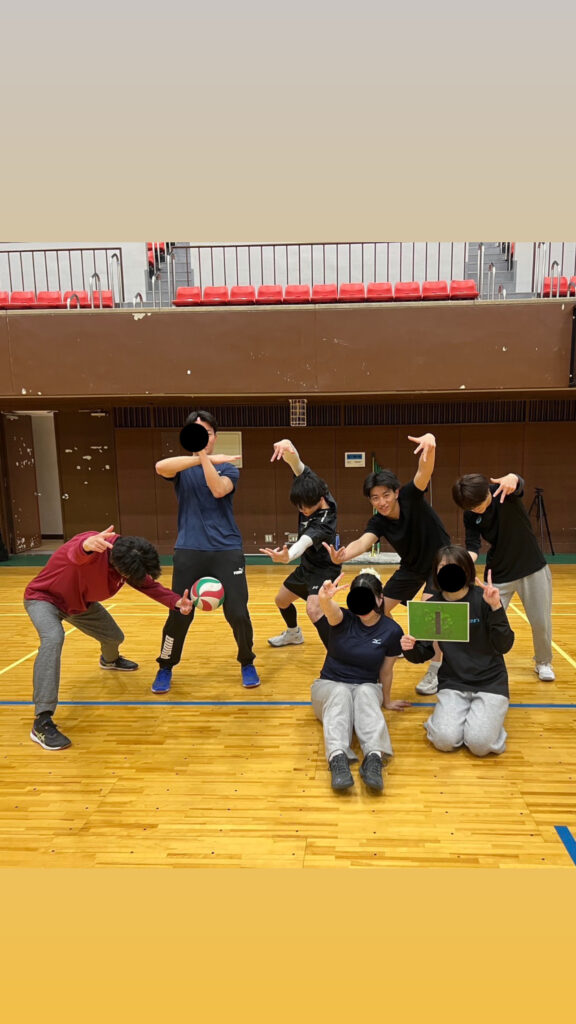
For my CIP, I participated in the hip-hop/breakdancing club called Egoistic Dancers.  At the club, we did some workshops and taught each other moves.  They have different group chats for what year of breaking you are at, for example, if you are a first year, they would invite you to beginner workshops. The club didn’t really do any cyphering, which I feel like was very much needed, as it allowed everyone to interact with each other.  Many of the club members were very busy with upcoming tournaments and shows, thus there was not much room to interact with fellow breakers.  Unfortunately, they also did not have a real break space, so I would often go to another place to break.  Some advice would be to do some more research before committing to a CIP, and it doesn’t always have to be something that you are really into, because if I could go back, I would have changed my CIP to something I’ve never done before but had some interest in.  I think CIP should be moreso a place to meet and interact with the local Japanese students.

Umi Imai: Intensity Basketball Circle

For my CIP, I joined Intensity, one of Doshisha’s basketball circles, where I participated in weekly practices throughout the semester. This circle holds practices on MTF from 3pm-6pm, and there are usually around 10-15 members who always show up.

At first, I struggled to communicate with the other members as the circle has a quieter, more gradual style of building connections. However, by showing up consistently and playing in practice matches with the other members, I slowly understood the rhythm of the group, felt more comfortable and included, and was also able to make friends.

My advice to incoming KCJS students is to be open to slower-paced relationship building and to show up consistently, as the connections form naturally over time. I also recommend not hesitating to speak up or ask if you can play with the other members, because usually the Japanese members are really nice and want to play with you but they can be a bit shy to ask you themselves.