Skyler Lee: Primo Passo Orchestra (プリモパッソオーケストラ)


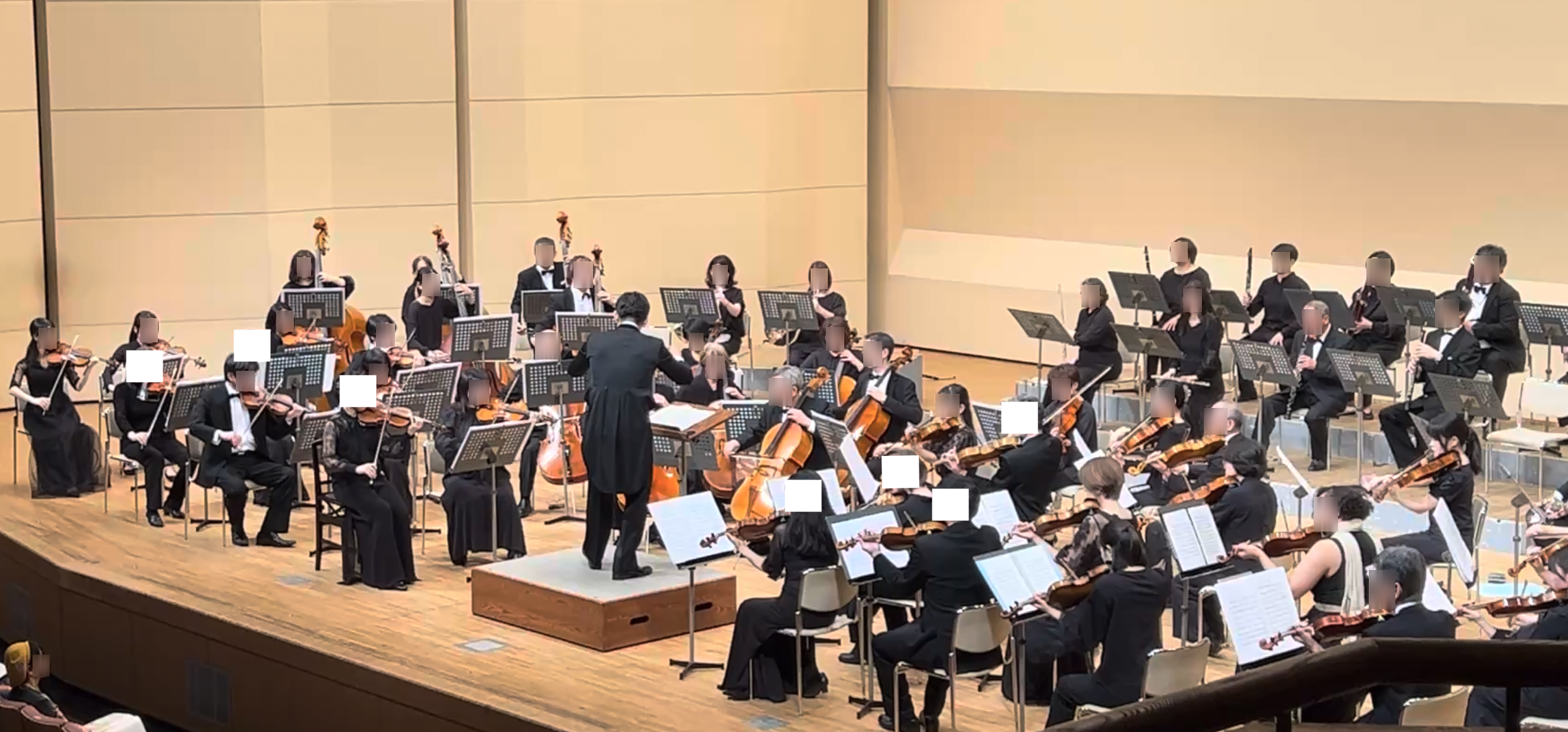
I participated in the rehearsals and concerts of one of Kyoto’s amateur orchestras (~50 ppl). Rehearsals are once a week, in rotating locations and regular sectionals, and the main concert is once a year (February).

As an amateur orchestra, naturally the players are on the older side, but there are a few college age students. Everyone was extremely welcoming and kind, got to meet something really awesome people and learned musical terms in Japanese.

Pretty much anyone can join, so don’t be intimidated! Make an effort to talk to those around you. There are other orchestras in Kyoto you may be able to join, if you’ve brought your instrument to Japan. Doshisha was oddly exclusive and cliquey—a Japanese friend corroborated with similar experiences. Kyoto Three Universities Joint Symphony Orchestra is a very welcoming college-level orchestra, but it’s a bit chaotic and their rehearsal schedule is fairly intensive. Ultimately, figure out what you want from joining orchestra in Japan. I wanted to talk to people who likes music so things worked out.
Brian Ramon-Miron: Ikebana

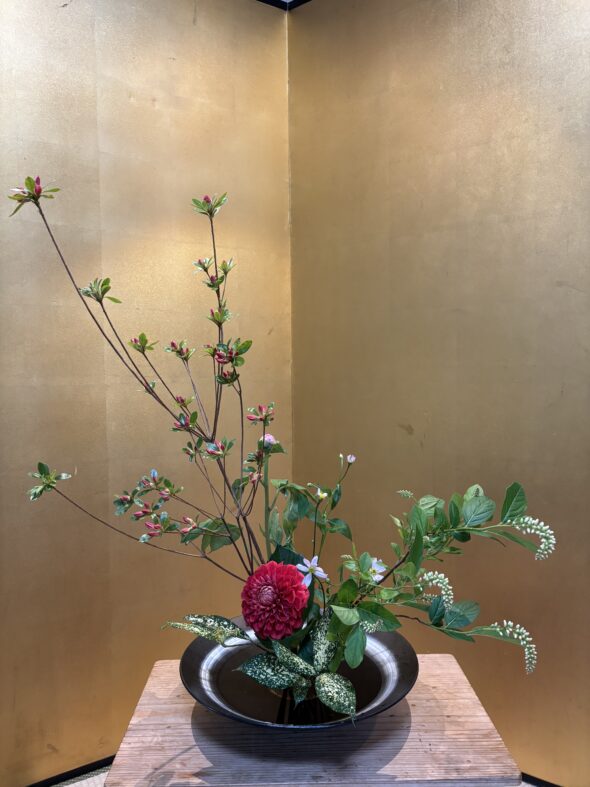
This semester I took weekly ikebana lessons under Ashida Sensei over the course of eight weeks. During these lessons, I learned both traditional and modern styles of ikebana.

Each class focused on a specific arrangement style while keeping in mind the four main principles of ikebana in these styles: shin, gyō, tome and dou. Learning to respect the unique purpose of various flowers allowed me to continue appreciating the deep meaning and intentions behind every piece that keeps the ikebana spirit alive.

I recommend anyone starting off or continuing ikebana to remember to stay patient with all aspects of arranging, as the process itself is just as important as the final result. It was very rewarding to see how a simple assortment of flowers can be styled in a way that holds deep meaning, history, and beauty.

Penelope Hartogensis: Knitting Workshop at Yokoso Cafe

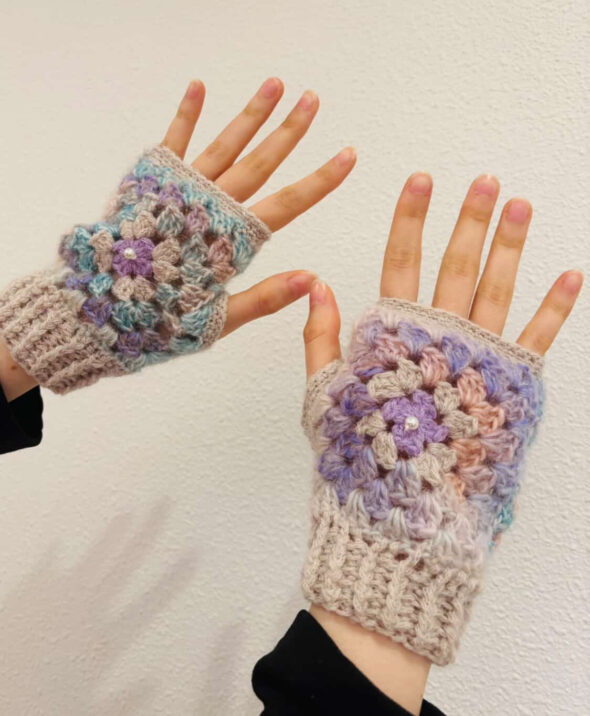
My CIP this semester was attending a crochet/knitting workshop at Yokoso Cafe. Once a week, I meet with a bunch of other women, and we’d work on our own individual projects with the guidance of a teacher.

It was an absolutely phenomenal experience; all the other women were so kind and warm and eager to talk to me. I definitely believe that my discussion and conversation skills improved, and I’m very grateful that they were so open to help me out or teach me new things in Japanese.

My main advice would be have in mind what you want to accomplish during you CIP and try to choose an activity where you can accomplish that. This semester I wanted to practice my speaking skills, so by choosing an activity where I’d be able to practice it a lot, it definitely felt more rewarding in the end.

Elise Nishii-Kim: Yin Yoga

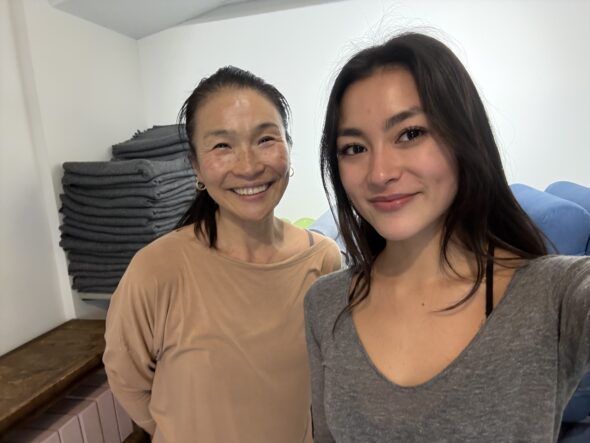
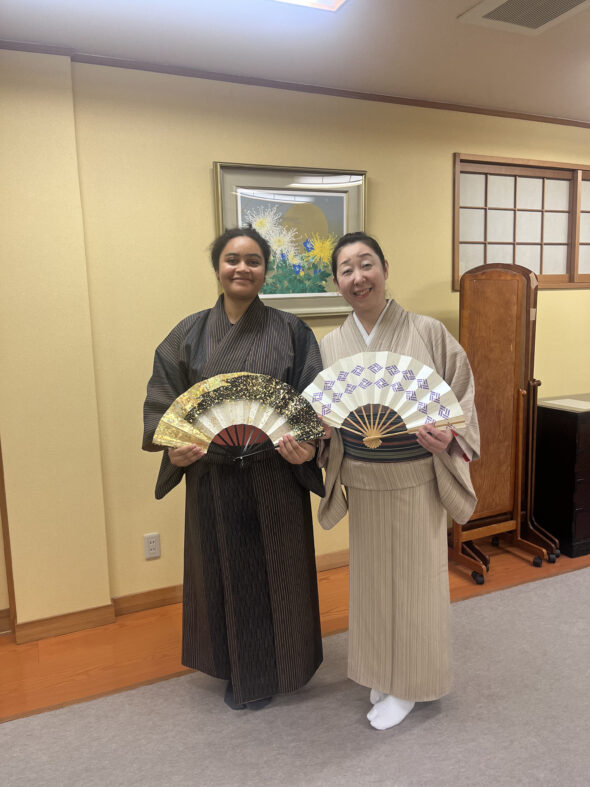
Me with my yoga teacher, Asako-sensei!

For my Community Involvement Project, I attended weekly Yin Yoga sessions at Tamisa Yoga Studio’s Teramachi-dori location. Our classes focused on breathing and slow pose transitions, which created an amazingly relaxed and centered environment. The instructor, Asako-sensei, was a kind and supportive presence for me throughout the semester and I always looked forward to attending her class. Studying abroad can be overwhelming and stressful at times, and going to Yin Yoga was a great way for me to practice mindfulness and calm while also learning about Japanese culture, communication styles, and social expectations.  I loved my class and my teacher, and was able to build a lot of meaningful connections with my classmates during our post-class tea time. I highly recommend Tamisa Yoga studio to incoming students, whether they have experience with yoga or not!

Nicole Beamon: Volunteering at Nalba

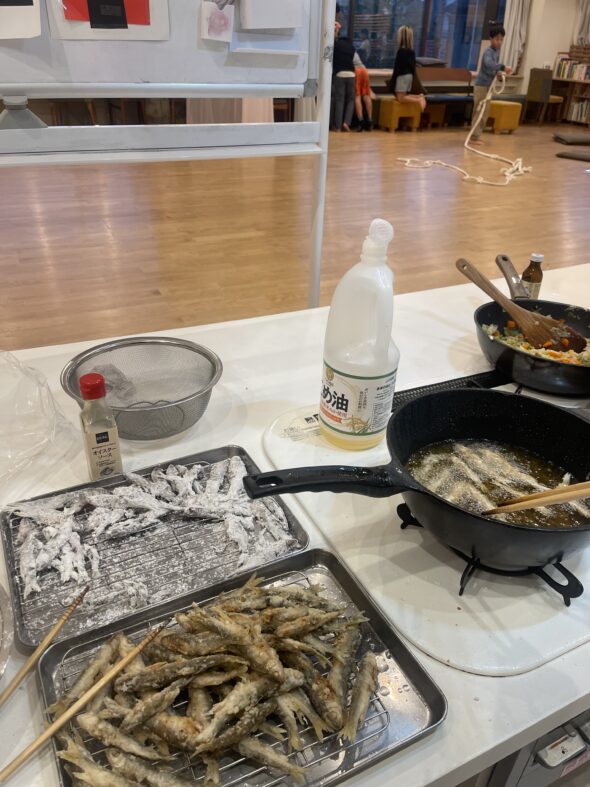
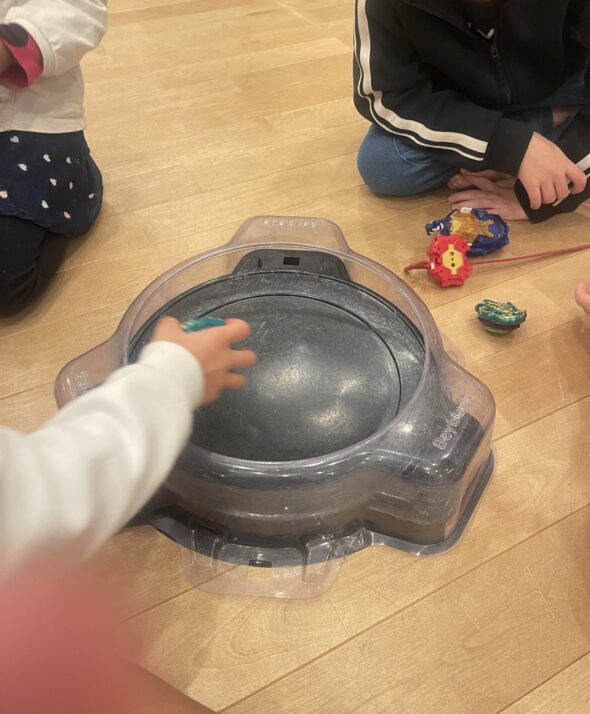
Nalba is an after school program that provides children with a place to play and one highly-balanced meal a night. The team takes time and consideration to make sure each meal is locally sourced and delicious for both kids and adults. I had a very pleasant time at Nalba hosting games with the kids and cooking with the staff. From the beginning, I became very appreciative of Nalba’s mission and the help they provide for busy working parents. However, as rewarding as my CIP has been, I do believe that Nalba is for a specific kind of person. Everyday you’re invited to help with homework, talk/play with the kids, and initiate games. Their homework typically consists of kanji and Japanese grammar workbooks. The kids also tend to talk very fast even if they recognize that you’re a foreigner. With that being said, If you are a person who is confident in their speaking or listening skills, I believe you can really thrive at Nalba. Being able to guide them through their homework or even initiate conversations/games will truly add to the kids’ and your experience!

Sakano Kiki: Kyoto University Choir

For my CIP, I participated in the Kyoto University Choir, joining their weekly evening rehearsals on the Kyoto University campus. They have three practices a week, and you can choose whichever days you would like to go. I sang with the Alto section and had a really fun time experiencing what it was like to be part of a fully student-organized Japanese musical circle.

Over the semester, choir slowly shifted from something unfamiliar and intimidating to a normal, comfortable part of my weekly routine. Observing how clearly the student leaders organized rehearsals gave me a new appreciation for role delegation, respect, and group communication in Japan.

Don’t stress if things feel awkward or slow at first. Relationships in any student groups take time, not force. Even if you’re shy like me, show small signs of engagement (greetings, nodding, following instructions carefully), and they are so kind, so you’ll naturally blend into the group before you realize it!

Tai O’Malley: Shamisen Performance

In this CIP I learned all the basics of playing the shamisen, from techniques to repertoire, alongside two other classmates from KCJS. We’d go to the Greenwich House (practice space) twice a week to practice with different groups of relatively older Japanese locals, most of whom had relationships to Iwasaki sensei as students. Learning the shamisen in an environment with a language that I’m not entirely familiar with led to the action of demonstration and common understanding within music to be the biggest teacher of all. I also learned how the power of music can bring people together from various different walks of life, as evidenced by the diversity of people attending Iwasaki sensei’s rehearsals. For future students of Iwasaki sensei, I wouldn’t be worried about making mistakes, as the space is very friendly about giving people a voice through music despite skill level. In fact, in Iwasaki sensei hearing me noodle around on the instrument one day, I was given the opportunity to perform a improvised solo for our final concert.

Our full performance can be found here: https://urldefense.com/v3/__https://www.youtube.com/watch?v=5N9qkeN6lkI__;!!BDUfV1Et5lrpZQ!QEtwNJ5CtYMGkjg0sapTOUV1f9RVug_dUbArsKQoFUmgiGif-0kPvViiBa3M5wjz4VNft1a5TyGyHPFxUWBI0uky$

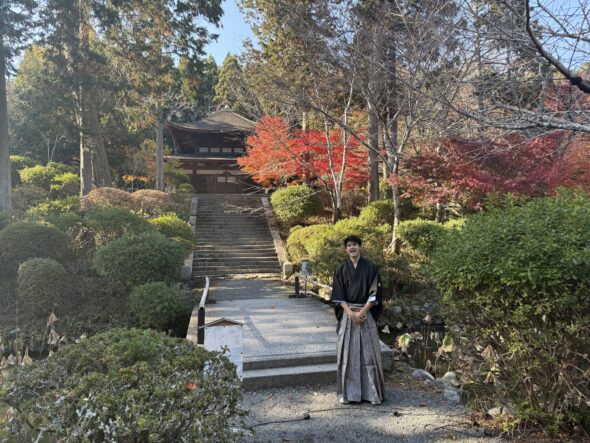
Nava Berwick: Learning the traditional dance art form, 日本舞踊 (Nihon Buyo)

I had the amazing opportunity to learn Japanese traditional dance, 日本舞踊 (Nihon Buyo), for my CIP activity! The teacher is so bright, funny, and very knowledgeable about this art form, so it was so fun learning about Nihon Buyo’s history and method from her.

Personally coming from a long history of learning traditional dance myself (specifically Indonesian dance), it was quite fascinating learning the similarities and differences between both country’s respective traditional dances.

If you find yourself wanting to also partake in this CIP, the advice I have is to be prepared for mild confusion when trying to figure out the proper tuition payment system. If you’re able to find resources on this practice on the internet before arriving in Kyoto, I recommend reading up on that before coming. Also, when first starting your lessons you may feel a little lost at first when you see how the teacher and dance classmates interact, as there will be a lot of keigo and a certain body posture to follow. Be sure to observe them! This will really help you get more comfortable and help you connect more deeply with Japanese culture.

Logan Ruzzier: Curatorial Volunteering at the Kyoto Institute of Technology Art Museum

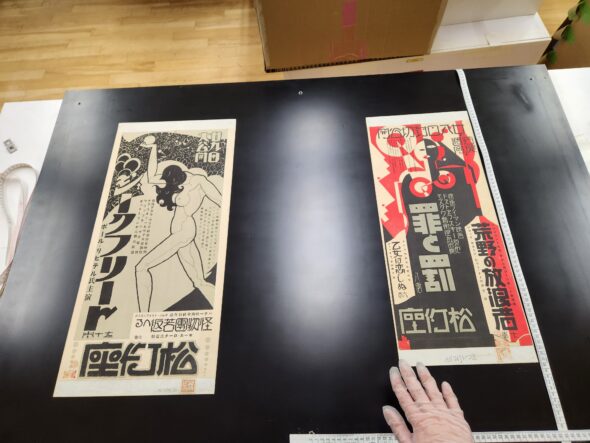
My CIP at KCJS was volunteering at the Kyoto Institute of Technology’s Museum and Archives. During my ten-odd 2-hour sessions, spread evenly through the Fall, I engaged in a wide variety of art historical and curatorial activities for the museum. These activities spanned the realms of posters, architectural plans, and fabrics. I worked hands-on each session with one of three staff members, who each specialized in one of the aforementioned fields. I helped prepare artworks for display, measured and organized them within the archives, and even worked with graduate students to get exhibit rooms in order. 


My advice to you is to seize upon this opportunity if you are seeking the following from a CIP:

  • 1-on-1 relationship building in an apprenticeship-style role
  • Consistent exposure to uncompromising, workplace-level and instruction-oriented Japanese 
  • Conversations on any topic of your choice with highly knowledgeable, passionate academics (contingent only on your will to ask and ability to understand)
  • Above all, the chance to gather diverse and esoteric art historical knowledge through real objects, as well as the responsibility of handling them


This is very much a project that returns what you give, so I recommend that you arrive at the museum each time hungry to help out and learn as much as possible.

Nell Di Bona Beck: Calligraphy

During my time at KCJS I chose to take semi-private shodō, or Japanese calligraphy, classes. My teacher, Tanaka-san, is a professional calligrapher and he guided me during this time. Some of the things I learned was how to position my arms, both the one holding the brush and the one not, how to control the amount of pressure I exerted, how to manipulate the brush to move how I wanted it to, how much ink I needed, and most importantly to never stop the flow of the brush as it glided across the paper. There is a lot more to the world of shodō than simply painting the characters, you must write with intention and meaning. The type of brush you use, the style of writing, and where you position the characters on the paper are also important in conveying not just the meaning but the feeling to the viewer. I recommend incoming students to put themselves in challenging situations–situations where they will encounter new things, or listen to Japanese above their level, or have to speak to strangers. Tanaka-san communicated with me in broken English and Japanese in order to teach me shodō because he wanted me to learn and no language barrier could change that. As long as you show that you are actively trying and putting effort, there will be people willing to help, and you in turn with grow.