
My CIP was volunteering at a children’s cafeteria called Nalba. I really enjoyed my experience. My responsibilities included playing with the students and helping out with cooking here and there. I was able to learn a lot of new recipes that I plan to try out after returning to America. The kids were also really fun to interact with and I made a lot of precious memories. I would definitely recommend this activity!
「KCJS Year」カテゴリーアーカイブ
Bella Besuud: Koto
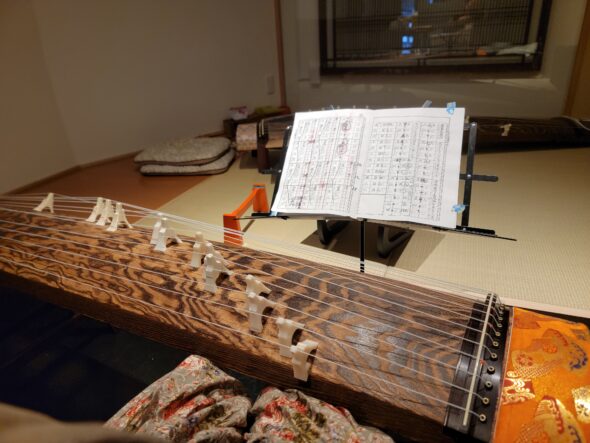
For my CIP, I took koto lessons with Iwasaki Sensei. Since I’ve played the piano, violin and have had brief stints with some other instruments, I wanted to learn another instrument. I’m always looking for the opportunity to learn how to play more instruments because I love music! It’s been rewarding and interesting to learn how to play the koto. It’s unlike any instrument I’ve played before, including the way the score is written
Cindy Bu: Kendo | 京都剣清会・妙覚寺道場・武徳殿・同志社剣道部体育会
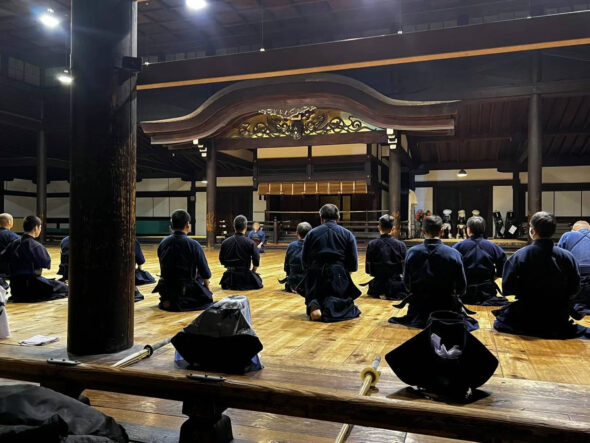
This semester, I went to different dojos to practice kendo, the sword martial arts in a number of dojos. I did not go to Doshisha Kendo Club to practice this semester yet due to schedule conflicts very sadly.
Different types of Dojos have very different vibes. 京都剣清会does not place much focus on waza training, and does fundamental basics (1h), kata (the form) (30min), and Jikeiko (1h) usually. The dojo there is very pretty (on Saturdays, I have not been to the Tuesday dojo). They will also have 飲み会 sometimes. 妙覚寺道場 is a dojo in the temple. They have practice for 1h/time, but 3times a week, spreading basics and jikeiko fairly evenly (I have not been to so many times, and you may refer to Emile’s post!). Both social dojos have strong senseis. And 妙覚寺道場 is closer to Doshisha University. 武徳殿 is open to the public, and anyone can go to the night practice there (no need invitation as said on the website). I also did not go as much, but the focus on the basics will be much less, and it is primarily focusing on 地稽古. There would be a lot of high-ranking senseis from many different dojos. 同志社剣道部’s practice is less of instruction but has more freedom to practice the skills you wish. Normally, we do the warm-up, 素振り, 切り返し, and some fixed pattern training together, and we are left off to do 自由稽古, (and 地稽古 shortly in the end). It requires more dependence on oneself, and the training is definitely much more demanding.
I would say that the Spring semester is relatively hard for being able to practice in 同志社剣道部 Doshisha Kendo Club (solely) and the fall will be much more doable. Practice after the winter break for Doshisha starts in mid-February, while our spring semester begins in the head of January. In addition, most of the practices during the Japanese students’ spring break are in the morning on weekdays, which KCJS has Japanese classes every day in the morning. And some practices on the weekends will be canceled if there is a tournament, adding on that the 春合宿 that we would not be able to attend as we probably have class at that time (it was right after the spring break for this semester unfortunately, but if it happens right in that week, you are lucky!) . The practice in the Spring semester is in the evening, but their semester starts around April, where the program is about to get to the end. I think it might be fine if you talk to Doshisha Kendo Club only to practice on weekends, but I would also recommend adding some other practices outside Doshisha Kendo and talk to both sides!
P.S. These commentaries on dojos and the scheduling for Doshisha Kendo Club is fully based on my personal first-hand experience practicing in those dojos based on my personal situations. These feelings may be different for different people. Please only take it as ONE source of reference and ask more people about these dojos or ask for a trial training and go there yourself!
Jordan Jones: Kyudo
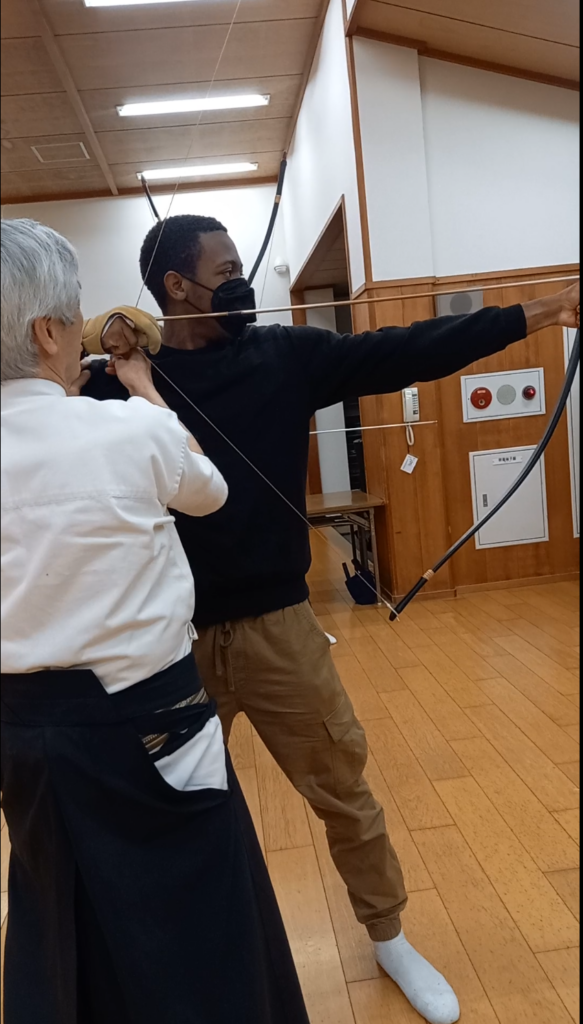
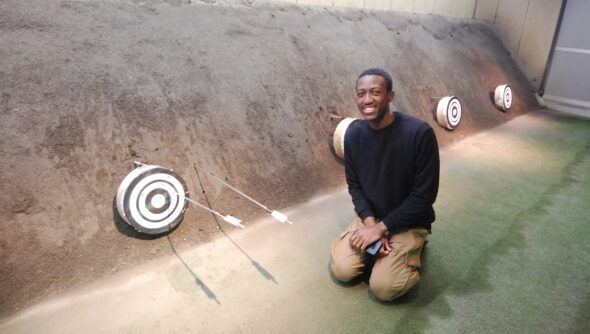
My CIP was taking weekly Kyudo lessons. Kyudo is traditional Japanese archery that focuses more on the control and movement rather than getting a bullseye.
The experience was both challenging and rewarding. I gained a deeper understanding of Japanese culture and customs while honing my archery skills. It gave me opportunities for personal growth and reflection, instilling a sense of discipline and resilience both in and outside of the dojo.
My advice to incoming students is even if you have no prior experience with Kyudo or archery at all, embrace the learning process with an open mind, staying patient with yourself, and appreciating the journey of self-discovery that comes with exploring a new cultural practice. Approach each lesson with an open mind and willingness to learn because the journey itself holds valuable lessons in discipline, self-awareness, and cross-cultural understanding.
Cameron Molnar: Boxing
For my CIP, I had the opportunity to at group boxing lessons at the フュチュールボクシングジム (Futur Boxing Gym). I got to learn a Japanese style of the sport while having the chance to meet many different kinds of Japanese people in a friendly setting. I appreciated my time at the boxing gym because I got to see more firsthand about how Japanese people interact and react with difficult challenges. Also, since myself and others in the lessons were experiencing the same physically challenging activities, we had something to bond over that made it easier to talk to them afterwards. My advice to incoming KCJS students would be to come in with a positive mindset. Sometimes you try to speak with someone and they are too busy or just not interested. But if you keep pushing and look for the right opportunities, you could find some great friendships that you would’ve never been possible otherwise.
Santiago Chamorro: Volunteering at St. Maria’s Children’s Dining Room
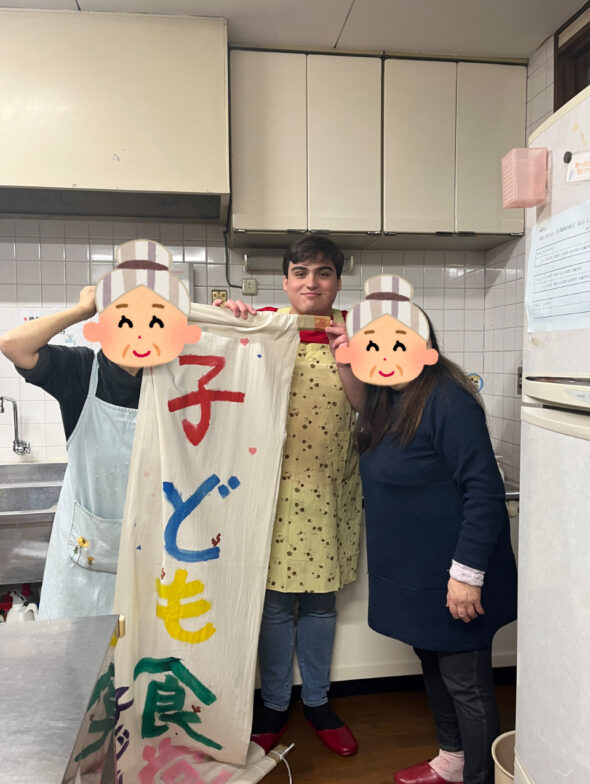
For my CIP, I volunteered at St. Maria’s Church to help its members set up and manage a dining room for children. This activity mostly consisted of helping prepare food, setting up tables, and interacting with the children that come to visit. This CIP is filled with kind and patient volunteers who helped me with my tasks, and allowed for me to practice Japanese through conversations we had while working. The children are also great. They are energetic and very nice, and although the speed at which they speak may be a challenge, they always cheered me up with every visit. Apart from preparing the food, you also get to share a meal with the volunteers and children, which gave me a great experience to enjoy some homemade Japanese food and to practice Japanese with the people I sat with. In this CIP I not only got to practice my speaking in a very active environment, but I also got a deeper understanding of this small sect of Japanese society. For anyone interested in this CIP, I recommend to be ready to interact with children and adults, and to communicate in a bit of a busy environment. It can be a little challenging at times, but it is very fun!
You Wu: Volunteering at Kyoto Institute of Technology Museum and Archives
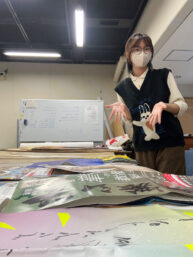

My CIP is volunteering in a museum archive that specializes in posters collection. My main job was to organize museum posters from recent years in Japan or help my supervisor Wada-sensei with some hands-on museum work.
It was highly pleasant to just look at various posters with all ranges of excellent artistic designs. I also got to work on different kinds of posters, including the poster (ポスター) collection books from Shōwa era. However, it could get a bit boring after several weeks, since archive work is repeated and I usually worked alone. Therefore, it’s important for volunteers to reach out actively to ask more about museum work or politely address our own requests. After reaching out, I found myself being much closer with my supervisor! She is also nice enough to show me around various curation works that were in progress and gave me some different work that fitted my interests. People here might seem to be introvert but are actually friendly and helpful!
Larissa Barth: 茶道 (tea ceremony)
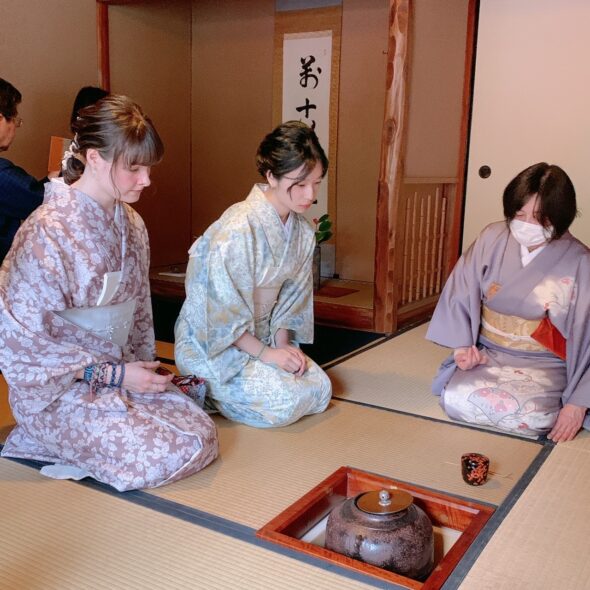
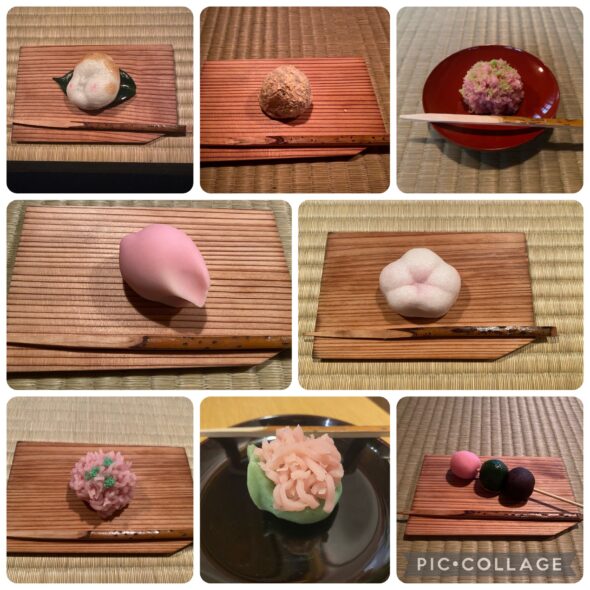
Through my CIP, I had the wonderful opportunity to learn the art of 茶道 (tea ceremony) from Fujimura-sensei, who taught us not only the complex movements of the ceremony but also the spiritual and cultural background behind them, such as wabi-sabi, Shinto and Zen, Shu-Ha-Ri, and yin/yang. Through the ritualistic sequence of the tea ceremony, we learn to let go of our thoughts and pay attention to our senses, and ultimately to approach daily life with a similar attitude of care and mindfulness.
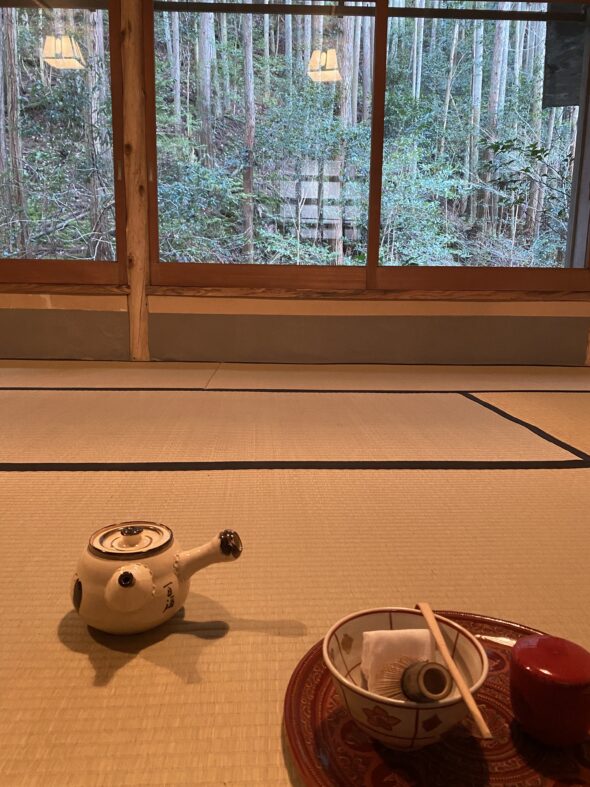
In addition to our regular practice at the beautiful 茶室, Fujimura-sensei was also so kind to take us on various cultural excursions, such as a plum blossom night light-up at Kitano Tenman-gu, seeing the sunrise at Ise Jingu, morning and night meditations, and attending an お茶会 at Heian Jingu while wearing kimono.
Through this CIP, I gained a much deeper understanding of Japanese life and culture and made so many wonderful memories. I am very grateful that I have been able to learn from Fujimura-sensei and really don’t think I could’ve chosen a better CIP! I would recommend it to anyone, particularly if you are interested in traditional arts and philosophy. The only consideration is that because there’s a lot of difficult vocab, it’ll be helpful if you’re fairly proficient in Japanese, especially listening-wise.
Dale Yu: Volunteering At Nalba (子供の食堂)
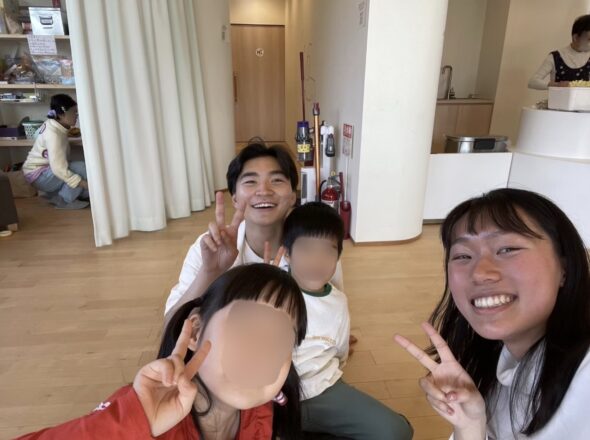
My CIP activity involved volunteering at Nalba, a children’s after-school cafeteria. However, Nalba serves as much more than just a cafeteria for many of these children; it functions as an after-school program where they can learn how food is prepared, interact with peers, and engage in creative play. The children are primarily elementary school students, ranging from first to fifth grade, which introduces a wide variety of personalities to work with. I spent most of my time playing and conversing with the children, which provided excellent practice in listening and speaking. Frequently, there are opportunities to assist adults in preparing dinner, alongside children who are curious about food preparation. The children are generally welcoming and express excitement each week upon your arrival. This enthusiasm makes you feel appreciated as a volunteer, especially when they seek your assistance with various games, tasks, or even resolving conflicts with others. Some of the kids even get attached to seeing you every week which makes the times at Nalba memorable for you and the children. Overall, I would recommend Nalba to future students seeking an experience where they feel valued as part of the community.
Adam Bollt: Volunteering at the Doshisha University Historical Archives
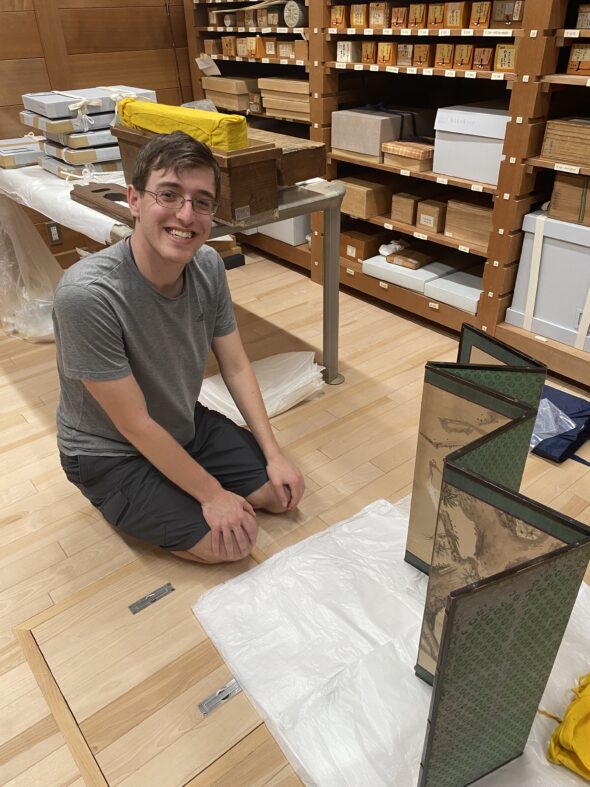
My activity was volunteering at the Doshisha University Historical Editorial Office and History Archival Center. I got to participate in and learn about numerous tasks the university carries out in order to preserve and promote its history. One week, I was helping arrange an exhibition for the university, and another, I was handling precious historical objects that belonged to famous figures in Japanese history. It was a truly unique experience to see Japanese historical conservation from the inside out, and to meet and talk with other people fascinated by history, whose perspective on history was necessarily shaped by growing up in a culture and historical environment wildly different from mine. I believe that any experience as a study abroad student has contact and interaction with new perspectives as a primary objective, and this historical-related activity was perfect for that – indeed, history is all about perspective! The volunteer activity felt mostly very informal, so one could really choose to do what was personally interesting if one spoke up – though there were certain moments of sudden formality, so one could get a taste of a whole gamut of types of experiences. So be flexible enough to go with the flow and enjoy every moment for how unique it is!