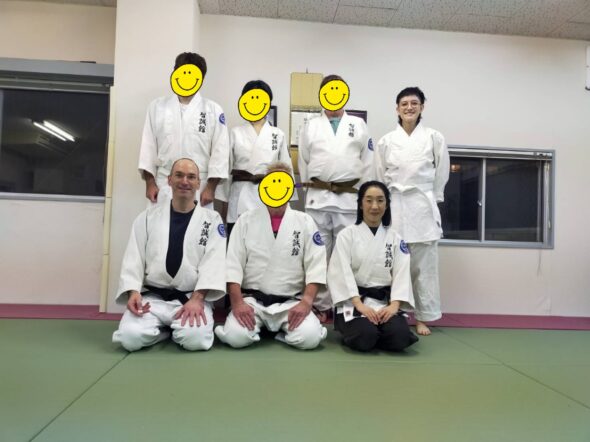
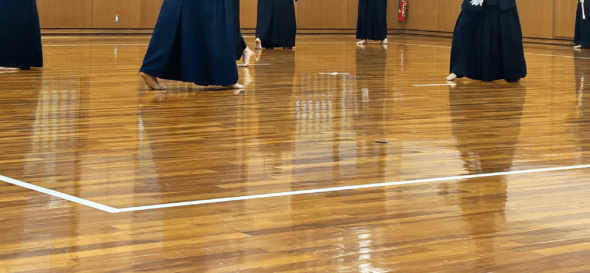
Doshisha University Kendo-Club 同志社剣道部体育会 was founded over 100 years ago as the school club for kendo, a sword martial art. The students practice almost every day and have mock competitions with other universities regularly where selected members participate.
Doshisha University Kendo-Club provided me with valuable experience on my kendo journey. As one with practice length and strength incomparable to club students, the practice is definitely demanding and intense for me. I had many times of perplexity and inconfidence. However, while looking back, I still realize my growth throughout my journey, not only my Kendo level, but how I view myself in an unfamiliar foreign environment, how comparison and self-focus work together and balance, how I communicate with others especially with Japanese, etc. I still have many things to achieve in this experience, but I will never forget this for sure. (The members are ALL very kind and I am very grateful for their tolerance of my skills and communication!!)
If you want to join Doshisha University Kendo-Club, please contact them early (>1 month on the web page) and if they did not reply, try other methods such as Instagram. The practice is definitely demanding, especially for the men’s practice, so that one might feel overwhelming. However, it is definitely a great experience especially for one that are passionate for kendo!
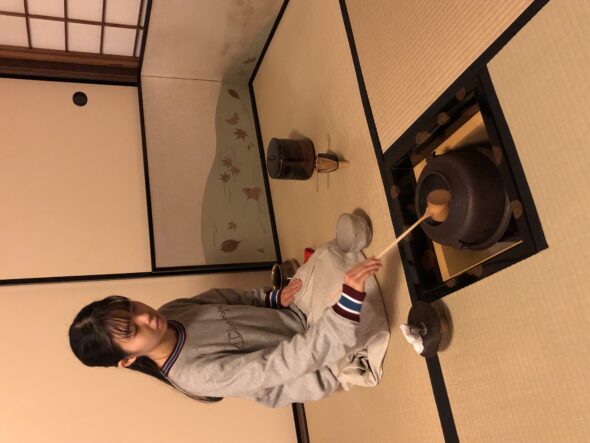 For my Community Involvement Project (CIP), I learned Japanese tea ceremony at 幽静庵 (yuseian), which is a tea room that was designed by 井口海仙宗匠 (Iguchi Kaisen), the brother of the 14th Urasenke Grandmaster 淡々斎御家元 (Tantansai). At the 幽静庵, I had many precious experiences, including learning various tea preparation procedures (お点前, otemae) and participating in a special ceremony to celebrate the change of season called 口切 (kuchikiri).
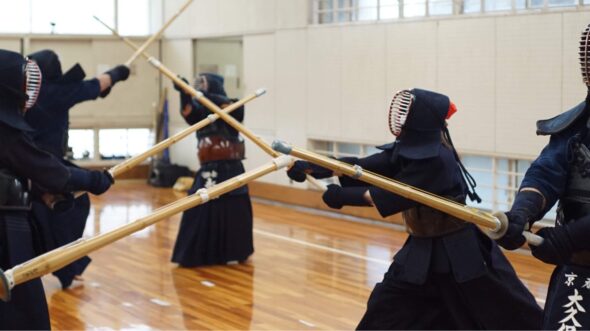 For my CIP this semester I did kendo three or four times a week at Kyoto University Kendo Club. Kendo is