
今学期も先学期のように弓道を練習しています。毎週二回武道センターへ練習に行きます。練習の雰囲気は相変わらず穏やかですが、いつもとても楽しいです。弓道の先生はとても可愛くて、親切な人で、先生が好きではない生徒がいないと思います。先生と出会って、本当によかったと思います。または、初心者として来る生徒はふだん様々な外国人なので、練習中に色々な外国の話を聞くことができて、いっぱい勉強になりました。私は弓道がすごく難しいと思って、色々なことがまた分からないけど、弓道の穏やかな時間を大切にします。
「Private or Group Lesson (Sports)」カテゴリーアーカイブ
Aarron Lee: Kyuudou
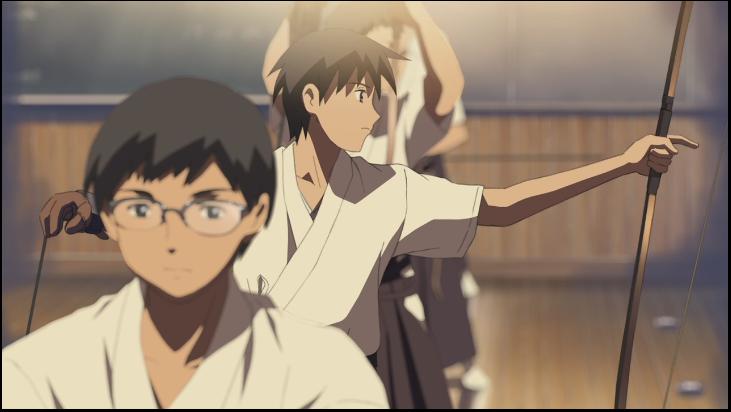
Kyuudou, as a sport, is a rather peculiar one. It doesn’t really strive for perfect accuracy and precision (unlike its western counterpart, archery). Instead, it is intensely focused on being able to maintain a perfect form, going through a set of 8 steps (called the hassetsu) while maintaining a very rigid posture. The “sport” of Kyuudou has a huge emphasis on self-discipline, but it does not have an end goal like “getting the highest score” or “being the most accurate”. Or at least, that’s my impression of Kyuudou after doing it for the past few months.
The basic tenet of Kyuudou seems to be “self-improvement”, where you pretty much must discipline yourself to follow those 8 steps that are so vital to Kyuudou. And with no real end goal (like a score, etc), the only real motivation for improvement is your own desire to do so. That, in itself, is a rather refreshing difference from most sports that I do play (basketball, skiing, snowboarding, etc). There’s no real standard you need to compare yourself, you don’t need to get particularly skilled or accurate, you simply need a desire to improve your Kyuudou abilities in a way you see fit. While the hassetsu is quite regimented and strict, at the same time it’s rather freeing due to how you can define your own vision of what you want Kyuudou to be.
With that being said, I don’t find Kyuudou particularly fun or exuberating. Rather, it gives me time to simply focus on something other than the chaos of real life and student assignments, and that shift in focus is a blessing during times of stress. You sort of just forget about the ongoing world around you, and focus on the target in front of your face. You temporarily forget about that paper due in a week, or a test the next day, or ongoing drama amongst your friends, etc. All that matters is that target, and whether you can hit it. Yea, I did talk about how, unlike archery, there aren’t really any defined set goals in Kyuudou. But mine is being able to hit the target where I want it to, so in a sense, my goals in Kyuudou align with what an archery practitioner may strive for. With enough practice, will I ever reach my goal? Who knows, but if I ever do, I know that it was a goal I set for myself.
Sam Allen: Kyudo
Although I intended to participate in more than one club activity, it turned out that my schedule only matched with my Kyudo lessons. But I’m very glad that I picked Kyudo as my CIP, because it’s been a very rewarding activity so far. When I first started, I was nervous. From my observations, Kyudo looked more like an art than anything else. Kawaguchi-sensei was very patient in explaining to us the eight basic steps to Kyudo. Before I was allowed to hold a bow, I had to know the names and actions associated with these steps. I spent the first two weeks practicing the kata, the form used in Kyudo. Once I had memorized these to sensei’s satisfaction, I was allowed to practice with a bow. The bows used in Kyudo are enormous. Really, they’re often taller than the archer using them. And it’s really tough to draw them back, too. Finally, during our third week of lessons, we were allowed to fire the bow for the first time. I’ll never forget that moment – sensei helped me draw the bow fully, and told me to take a shot. My heart was racing when I let go of the string. I think I was shaking afterwards too.
Since then, we’ve been practicing on the straw makiwara targets every time we come to the dojo. Little by little, I feel myself improving. At first, I was using a really weak bow – only 8kg. But I’ve worked myself up to an 11kg, and soon I’ll be able to handle something a little stronger. I’m getting better at controlling my aim, steadying my hands, and keeping correct posture while shooting. Best of all, I recently learned the trick to making the arrow fly in a straight line – a big deal, since the recoil of the bow had been altering the trajectory of my shots.
During my second month of lessons, I decided to buy my own uniform, including the glove. Making this investment means that Kyudo is more than just something I’m trying; it’s something I plan on doing forever, if possible. Not just because it’s expensive, but because it almost felt like an initiation. Going to a specialty Kyudo store over in Shiga-ken to get fitted for a glove and uniform, and pick out my own arrow meant that in a way, I’ve become a part of the dojo. I have, too. I often make small talk with the other practioners, usually somewhat older than me. Some of them greet me when I come in, and it’s nice to feel that I’m seen as less of an outsider.
Meeting other people through Kyudo is definitely harder than in other CIP activities, I think. People go there to practice, not really to socialize. That isn’t to say it’s impossible to make friends there; when I have the chance, I talk with other in the break room, or exchange a few words while practicing. There was one situation in which I introduced myself to a Japanese college student. Of course, the initial response is always very formal and not necessarily open to continuing conversation. What I’ve learned is that, by being in the dojo as often as possible and making constant effort to communicate with others, little by little they’ll open up to you.
The end of this semester ends on a high note in Kyudo as well. Before the year ends, I will likely get my first chance to shoot at a real target, much smaller and farther than the practice makiwara. I don’t know how I’ll feel when I do it – I could be relaxed, due to all the practice I’ve put in, but I might get as nervous as I was the first time I shot a bow. Only time will tell.
Henry Mantel: Aikido Practice
For my CIP requirement I am taking Aikido classes two, sometimes three times a week. Aikido is a Japanese martial art that has the interesting priority of self-defense while inflicting as little damage as possible, even on the attacker. There are no punches or kicking techniques. Every move is an arm lock, a throw, or a takedown. Every move is designed to require as little force as possible, which means most of the movement happens in the core of the body. Aikido movements are all about circles. Every move I’ve learned so far involves circular motion, which can be really difficult to get right sometimes.
I practice at the Kyoto Martial Arts Center. It’s about 15 minutes away from Doshisha and is between my house and school, making it very convenient for me. The people are mixed but they all seem nice and willing to help if asked or open to suggestions. I confess I cannot understand half of the directions the instructor gives me but he always demonstrates so I just follow his example and I usually get it eventually. I’ve practice with the older students a few times, most of them are in there forties, I think, and they have no mercy. I learned pretty quickly that the harder I grip, the harder I’m going to get thrown. Fortunately I haven’t been injured at all yet, proper falling techniques were the first thing I was taught, but I have screwed up a roll or two and ended up flat on my back. Also sometimes they get a bit over zealous with the arm locks and end up bending my arm in the wrong direction a little farther than necessary, but they’re usually quick to release when I hit the mat.
I’m having a lot of fun with Aikido. It’s been a long time since I’ve taken a martial art and I forgot how much I enjoy it. It’s also a great workout sometimes, which is something I’ve neglected to do since I got here. The people are nice, the teachers are good, and the classes are fun and challenging.
ヘンリー・マンテル:合気道の練習
私のCIPは合気道です。毎週月、木、土曜日に武道センターに行って、合気道を練習しています。合気道はとても楽しいけど、難しいです。合気道の先生はみんなに合気道の技法を見せて、補助教員と技法を実証します。先生はとても上手です。ぼくは若い人と練習します。でも、数人の合気道生の方が私より年を取っているけど、数人の合気道生は若いです。
練習毎に補助教員は私に新しい技法を教えます。いつも技法はたいへんだから、私たちは技法を何度も練習します。時々、上級生は私たちを手伝います。ぼくの日本語は上手じゃないけど、たいてい日本人の合気道生と話してみます。年上の人親切で、いろいろ助けれくれます。
アロン・リー:歴史な京都、そして弓道
実は、京都に来る前に、「KCJSで何をしようか」とよく考えました。Introductory guideを、もちろん、読みましたが、やっぱり何をするかよくわかりませんでした。海外に行くのは初めてだったから、びっくりするほど緊張しました。京都ってどんな町でしょう?そして、京都で何ができるでしょう?そういう質問を、来る前に、一日中考えました。
まあ、来てから、「私の生活は、以外にも、普通だな~」と思うようになりました。だって、毎日学校に通うだし、宿題のりょうは多すぎてあまり出かけられないし、やっぱりどこに行っても学校はほとんど同じです。でも、京都で留学したのを絶対後悔しません。京都はすごくきれいで、町の中にすばらしい神社や町家があります。金閣寺とか、伏見稲荷とか、いろんな神社に行くのは楽しいです。でもやっぱり一番楽しい活動は弓道です。
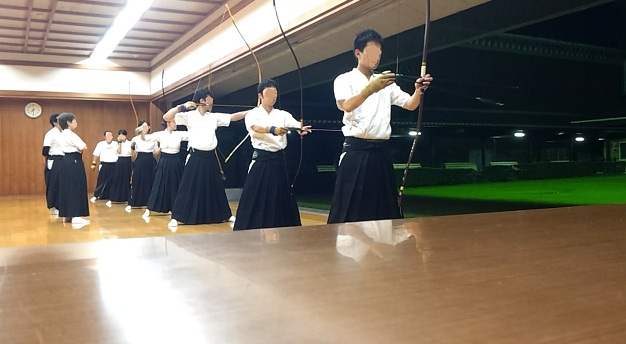
弓道は、ずっと昔、日本人は弓を使って狩をしていました。実用的な活動でした。でも最近そうではありません。今の弓道は、ほかのスポーツと同じ、レクリエーションの活動だと思います。まあ、現実はちょっと違ったんですね。
弓道は、以外にも修養です。厳しくて、いろんな繊細なことがたくさんあります。弓道の練習に行った時から、二週間弓なしで練習しなくてはいけなかったんです。「はっせつ」というルールがあって、忍耐心というものが必要です。私は京都武道センターで練習しますが、あそこでどれほどまじめなスポーツかよく分かりました。アメリカでのスポーツと比べたら、大変違うと思いました。
一週間まえに、初めて弓を使うことになりましたが、まだまだたくさん練習しなくてはいけないです。練習も、勉強も、観光も、ぜんぶ留学生の経験ということですね。
サム・アレン:弓道と社交ダンス
私はCIPとして、弓道と社交ダンスをすると決めた。社交ダンスはタフツ大学で二年間したから、日本にいる間も続けたいと思った。アマダンという京大のダンスサークルに連絡して、やっと参加できた。11月の上旬ダンスの演技があるから、今は全部の練習に行けない。でも、パーティが終わってから、普通に参加できると思う。一回しか練習しなかったがみなさんすごく上手だった。もっともっとアマダンのみなさんと踊りたい。
それから、タフツの先輩は日本にいる間弓道をしたから、私もしてみようと思った。弓道をした前のKCJSの留学生と同じように武道センターに行って、川口先生と話した。KCJSの留学生は毎年その道場に行くから、けっこう難しくなかった。弓道はちょっと面白いけど、KCJSの三人以外、ドイツ人二人とフランス人一人も参加している。今まで一ヶ月間毎週二回練習していて、今は弓と矢を使って練習をすることができる。まだ、本当の的を使ったことないけど、だんだんわかるようになっていて、もうすぐ的を射ることができると思う。
レイラ・リン:弓道と学生テレビ局
ジンギスカンに憧れているので、モンゴル人が上手に出来る事に興味があります。だから、大学に入ったら、アーチェリーを練習しはじめました。アーチェリーは的の中心を射るために様々な器具がある一方、日本の弓道の弓矢は何もなくて、大変かっこいいと思って、日本に来たらぜひ弓道を習おうと思っていました。
今、 毎週月曜日と木曜日に武道センターで二時間弓道を練習しています。アーチェリーと違って、弓道はあいさつや正座などといった礼儀がたくさんあるので、最初はちょっと大変でしたけど、川口先生の辛抱のおかげで、弓道の練習にもう慣れました。そして、アーチェリーの経験は多分弓道に役に立つと思ったけど、事実は全然違います。弓道とアーチェリーは二つの世界のものです。それに、川口先生本当に素晴らしい先生で、すごいおばあさんのような感じがあります。
また、ドキュメンタリー映画に興味があるので、学生テレビ局という同志社大学のサークルに入りました。学生テレビは新町キャンパスの学生会館にオフィスがあって、毎週火曜日に集まります。学生テレビのメンバーは同志社の生活に関するテレビ番組やドキュメンタリーなどを作ります。私はまだ見学しているだけだけど、いつか撮影や編集に参加するつもりです。それを楽しみにしています。
Angelica Gam: Kyudo and KyoDai Choir
As per usual, the days have continued to grow increasingly busy now that the end of the semester is drawing near. Even so, I continue attending practices for both Kyudo and choir on a regular basis.
First, I’d like to discuss my relationship with my bow. Emily, Megan and I have nicknamed the bow that I tend to use during Kyudo, “Edward”, as in “Edward Cullen.” Why would I ever do that to myself, you ask? See, just like the abusive boyfriend Edward Cullen of Twilight fame, I tend to get injured whenever I use the bow. And, just like a textbook case of domestic abusive, I still use the same bow because I know that the reason why my bruises from Kyudo continue to increase is because I’m doing something incorrectly. It’s all fun when we joke about my abusive bow (Bow, Beau, get it?) but whenever I think my bruises have healed, I find myself getting new ones to replace the old ones. It’s like the bows are trying to remind me that this is a sport and requires some kind of physical strain. I joked around about finding the one sport that doesn’t require running and getting exhausted when I found my strong affection for archery of all types, but after practicing for these past months, I realize that’s not entirely true. Partly because of the occasional slaps of the bow string against my arm, and partly because of the gripping energy I realize I lack after a full hour of shooting, do I realize that archery still exercises muscles more than one would think.
With that said, I’ve known for a while as to what my issue is, and I’m just having problems changing it. My fear of being attacked by the string of the bow and my improper method of handling the bow has hindered me from shooting arrows sans corporal punishment. You’d think I’d be used to dealing with pain from the string after having gotten hit so many times, but I’m still subconsciously shying away and doing weird things when I practice. Meaning, I’m not really getting the meditating aspect part of Kyudo down. I’m entirely wrapped up in going through the motions that I find that I’m having difficulty getting out of my mind. More than shooting the arrow, trying to get out of my mind is the hardest part for me.
Since I’ve figured out how to hold the bow somewhat properly, the pain has decreased over the past couple of weeks. That does not mean that I’ve been able to graduate on to a painless existence in the dojo. In the end, the pain I receive is just like when those monks hit people during meditation when they find their minds wandering. It serves as a reminder of the fact that A.) I’m still doing weird things unnatural to kyudo and that B.) it needs to stop. All I can do is keeping chugging on, and maybe Edward and I can come to some kind of compromise soon. Or I could just use the other bow we named Jacob, whom I work better with anyway. Either works.
Moving on to choir, I think my main issue is the fact that my motivation to regularly attend is like zip. My lack of motivation stems from the fact that I know I’m practicing for a performance that I don’t have the funds to participate in. I personally think it’s ridiculous that I have to pay 10600 yen to perform in my own concert. And I really want to introduce the concept of fundraising to the group. But since I need some kind of motivation to keep me going, I’ve decided to go with the cheaper option: performing the theme song and the encore for only 2000 yen.
It’s still frustrating, though. The people are really nice, and they’ve always been incredibly welcoming, and even though we’re not performing the actual set, we’re still allowed to practice with them. But perhaps actually going and practicing the set with them increases my frustration with my lack of sufficient funds to appear in the whole concert.
It makes me wonder though, am I in this for the music, or am I in this for the people? Giving up on performing because of funds, and losing motivation… Perhaps this also stems from the lack of practices over their spring break, and the cancelled practices due to influenza bugs going around. I miss singing like crazy, but I’m not so crazy as to spend that much on my own performance. Maybe my love for music has died over the years of not singing — although I really hope that’s not the case. I have to think about this more.
It’s at least a bit heartening to know that my issues with both kyudo and choir do not stem from some kind of cultural misunderstanding. These are things that could virtually, and probably already does, happen anywhere else in the world. Money, time, lack of skills—these are all problems common to any other college student like myself, Japanese or not. And in a way, that provides at least a little bit of comfort, knowing that I have some kind of inherent connection with this strange new world I’ve been living in for the past few months.
Woes aside, I really am having a blast. That much, at least, hasn’t changed.
Andrea Mendoza: K-Pop Dance Aerobics
Although mirrors line the walls of NAS Sports Club, each time that I find myself sitting or stretching idly on the hard, wooden floors before lessons, I feel strangely imperceptible. In a society that targets Seta’s middle-aged (and predominantly female) community, everything suddenly falls into a wonderful routine of blending in through partially transforming mentally into a middle-aged woman from Shiga.
Very little actual K-Pop dancing happens in K-Pop dance class. (a phenomenon entirely comprehensible given that the majority of the class delightfully consists of ojisan and obasan). Small talk is limited to the first five minutes before class, when I usually find myself sitting next to a short woman in her mid-forties who enjoys talking about KARA and Kim Hyun Joong. Our instructor, Karl, walks in with over-sized pants whose inspiration may have derived from a raggedy parachute and begins to stretch, never failing to check on his (again, oversized) baseball cap in the mirror. With Seungri’s “Strong Baby” blasting in our ears, we immediately feel pumped up for the new KARA dance. We will look like fools for the first forty minutes, and exhausted pop stars for the last twenty. Somehow, though, this is the least of my worries.
I wonder where the man on my right bought his neon orange towel.
More than this, though, I wonder what it is about KARA’s dance that attracts the middle-aged population of Shiga to come to NAS and learn it from a man named Karl whose pants are too big for his small frame and who barely hides his muffled giggles when we visibly lack to ability to move our legs in sync to the song.
If asked about the true identity of my Community Involvement Project, I should have to admit that it is not KPop. Sometimes, I could say that it is NAS Sports Club (where I find myself in at least twice a week, sweating through kick-boxing, zumba, pilates or a variety of embarrassingly difficult aerobic work outs that my host mom has somehow mastered). Generally, however, I would say that this is not me who makes this “project” so “involved”, but Seta’s involved ojisan and obasan who have adopted me into their community that have made this visceral and emotional experience thoroughly enjoyable.